Arcade Website Cost: Game Cards, Prize Counters and Party Rooms
An arcade's website is hosted for $119 a year or $19 a month, with a domain bought alongside. Inside: who visits, the pages, game cards, prize counter rules, zones, age rules, parties and hire, search and the yearly sums.
- No coding required
- Live in minutes
- Blog, SEO and chatbot tools included
Keeping cabinets and simulators running costs an arcade far more than its website, whose hosting bill from AI Web Maker reads $119 yearly or $19 monthly, domain extra. Arranging the game zones, card rules and party packages in the preview, and rearranging them as often as needed, is not charged for. A single children's party of ten covers the year with change left over. The trickier work is explaining game cards, credits and tickets so clearly that parents trust the spending and nobody expects a prize a game cannot promise. Families, retro fans and party planners each want different answers, and most read on a phone while deciding where to spend a rainy afternoon. Covered here are who looks up an arcade, the pages, cards and top ups, the prize counter, game zones, age rules, parties and hire, search, twelve months of costs and the gaps that end a visit early.
This article is part of our complete guide: Food Business Website Builder.
Families, retro fans and party planners: who looks up an arcade
An arcade's website is read by several groups with very different plans for the afternoon. Parents check opening hours, whether there is anything for small children, how the game cards work and what a visit is likely to cost. Retro fans look for the list of classic cabinets, whether they are kept in working order and whether adult evenings exist. Teenagers and students look at the modern floor, racing seats, dance games and what the prize counter offers. Party planners compare packages, the room, the food and how many guests are included. A page that shows each group its own route keeps them all from closing the tab.
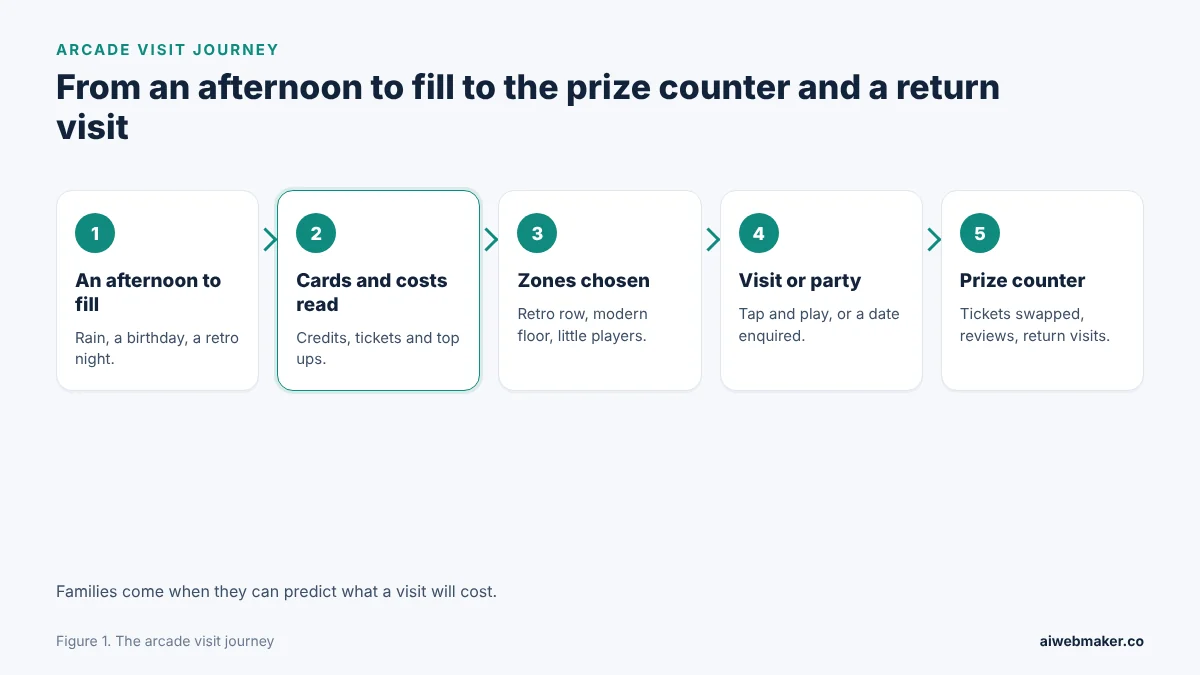
Card rules glow in the middle of this arcade journey, because a parent who cannot work out what a visit costs will pick the cinema instead. The path starts with time to fill, often a wet afternoon, a birthday or an evening out for grown ups. Choosing which zones to head for comes next, which is where photos and a game list help. The visit itself, or a party enquiry for a later date, follows once costs feel predictable. The prize counter and the café close the visit and shape what visitors say afterwards. Pages that make each step easy turn a single wet day into a habit.
Games, cards, prizes and parties: an arcade's core pages
An arcade's site should be built around four questions: what can we play, how does paying work, what can we win and can we hold a party here. A games page sorts the floor into zones, with the type of game, the age it suits and the typical credit cost. A cards page explains how to get a card, top up, tap and check the balance. A prize counter page sets out how tickets work, without promising anything a game cannot deliver. Party and hire pages handle groups, and a visit page carries hours, directions and age rules.
| Page | Visitor question | What to include |
|---|---|---|
| Games and zones | What is there to play | Zones, game types, ages, credits per play |
| Game cards | How does paying work | Card price, top ups, balances, expiry |
| Prize counter | What can tickets buy | Ticket prices on prizes, rules, no guarantees |
| Parties and hire | Can we celebrate here | Packages, room, food, host, guest numbers |
| Visit and rules | When and with whom | Hours, ages, supervision, café, directions |
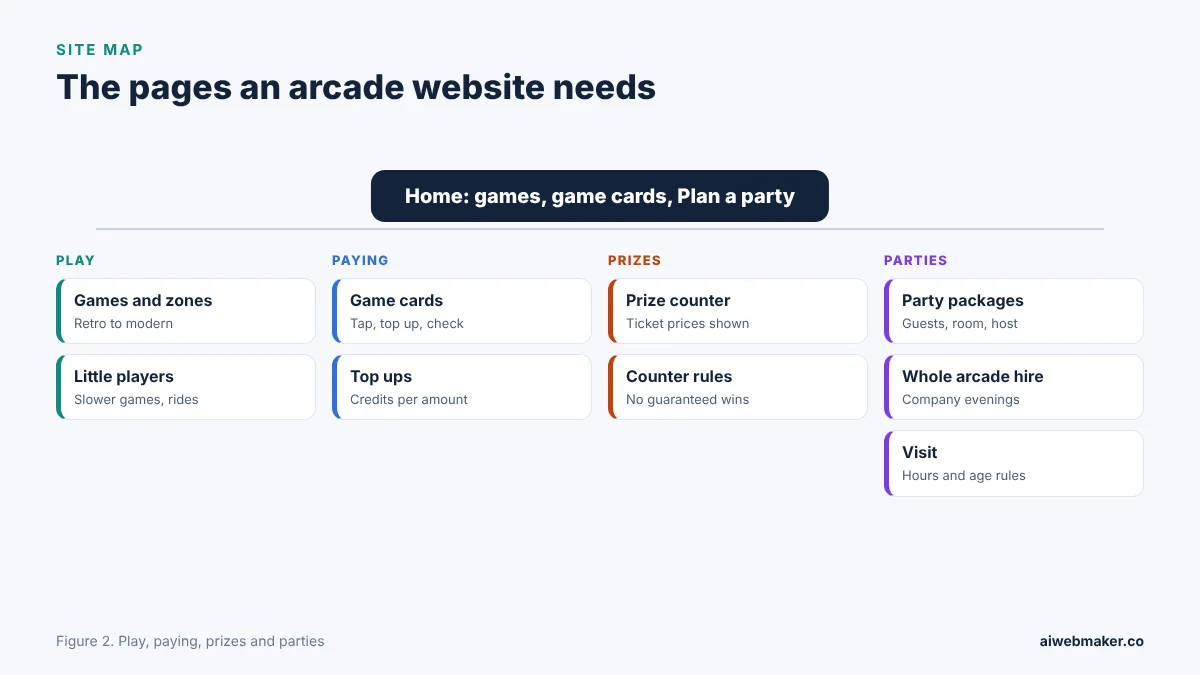
Branches for play, paying, prizes and parties grow from the home page in this plan, and the visit details hang beneath them all. Our sample arcade, Pixel Pier Arcade, divides its pier into six areas: the retro row, the modern floor, ticket alley, air hockey and tables, the little players corner and the pier café. A step by step section explains how a game card works, a table shows what each top up loads, and the prize counter rules are written in plain words. Three party options follow, an arcade party, a retro night for grown ups and whole arcade hire, before a set of questions and answers. The arcade website example with game cards, a prize counter and party packages ends with an enquiry asking for the date, the package and the number of guests. The same order suits any arcade, since it explains paying before it sells the party.
Game cards, credits and top ups, explained before the visit
Game cards have replaced coins in many arcades, and visitors who have never used one need a short, plain explanation before they arrive. The page should state what a card costs, how top ups work, how many credits each amount loads and whether bigger top ups add bonus credits. Each zone's typical cost in credits helps families estimate a visit, especially when games range from cheap classics to pricier simulators. Balances and expiry deserve a clear line, along with what happens if a card is lost and whether registering it protects the balance. Rules on stored balances, expiry and refunds vary by country, so the wording should respect local consumer law. Clear card rules turn a confusing system into a budget parents can control.
| Card detail | What to state |
|---|---|
| Card price | What the card costs, and whether it is reusable |
| Top up amounts | Credits loaded for each amount, with any bonus |
| Credits per play | A typical range for each zone |
| Balance checks | Where visitors can see credits and tickets |
| Expiry | How long credits and tickets last |
| Lost cards | Whether registration lets a balance move |
Prize counter rules that promise nothing a game cannot give
The prize counter is the part of an arcade most likely to disappoint, so its rules should be written to set honest expectations. Every prize can show its ticket price, and the page can explain that tickets may be saved for bigger prizes on later visits. It should say clearly that ticket games are played for fun and that no game, card or top up guarantees a prize or a set number of tickets. In some countries certain prize machines, such as crane grabbers and coin pushers, fall under gaming rules with age limits or licences, so an arcade should check the rules where it trades. Rules for joining tickets from two cards, or for children visiting the counter with an adult, prevent queues and arguments. A counter run on clear rules keeps children happy and parents confident.
| Prize rule | Why it helps |
|---|---|
| Ticket price on every prize | Children can plan what to save for |
| No guaranteed wins | Sets honest expectations from the start |
| Tickets have no cash value | Prevents disputes at the counter |
| Joining tickets from two cards | Lets siblings pool for a bigger prize |
| Closing time for the counter | Avoids a last minute rush |
Retro cabinets, modern floors and the zones that sort a visit
Describing the floor zone by zone helps visitors picture the arcade and decide where to start. Retro fans want the decades covered, the type of cabinets and whether original controls are kept in working order by a technician. Families with small children look for slower games and small rides placed near seating. Groups of teenagers and adults look for racing seats, dance platforms and big screen team games. Air hockey, table football and pinball suit mixed ages, so a sentence on each pays off. Photos of each zone, taken at a busy but not crowded moment, show the real atmosphere better than any description.
Age rules, supervision and evenings for grown ups
Age and supervision rules matter to parents and to the arcade, and they should be easy to find from every page. Many arcades ask that younger children are accompanied by an adult at all times, with stricter rules in the evening. Adult evenings, sometimes with a bar, need their own age limit and a note that identification may be checked under local licensing law. Flashing screens and loud sound are part of most arcades, so a note for visitors with photosensitive epilepsy or sensory needs is thoughtful. Some arcades run quieter sessions for visitors who find the usual noise overwhelming, and these should be listed if offered. Clear rules prevent awkward moments at the door and show families they are welcome.
Party packages and whole arcade hire
Parties and private hire fill an arcade's quieter hours, and each package should state the guest numbers, the credits per guest, the room time, the food and the host. Children's parties usually combine a loaded card for each guest with time in a party room, while adult evenings may offer unlimited play on the retro cabinets for a set period. Whole venue hire suits company evenings, clubs and celebrations, and needs a starting price and a list of what it includes. The arcade's own deposit terms, and how far ahead a date can be moved, belong beside the packages. The AI website builder that drafts arcade pages from an outline of the floor writes a first version of the zone, card and party pages once the owner lists the games, card prices and rooms, and the owner then adjusts them in the preview. Packages that read clearly cut the back and forth that usually comes before a party is confirmed.
| Package type | What it usually includes | What organisers check |
|---|---|---|
| Children's party | Loaded cards, party room, food, a host | Guest numbers, ages, extra guests |
| Adult evening | Unlimited retro play, a reserved table | Age limit, group size, drinks |
| Whole venue hire | Every game, the room, the café | Starting price, hours, deposit |
How families and retro fans search for an arcade
Arcade searches mix a place with an occasion, such as arcade near me, retro arcade, arcade birthday party, things to do on a rainy day or arcade bar for adults. Each zone and party page can lead with the phrase visitors use, alongside the town or seafront it belongs to. The map listing needs the real opening hours, including seasonal changes, plus photos of the floor and the prize counter. Reviews that mention working machines, friendly staff and fair prizes do more than general praise. Articles about the history of a classic cabinet, how game cards work or rainy day plans for families give search engines fresh material and give fans something to share. That kind of sharing brings visitors from well beyond the town.
An arcade's website budget for the year
An arcade's website spending stops at three lines: hosting, a domain and credits for the odd article. Hosting is $119 billed yearly, compared with $228 when paid at $19 a month. A domain costs whatever its chosen ending costs, from roughly 400 options. About $7.80 of credits drafts twelve articles on games, cards and parties. The $189 tier is set beside them for comparison, and new game lists, top up prices or party menus are added without charge.
| Item | Yearly | Monthly |
|---|---|---|
| Hosting the arcade pages | $119 | $228 over twelve months |
| Domain | Depends on the ending | Depends on the ending |
| Higher plan, for comparison | $189 a year | Not needed |
| Twelve game and party articles at about $0.65 | About $7.80 | About $7.80 |
| Game, card and party updates | No charge | No charge |
| Year before the domain | About $126.80 | About $235.80 |
Confusing cards and silent rules that end a visit early
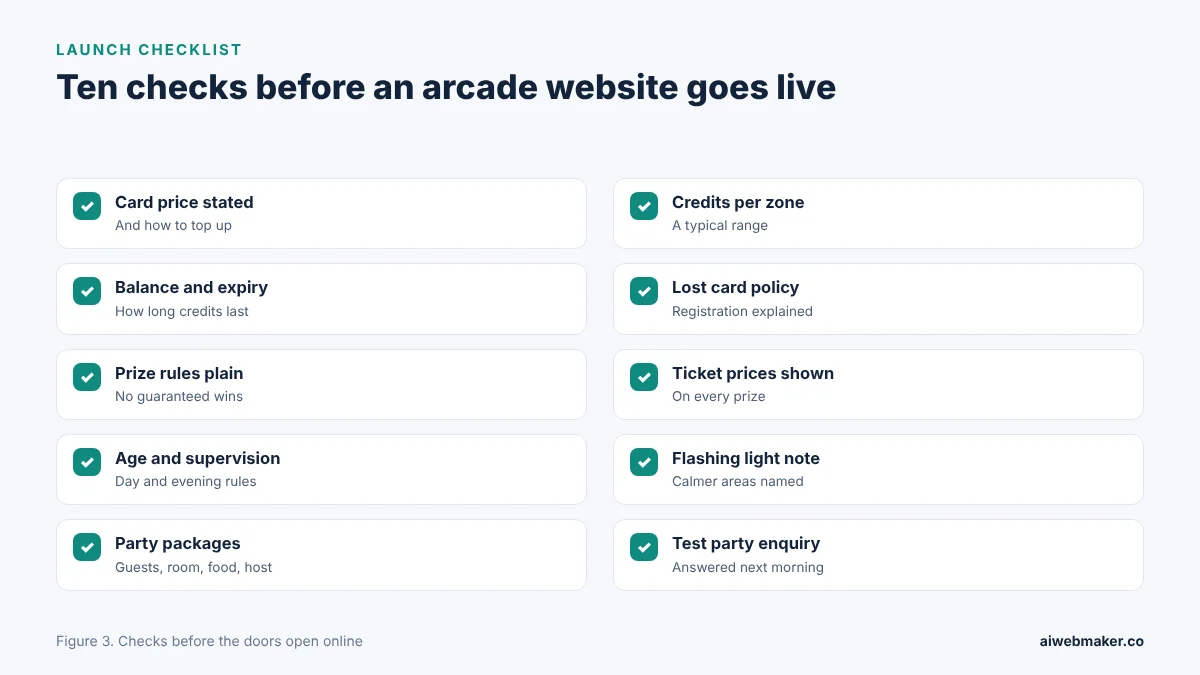
Visitors leave an arcade website when they cannot work out what a game card costs or how credits are spent. Missing opening hours, especially out of season, send families to a locked door and an angry review. A prize counter page that hints at guaranteed winnings invites complaints later. Party packages without guest numbers or food details lead to slow email chains instead of bookings. No mention of age rules leaves parents of teenagers unsure whether they must stay. Ten repairs for these gaps fill the tiles beneath.
Frequently asked questions
Are game card credits refundable?
Most arcades state that credits and tickets have no cash value and cannot be refunded, but rules on stored balances vary by country. The website should give the arcade's own policy, how long balances last and what happens if a game takes credits without starting. Registered cards whose balance can move to a new card if one is lost reassure regular visitors. Writing the policy plainly prevents disputes at the front desk. Honest terms make families more willing to top up.
Can the prize counter promise particular prizes?
An arcade should never promise that a game or a top up will win a particular prize or a set number of tickets. Ticket games give tickets according to how they are played, and outcomes vary from one go to the next. In some countries prize machines are regulated, so the wording should follow local rules. The page can show ticket prices on prizes and explain how tickets can be saved for bigger items. Clear limits protect both the visitor's expectations and the arcade's reputation.
Is a note on flashing lights and noise worth adding?
A note on flashing lights and noise is worth adding, because some visitors have photosensitive epilepsy, sensory sensitivities or young children who startle easily. The page can describe which areas are calmer and when the arcade is usually quieter. Quieter sessions, if the arcade runs them, should be listed with times. Such details take minutes to write and help families plan with confidence. Thoughtful information widens the arcade's audience.
How far ahead should a party date be requested?
Party dates at weekends and in school holidays tend to fill first, so the website can suggest asking several weeks ahead for those times. Weekday parties are often easier to place at shorter notice. The arcade's own policy on deposits, confirmations and moving a date should sit beside the packages. A note on the latest time a guest list can change helps the host prepare the cards. Clear lead times reduce disappointment and rushed calls.
One birthday party measured against twelve months online
At the sample arcade's starting price, a single party for ten covers the $119 of yearly hosting with a good margin. Two $10 top ups on the sample's cards clear a $19 month. Retro nights, whole venue hire and regular families then add income the arcade might otherwise miss. Clear card rules, an honest prize counter and well described parties win trust that flashing photos alone cannot. Arcades that keep hours, game lists and party menus current see families return every wet weekend. A queue at the kiosk on a rainy Saturday is the outcome every one of those pages aims for.
Build your website in Minutes and get the AI Tools that work
Start Building Your Website →