Basement tanking
A waterproof cement slurry bonded to the walls and floor of the basement, built up in coats and left ready for plaster or paint.
Per square metrefrom $95
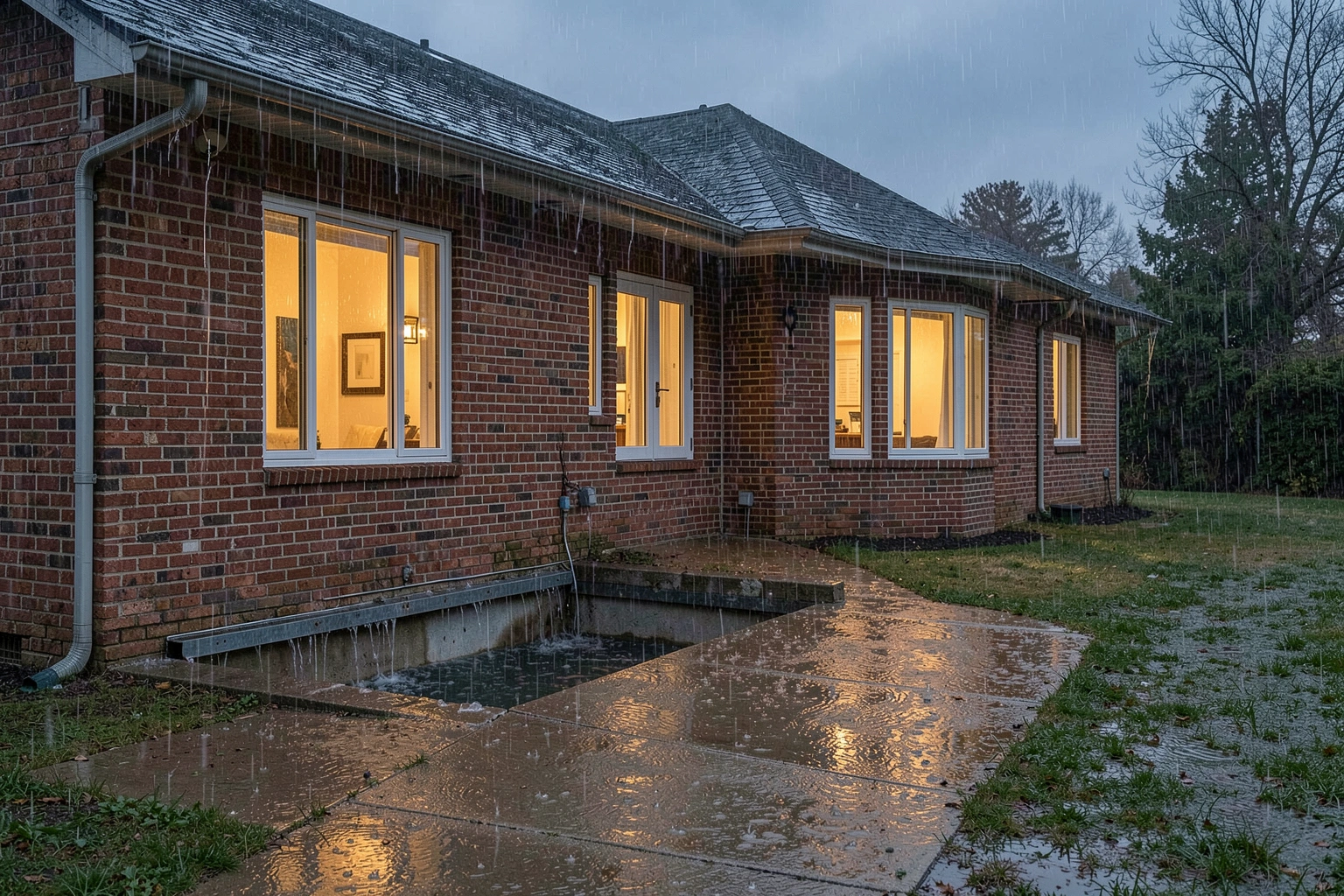
DryBase cures damp basements, leaking walls and tired flat roofs. Every job starts with a survey and moisture readings, so the repair matches the real cause rather than a guess.
Different water problems leave different marks. These are the patterns our surveyors look for before anyone talks about a cure.
| The mark you see | Where the water comes from | What usually cures it |
|---|---|---|
| A tide mark low on the wall, with salts and flaking paint | Ground moisture rising through a wall with no working damp course | A new damp course, once the readings confirm it |
| Wet patches that grow after heavy rain | Rain getting in through cracks, worn pointing or a leaking gutter | Repairs outside first: pointing, render or gutters |
| Water on the basement floor after storms | Groundwater pressing through the walls and the floor joint | Cavity drain membrane with a sump, or tanking |
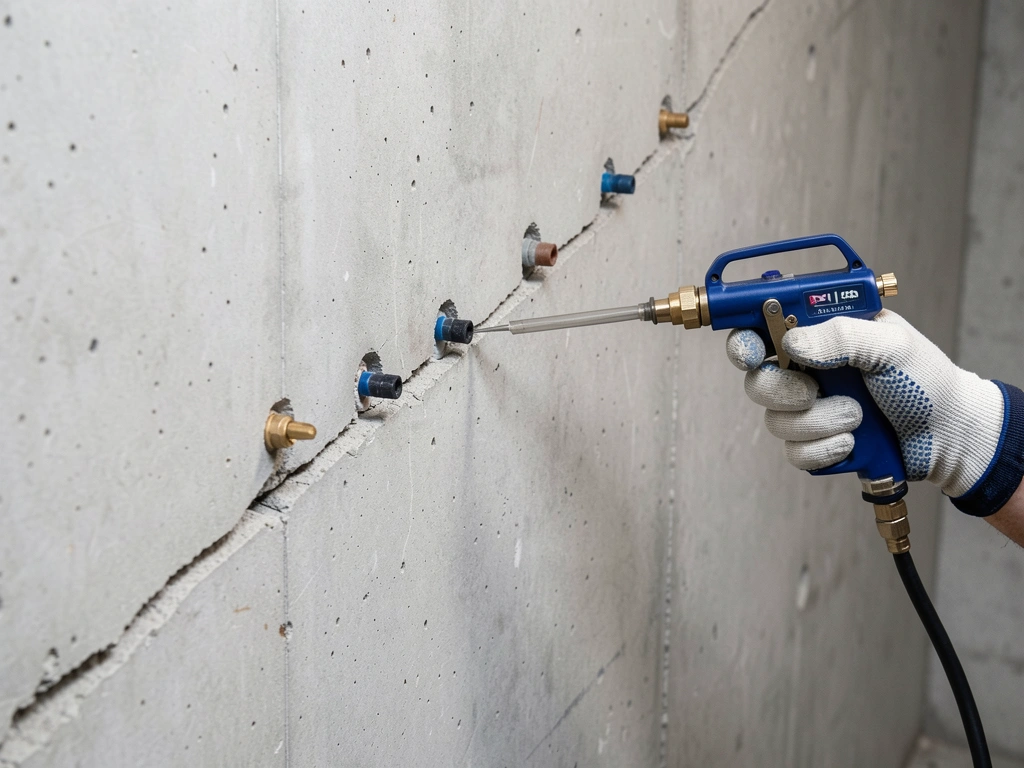
| A crack in a concrete wall that weeps | A shrinkage or settlement crack letting water through | Resin injection to seal the crack |
| Black mould in corners and behind furniture | Condensation from moist indoor air, not a leak | Better ventilation and heating; no waterproofing needed |
| Drips or stains under a flat roof | A split membrane or a failed flashing at an upstand | A patch repair, or a new membrane if it is worn out |
Condensation is a frequent cause of mould, and when the readings point to it we say so rather than sell a membrane.
Each one follows a survey. Prices are a guide for a typical job, and the quote is fixed before any work starts.
A waterproof cement slurry bonded to the walls and floor of the basement, built up in coats and left ready for plaster or paint.
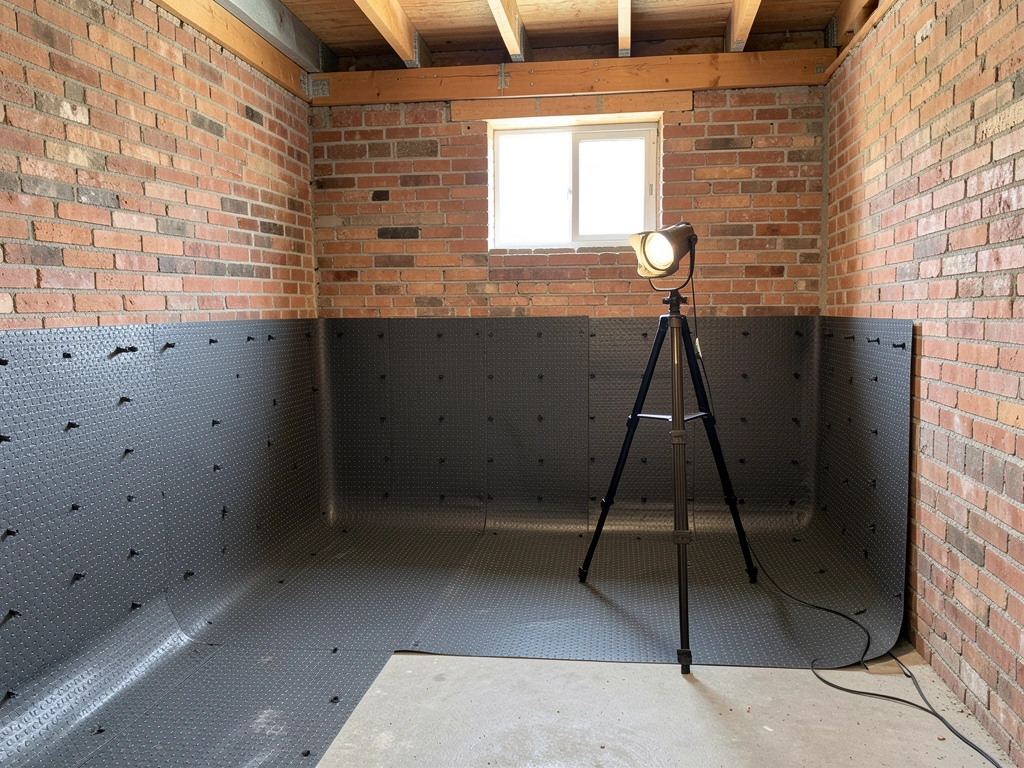
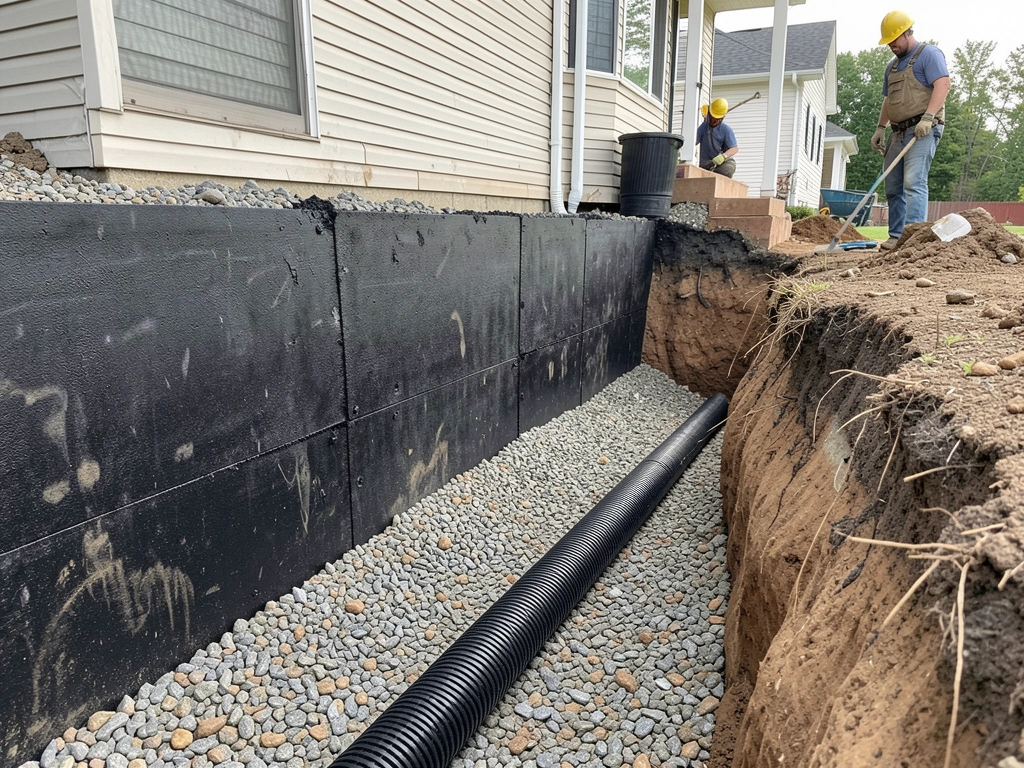
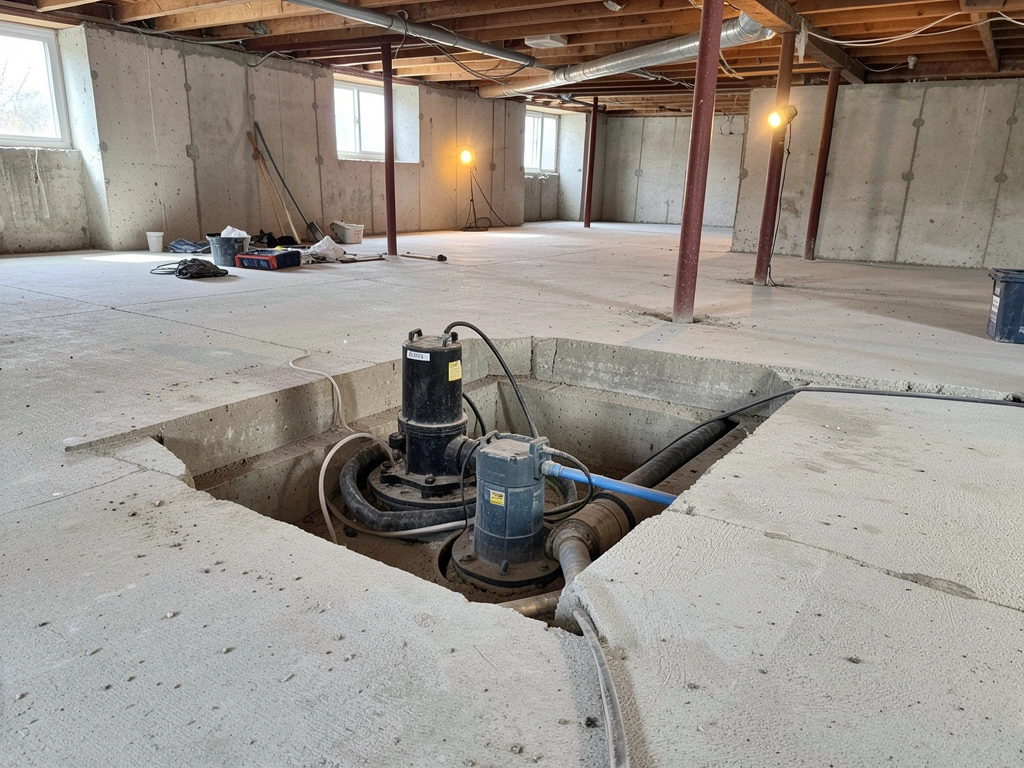
A studded membrane fixed to walls and floor that leads water to a sump pump, for basements under steady water pressure.
Weeping cracks in concrete walls sealed from inside with injected resin that expands into the crack and sets.
A new chemical damp course injected along the mortar line where readings confirm moisture rising from the ground.
Cracked render, worn pointing and leaking joints repaired on the outside, so rain stays out before any treatment inside.
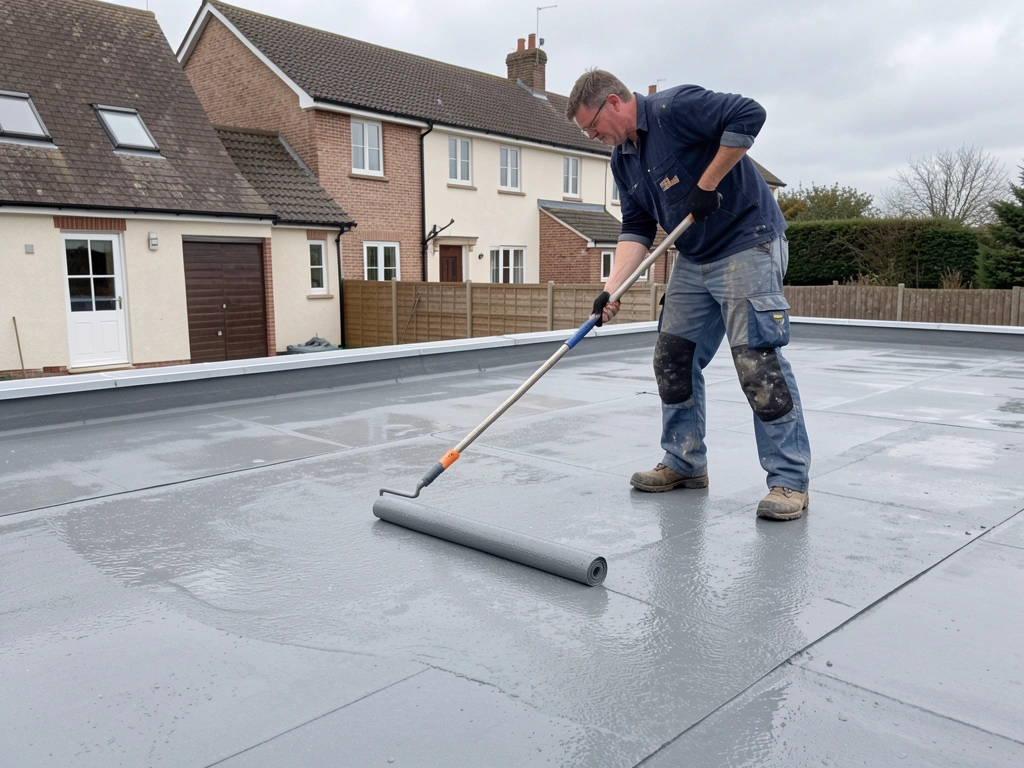
Single ply and liquid applied membranes laid over flat roofs, garages and extensions, with upstands and outlets dressed properly.
Rules on building work, listed buildings and shared walls vary by country and city. The survey tells you if anything needs approval before we start.
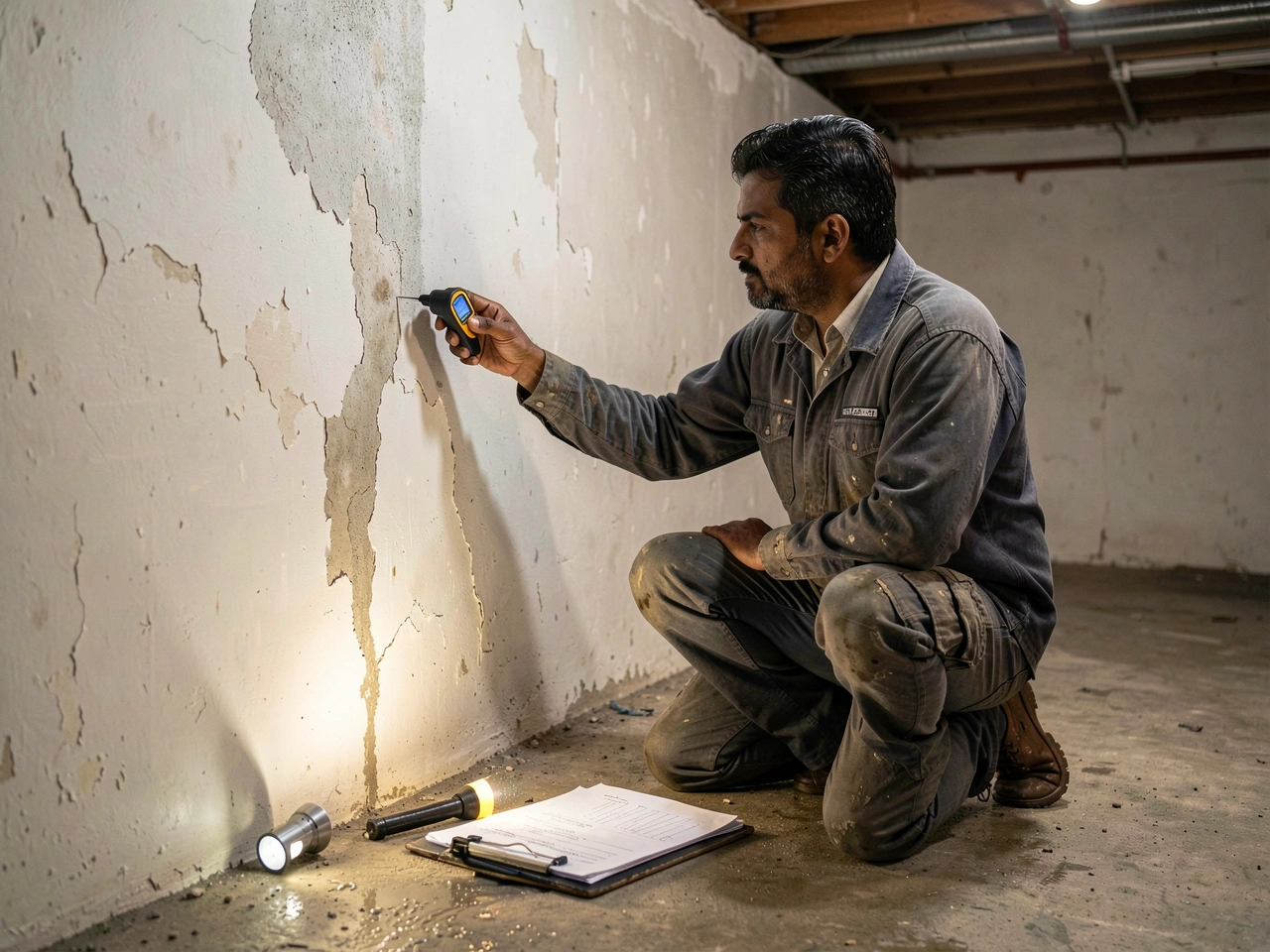
A surveyor spends about an hour at the property with a moisture meter, a thermal camera and a torch. Readings are taken across the walls and floors, outside as well as in, and the drains and gutters near the damp are checked too.
The written report arrives within three days with the readings, the photos, the likely cause and a fixed quote. When the cause is condensation or a blocked gutter, the report says so, and the quote is small or there is none.
A basement job takes one to three weeks on site. Wall and roof repairs are often finished in a few days.
Readings, photos and a look at the outside of the building, about an hour on site.
Within three days: the cause, the cure and a fixed price, with no pressure to decide.
Walls stripped back to sound masonry, cracks opened up and the floor cleaned.
Tanking, membranes or injection applied in the order the system needs, then left to cure.
A final round with the meter, then the written guarantee for the system installed.
Most waterproofing ends up hidden behind a finished wall, so the crews photograph every stage for the owner's records.
The survey found a leaking gutter joint behind the damp patch, not the rising damp another firm had quoted for. A small repair, and the wall has stayed dry through two winters.
Our cellar used to take water every spring. The membrane and the sump went in over eight days, and the room is now a dry workshop.
Photos at every stage, a tidy crew, and a flat roof over the garage that has finally stopped dripping onto the car.
No. Many damp walls are wet from rain getting in, a leaking pipe or condensation. The survey readings show which one it is, and the cure differs for each.
Yes, in most cases. Tanking and cavity drain membranes are both fitted from inside, which avoids digging around the building. Outside work is suggested only when the inside cannot be reached or the walls themselves are failing.
Rarely. Basement work is noisy and dusty for a few days, and we seal off the rest of the house with sheeting. Roof and wall repairs happen outside.
Basement tanking and membranes carry a 10 year written guarantee against water coming through the system we installed. Wall and roof repairs carry two years.
Most inside waterproofing needs none, but rules on building work, listed buildings and shared walls vary by country and by city. The survey report says if anything needs approval first.
A 20 percent deposit holds the start date, and the balance is invoiced once the job is signed off. You pay the office directly.
Tell us where the water shows and what kind of building it is. A surveyor rings back inside one working day to fix a visit.
The office takes calls on weekdays and Saturday mornings. Leaks that are coming in right now are answered first.
Homes, shops and warehouses across the city and the towns within 60 km
| Monday to Friday | 07:30 to 17:30 |
| Saturday | 08:00 to 12:00 |
| Sunday | Closed |
Homes, shops and warehouses across the city and the towns within 60 km. Further out, the travel cost is quoted before the survey is booked.
This waterproofing contractor website was built by AI from two sentences. Tell us about your business and yours is built the same way, with its pages, photos and booking in place, ready to preview in minutes.
About this sample page
DryBase Waterproofing is fictional, and its page was built to show how a damp specialist can put diagnosis, prices and surveys on AI Web Maker. Rain falls across the opening photo while a striped membrane edge runs along its foot, setting the scene before a word is read. A table of damp marks and their usual causes comes next, including the honest note that mould is often condensation. Priced cures, a measured survey and a five step job outline follow. This order leads a worried owner from a stain on the wall to a booked survey.
Any waterproofing firm can start the same way, with a few lines about its cures and its area, after which the builder returns draft pages carrying an enquiry form. Owners then get in touch by phone or through that form, and the firm settles prices and payment with each of them directly. Hosting begins at publishing, $119 a year with the domain on top, while drafts and previews are unbilled. The sample page goes deeper into the choices behind this layout. A firm can swap in its own jobs, drop the roof work or add a section on guarantees without breaking the flow.
The whole sample website of a waterproofing contractor, explained ·