Small group course
a course$420
- Reading, reasoning and maths in rotation
- Two full mock papers within the course
- Homework set and marked every week
- A written report at weeks 5 and 10
Mark Ahead prepares students for school entrance exams and for college and university admissions tests, with small group courses, one to one tutoring and full mock tests under timed conditions. Every block ends with a written progress report, so you always know what to practise next.

Every student starts with a 45 minute assessment, which tells us whether a group suits them or whether one to one lessons should target particular gaps first. Prices are per student.
a course$420
an hour, from$55
a paper$65
The assessment costs $30 and comes off the course fee if the student joins. Course fees are paid in two halves, and a course can be cancelled with a full refund up to the second class.
Entrance exams and admissions tests differ in format, timing and the skills they reward. We teach from the format each school, college or university publishes, and we never claim inside knowledge of any paper.
| Kind of test | Usually taken | What we practise |
|---|---|---|
| School entrance exams | Ages 9 to 11 | Reading comprehension, short creative writing, maths and reasoning puzzles |
| Senior school admissions tests | Ages 13 to 16 | Verbal and numerical reasoning, extended writing and interview practice |
| College and university admissions tests | Ages 16 to 19 | Critical thinking, problem solving, essay planning and pacing |
| Scholarship and bursary papers | Ages 10 to 16 | Longer answers, clear presentation and calm under time pressure |
The same five steps apply to group and one to one students, with one named tutor following each student the whole way.
A 45 minute session in reading, reasoning and maths shows where the student is starting from.
We suggest a group, tutoring or both, and set out the weeks that remain before the test.
Short timed drills, worked examples and homework marked before the next class.
Full papers in exam conditions, marked and returned within three working days.
A written report every six weeks on strengths, gaps and what to practise next.

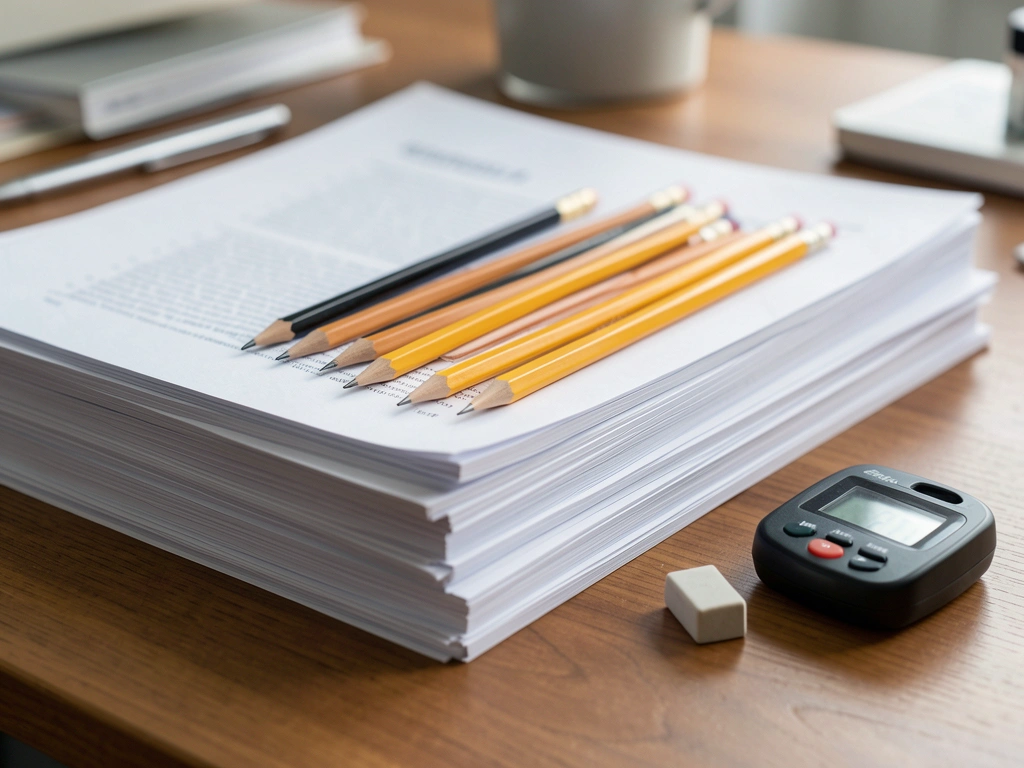
A mock paper only helps if it feels like the day itself. Students sit in rows in a quiet hall, with a clock on the wall, an invigilator at the front and the same rules on phones and water bottles that most test centres follow.
Papers come back within three working days, in a 20 minute feedback session. We go through the questions that cost the most time as well as the ones that went wrong, because pacing is often where a student has the most room to improve.
Reports are written by the student's own tutor rather than printed from a score sheet. They describe work and habits, and they never predict a result.
Strengths and gaps skill by skill, with examples from recent homework and mock papers rather than a single mark.
How the student spends time, checks answers and copes with questions that look unfamiliar at first sight.
Three focused targets for the coming six weeks, each with the exercises that build towards it.
Group classes and mock days in the teaching rooms, and one to one lessons in person or by video.





The mock was the first time our daughter sat a paper in silence with a clock running. The feedback session showed her exactly where the minutes went, and she practised that.
The report never promised anything. It said what was going well, what was not and what to do about it, which is what we needed six weeks before the test.
Reasoning questions used to make me freeze. After ten weeks of short timed drills they felt like puzzles, and test day was calmer than the mock.
No, and we would be wary of anyone who did. Results depend on the student, the paper and how many places there are, so we promise careful teaching, honest feedback and well run mock tests, and nothing beyond that.
We use practice papers we write ourselves in the published format of each kind of test, plus any sample material that schools, colleges or universities make public. We never claim to know what will appear on a paper.
Most students do well with one or two terms of steady practice. Starting a year ahead suits some, while a few weeks of cramming rarely helps, so we give honest advice after the assessment.
Both. Group courses meet in our teaching rooms, and one to one tutoring can be in person or by video. Mock test days always take place in person, so the conditions feel real.
We send the class notes and the homework, and the tutor covers anything missed at the start of the next class. Missed classes are not refunded, but a missed mock test can move to the next date.
Yes. Where a school, college or university interviews applicants, one to one tutoring can include practice interviews focused on listening, thinking aloud and answering in full sentences.
Choose what to book, the kind of test ahead and a day and time that suit. A tutor writes back within one working day, confirming that time, proposing the closest alternative or explaining that a course has filled.
Phone during teaching hours, or email whenever suits and a tutor answers within a working day.
Teaching rooms above the library in the town centre, and online lessons by video
| Monday to Thursday | 15:30 to 20:30 |
| Saturday | 9:00 to 16:00 |
| Friday and Sunday | Email only |
Parents may watch the first ten minutes of a group class before booking a course. Mention it in your booking request and we suggest a date.
Ask to watch a classThis test prep tutor website was built by AI from two sentences. Tell us about your business and yours is built the same way, with its pages, photos and booking in place, ready to preview in minutes.
About this sample page
Mark Ahead Test Prep is an invented tutoring business, written to show how a test prep tutor can present courses, mock tests and progress reports on one page. It opens with a booking button and three facts about group size, marking time and reports, then sets out a small group course, one to one tutoring and a mock test day with prices. A table names the kinds of test covered, from school entrance exams to college admissions tests, without naming any exam body. Five steps then trace the route from the first assessment to test day. The order mirrors how a family decides, moving from what is on offer to how progress is measured.
A section on mock tests describes the silent hall, the timed sections and the feedback session that follows. Another explains what a progress report covers and says clearly that it never predicts a result. Example reviews, a gallery and six family questions come next, including the one every tutor should answer honestly about guarantees. The booking request asks for the kind of test, the student's age and a preferred day and time. The sample page below walks through each part and the reason it is there.