Beginner group lesson
per surfer, from$65
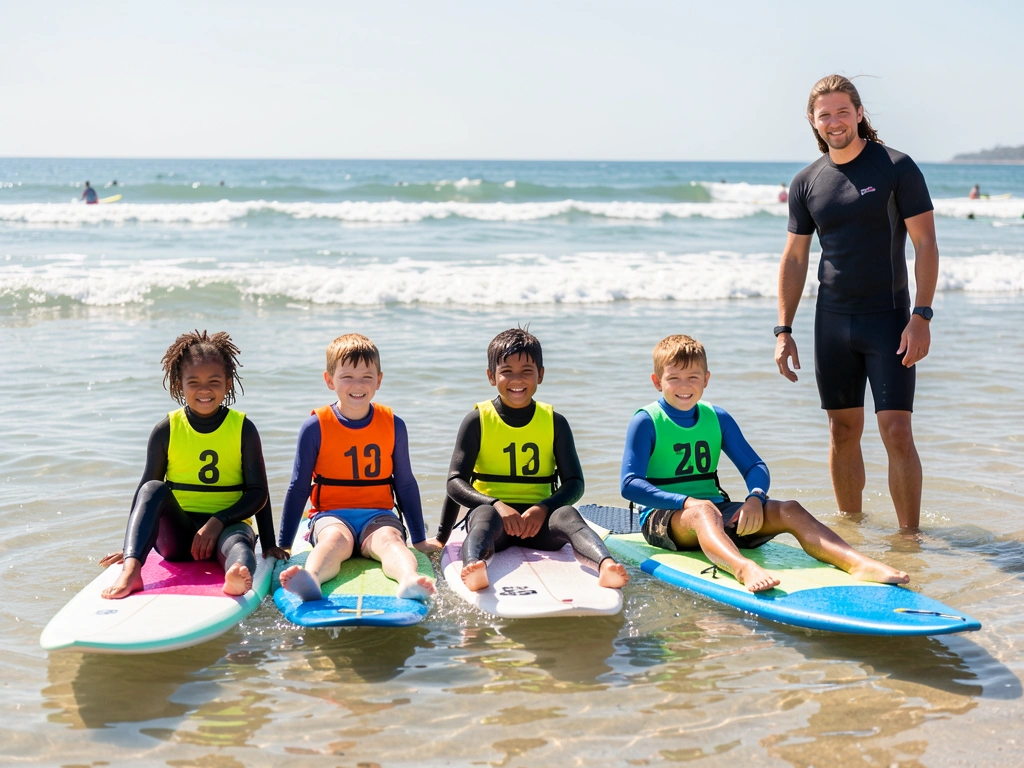
- Beach safety talk before anyone gets wet
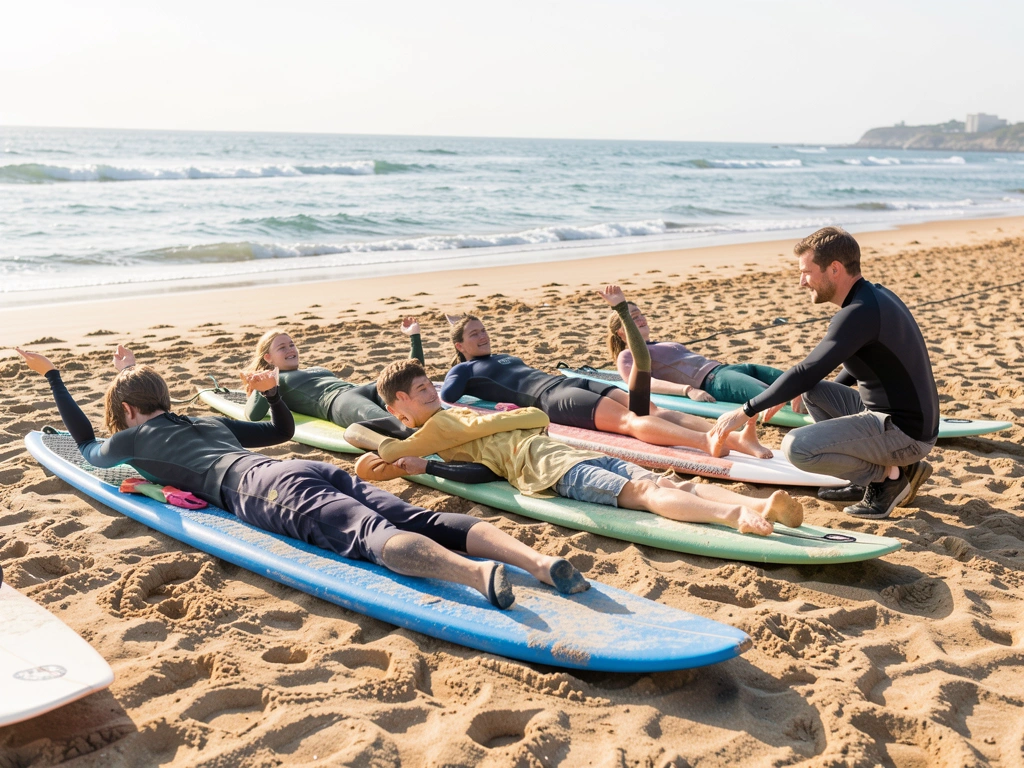
- Pop up practice on the sand
- Waist deep white water with a coach close by
- Six surfers to a coach, never more
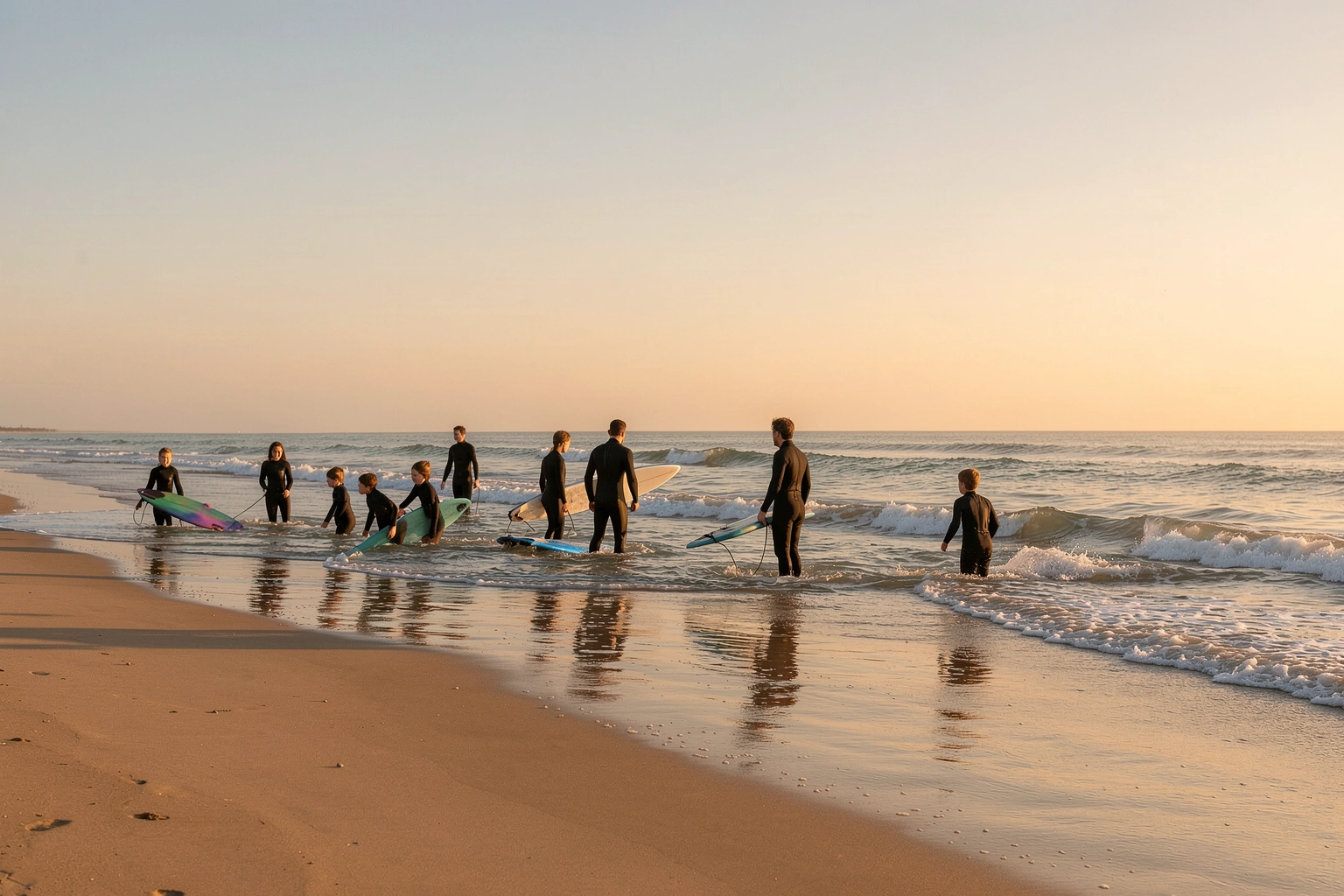
Beginner lessons, private coaching and board hire on a long sandy beach with gentle breaking waves. Every session is timed to the tide and runs only when the sea suits learners.
Every price includes a wetsuit, a soft board sized to the surfer and a coach in the water. Surfers start from age 8, and everyone must be able to swim.
per surfer, from$65
per surfer, from$175
one or two surfers, from$110
4 Saturdays, from$180
Lessons are paid at the surf hut once the time is confirmed. If we call a lesson off for wind, swell, current or lightning, you choose another day or take your money back in full.
Hire is for surfers who already catch and ride white water waves on their own. First timers are asked to start with a lesson, however confident they feel.
| Kit | 2 hours | Half day | Full day |
|---|---|---|---|
| Soft top board | $20 | $30 | $45 |
| Hard board for improvers | $25 | $35 | $50 |
| Wetsuit with boots in winter | $10 | $15 | $20 |
| Board and wetsuit together | $27 | $40 | $58 |
| Bodyboard and fins | $12 | $18 | $25 |
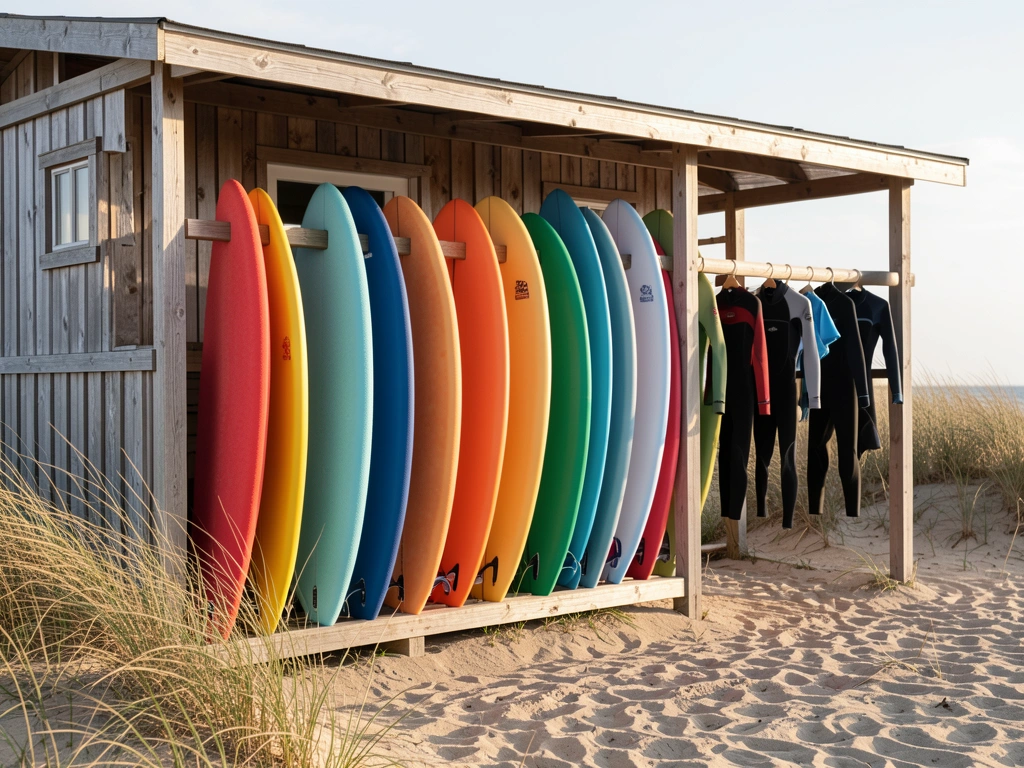
Kit goes out from the surf hut, and the coach on duty shows each hirer where to paddle out, where the current pulls and which stretch of sand is flagged for boards.
A group lesson follows the same rhythm every time, so a nervous first timer knows exactly what comes next.
Arrive fifteen minutes early, pick a wetsuit and carry a board down together.
Flags, currents, how to fall and how to signal a coach, before anyone goes in.
Paddling and standing are rehearsed on the sand until the moves feel natural.
Waist deep only, with a coach pushing each surfer into their early waves.
Kit back on the rack, a warm drink and a tip for the next session.
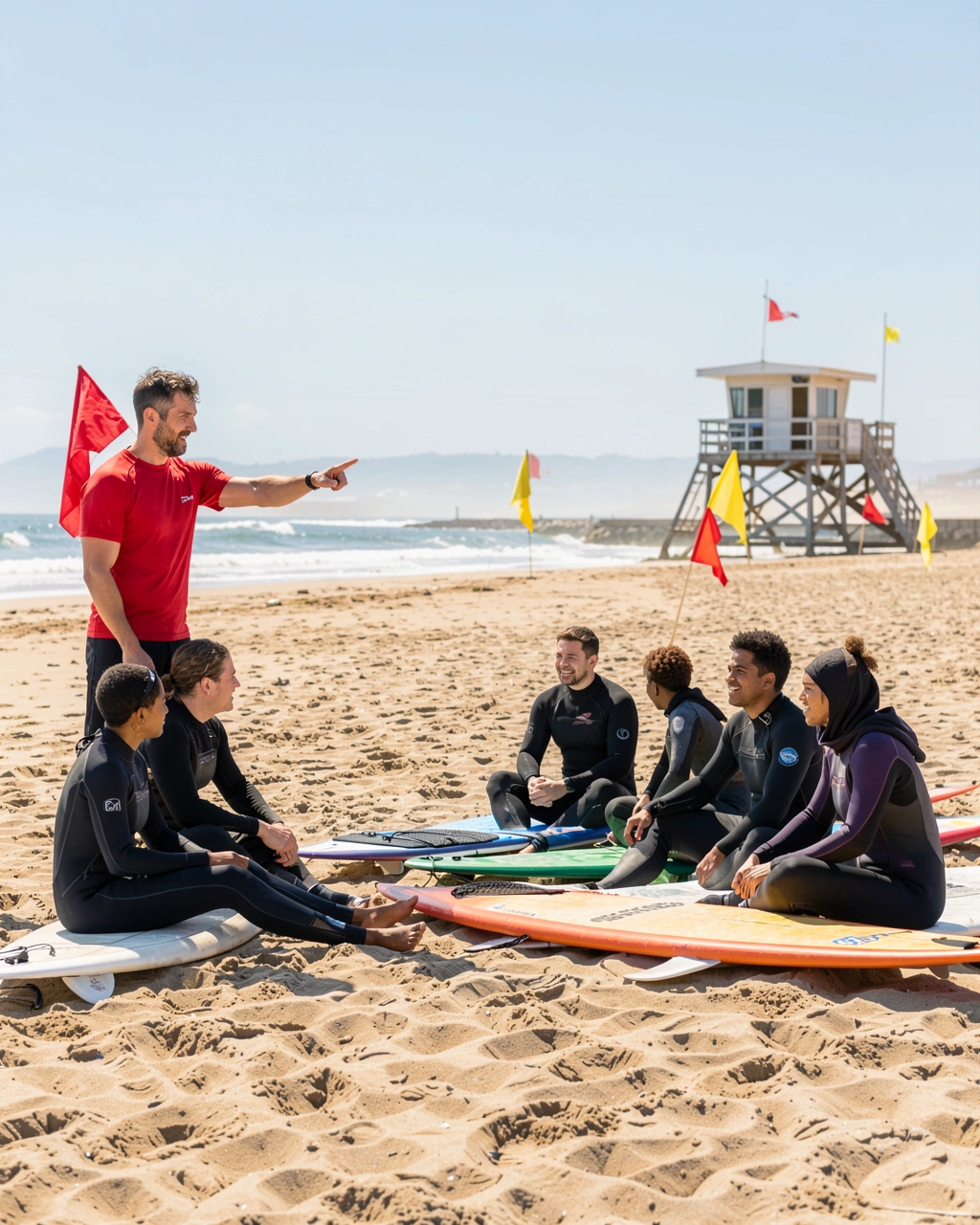
Every surfer must be able to swim at least 50 metres and feel at ease out of their depth, even though lessons stay in waist deep water. Coaches hold current surf lifesaving and first aid qualifications, and lessons run inside the stretch the lifeguards flag for boards. Who may teach surfing, and where, differs by country and by beach, so we work to the rules of the local lifeguard service.
We read the forecast the evening before and look at the sea again an hour before each lesson. When the wind, the swell or the current is wrong for learners, the lesson moves to another day. In an emergency on any beach, alert a lifeguard and call your local emergency number.
Wetsuits, boards and leashes come with every lesson. Bring the small things that make two hours in the sea comfortable.
Leave jewellery and phones in the lockers at the hut. Surfers who wear glasses can borrow a sports strap from the box by the door.
Group lessons, Saturday groms club and quiet evening hire sessions on the same long stretch of sand.
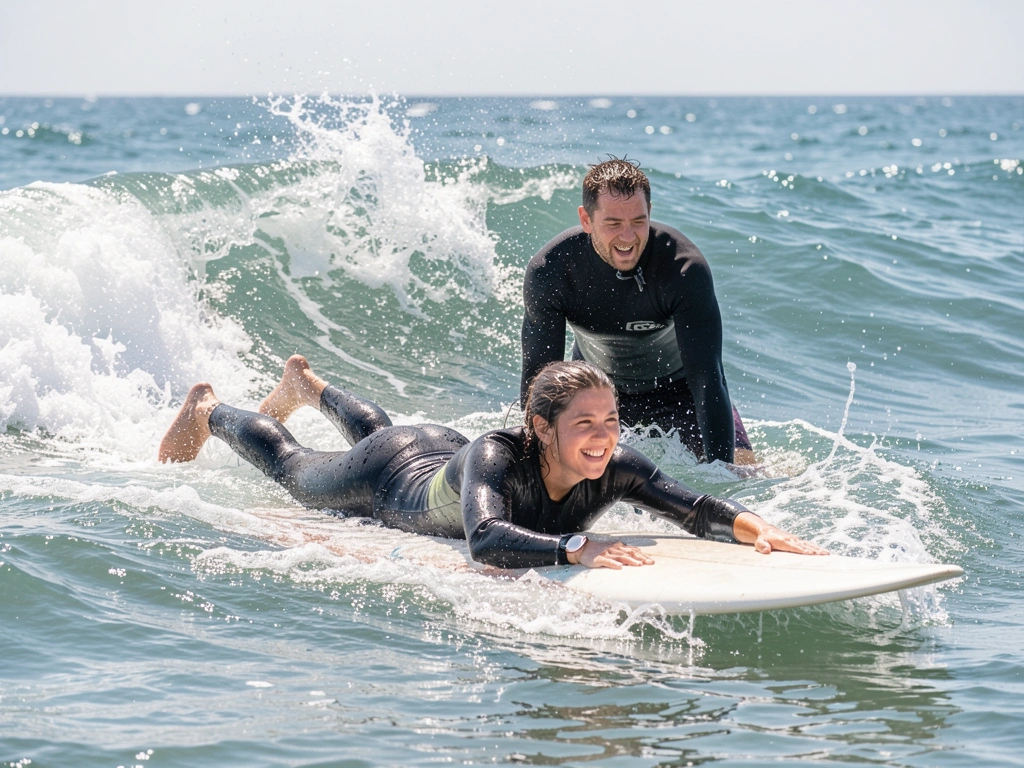
Neither of us had touched a surfboard before. The safety talk made sense, the coach stayed beside us the whole time, and by the third lesson we were catching waves on our own.
The sea was too rough on our first booked morning, so they called the night before and moved us to the next calm day. Worth the wait.
Our son came home from groms club sandy, tired and talking about rip currents and flags. Two coaches in the water for eight children felt right to us.
Every surfer must be able to swim 50 metres and stay calm out of their depth. Lessons stay in waist deep water, but the sea can change quickly, so this rule is never relaxed.
We look at the sea an hour before each lesson. If it is unsafe or flat, we call or email to move the lesson, and if no new day suits you the full price is refunded.
From age 8 in the Saturday groms club and from 10 in group lessons. Anyone under 16 needs a parent or carer on the beach for the whole lesson, and younger children can try a private lesson by arrangement.
Some people stand on their first wave and some take a few lessons, and both are normal. Coaches never promise a moment, but everyone leaves knowing how to paddle, fall safely and ride white water lying down.
Tell us about any health condition or recent injury when you send a request, and check with your doctor if you are unsure whether surfing suits you. Coaches are first aid trained but cannot give medical advice.
A pay car park sits behind the dunes, and the surf hut has changing cubicles and lockers. Arrive fifteen minutes early to change before the safety talk.
Pick a lesson and a day, and tell us how confident each surfer is in the water. We reply within a day with a start time that fits the tide, or with the closest day that does.
Call the hut in opening hours, or send an email and the coaches answer it after the last lesson of the day.
Surf hut at the north end of the main beach, beside the lifeguard tower
| April to September | 08:00 to 19:00 daily |
| October and March | 09:00 to 17:00 |
| Winter | Private lessons only |
The morning's conditions go up on the board outside the hut by 08:00. If you are unsure whether to come down, call and ask before you set off.
Ask about a lessonThis surf school website was built by AI from two sentences. Tell us about your business and yours is built the same way, with its pages, photos and booking in place, ready to preview in minutes.
About this sample page
Low Tide Surf School is made up, and the page behind it shows how a beach school might lay out lessons, hire and sea safety on AI Web Maker. Four lessons open the page, each priced per surfer with the wetsuit and board included, because hidden costs worry first timers. A hire table and a five step lesson outline follow, so visitors know what to expect before they come down to the beach. Sea safety, a kit list and honest answers about standing up and cancellations come next. That sequence turns a nervous first look into a confident lesson request.
A surf school owner building a real site gives the builder a short description of the beach and the lessons, and gets back a draft to edit. Surfers then send requests, which the owner accepts, moves to another tide or turns down, and payment stays at the hut. Hosting starts at $119 a year after launch, and the domain is bought separately. A walk through every section, with the reasons behind it, sits on the sample page linked from here. Each school can move these blocks around to lead with whatever its own beach does best.