Carriage
The padded platform you lie, kneel or sit on. It rolls on wheels along the frame as you push away or draw back in.
You feelA slow glide
A reformer is a padded sliding bed on springs: you push and pull against the springs to strengthen and stretch with control. Everyone starts with two introductory sessions, then joins classes of eight at most.
It looks like a rowing machine crossed with a bed, and the first visit can feel strange. These are the six parts a teacher names in every class.
The padded platform you lie, kneel or sit on. It rolls on wheels along the frame as you push away or draw back in.
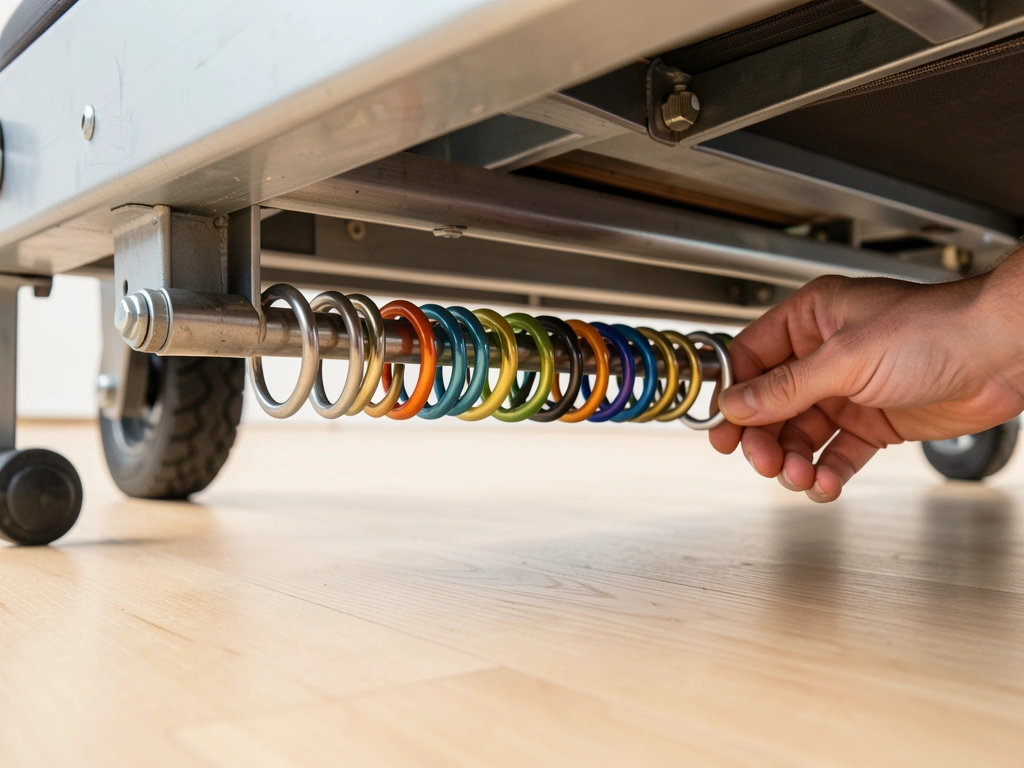
Coloured springs under the carriage set the resistance. More springs is not always harder: a light spring makes balance work tougher.
The padded bar at one end that you press with feet or hands, raised or lowered to suit your hips and knees.
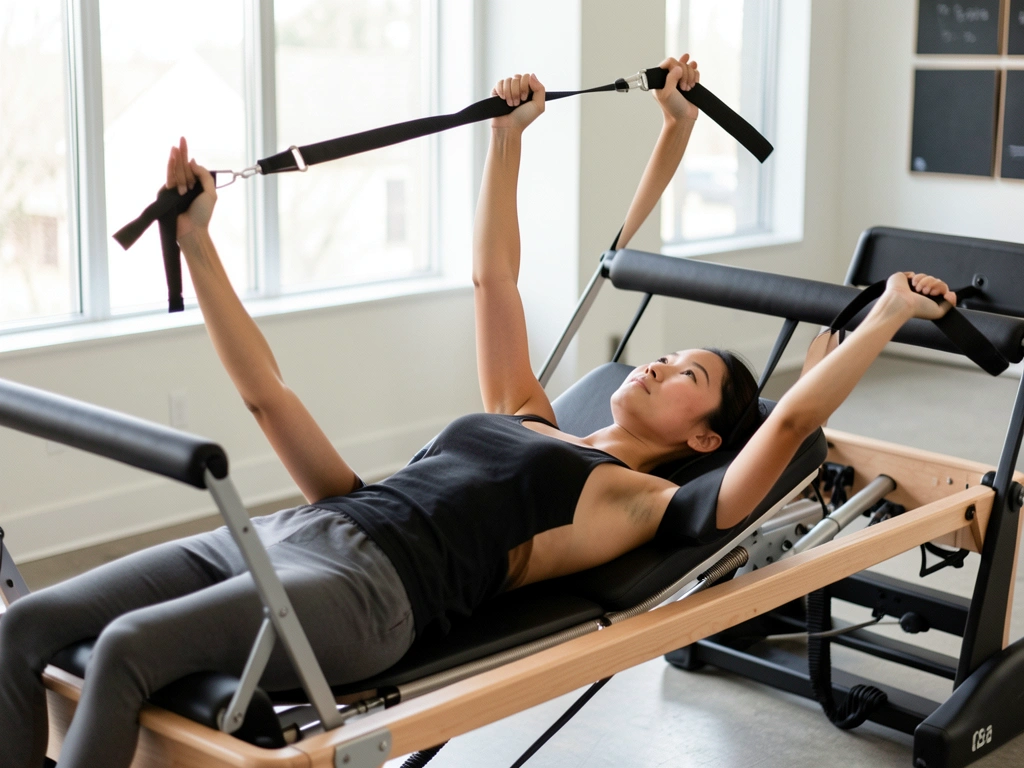
Long loops on ropes for hands or feet, used for arm work and leg circles while the carriage moves.
Two padded blocks at the head end that stop you sliding off as you push. Shoulders rest on them, never the neck.
A padded box set on the carriage for seated and lying work, so one machine gives dozens of positions.
Getting on and off is the first thing taught: the carriage can roll whenever weight shifts, so the teacher shows where to step and when to sit.
Group classes move briskly once they start, so every newcomer learns the machine first, with a teacher and one other person at most.
Getting on and off, each part by name, choosing springs with the teacher, and the footwork that opens every class.
The straps, kneeling and side lying work, and how to ease off when a spring feels too heavy or too light.
Three or four group classes at the slowest pace, where the teacher calls every spring change before it happens.
Move on to Flow or Strength once the teacher agrees, or stay in Foundations for as long as you like.
Every class lasts 50 minutes on the reformer. What changes is the pace, how often the springs change and how long the stretches last.
| Class | Pace | Who it suits | Springs |
|---|---|---|---|
| Foundations | Slow | Newcomers fresh from the two introductions | Called out one change at a time |
| Flow | Steady | Regulars who know every part by name | Fewer changes, in a set order |
| Strength | Brisk | Anyone after harder leg and arm work | Heavier springs, longer sets |
| Stretch and Release | Slow | A tired back after a long week or a long run | Light springs, long holds |
Foundations runs every weekday at 07:00 and 18:00, and on Saturday at 09:00; the other classes fill the rest of the week.
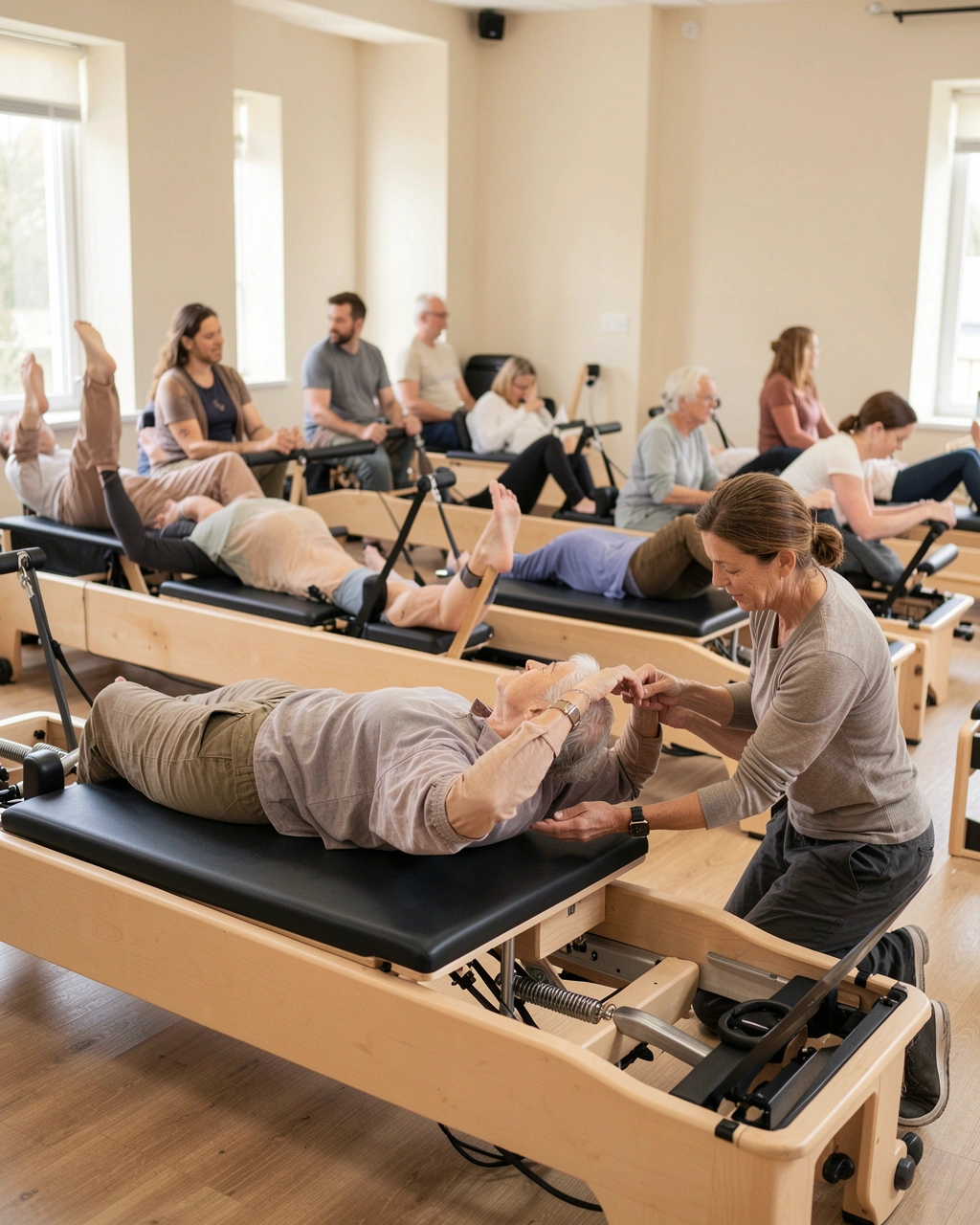
Eight machines in two rows, a long window down one side and space to walk round every carriage.
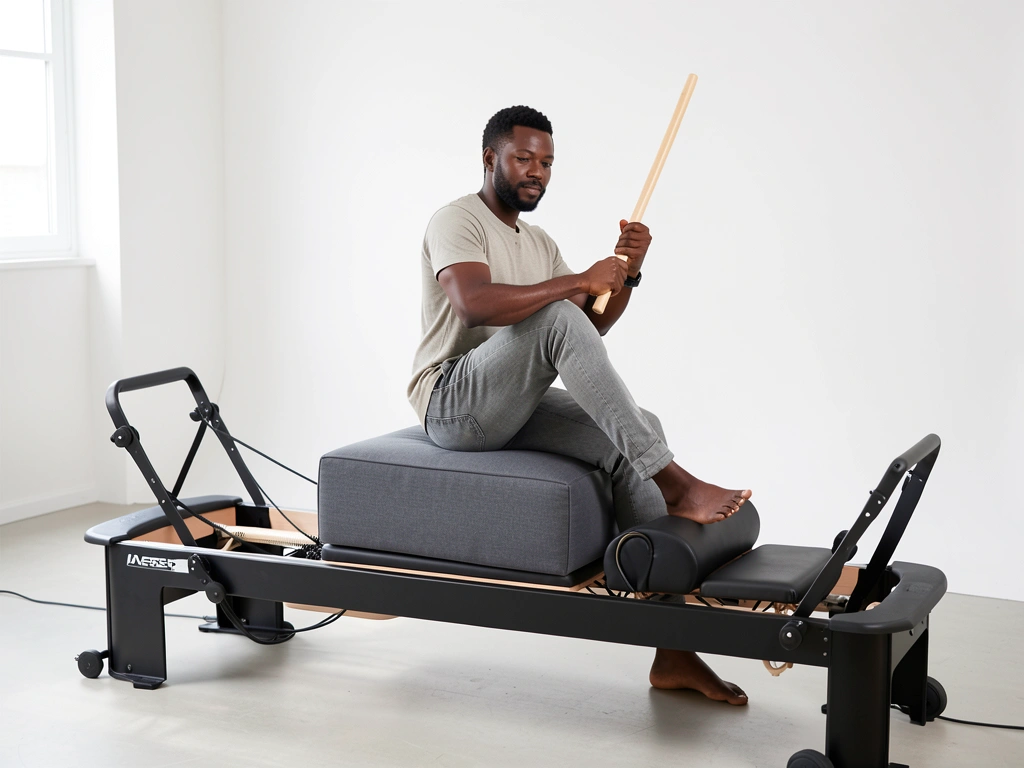
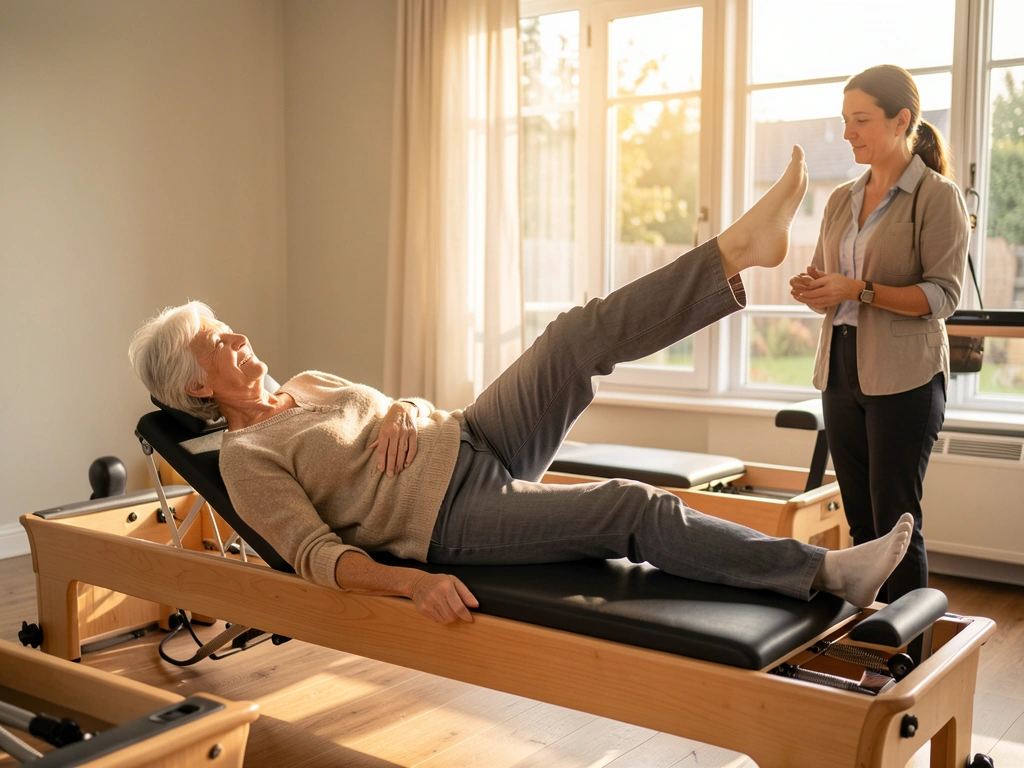
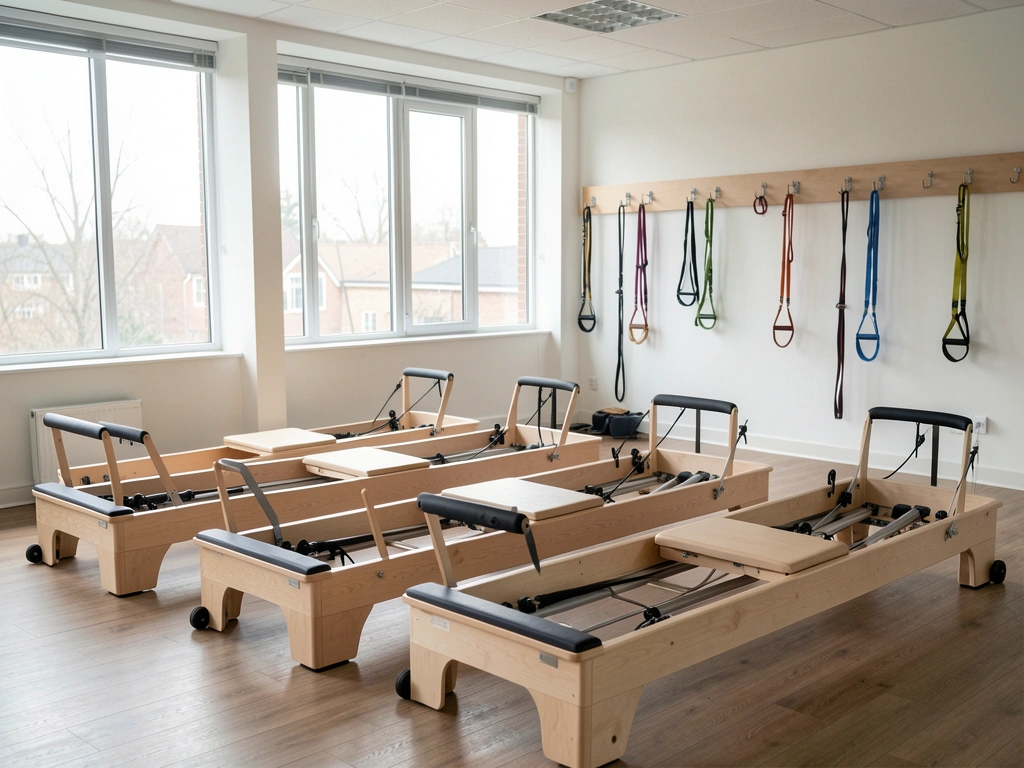
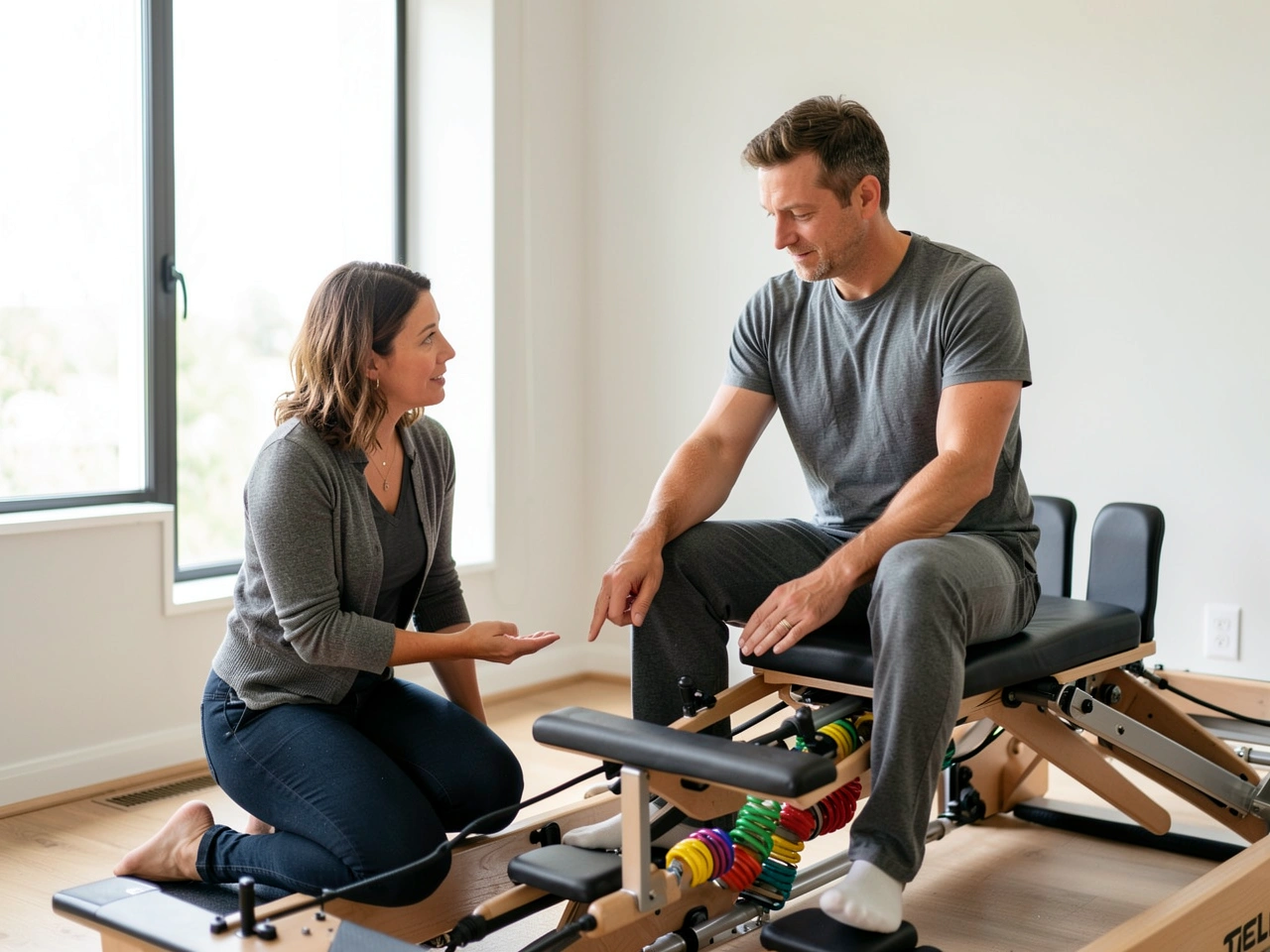
Tell the teacher about any injury, operation, back or joint problem, heart condition or pregnancy before your first introduction. Teachers can change positions, lighten springs and leave exercises out, but they do not diagnose pain or treat injuries, and some conditions need a go ahead from a doctor or physiotherapist first.
These are not pregnancy classes. Clients who already know the reformer can often carry on with changes after checking with their midwife or doctor, and anyone returning after a birth should wait until they have been cleared to exercise. Sharp pain, dizziness or numbness means stop and tell the teacher straight away.
Prices are per person. Packs work for every class and every teacher once the introductions are done.
2 sessions$70
a pack$140
a pack$260
a month$192
Twelve hours' notice returns a class to your pack. A machine left empty at shorter notice cannot be offered to anyone else, so late cancellations count as used.
Not harder, just different. Springs can add resistance or give support, so the same exercise can be made gentler or tougher than on a mat. Many beginners find the reformer easier at first, because the machine guides the movement.
The carriage moves and the springs change between exercises. Knowing the parts, the safe way on and off, and how each spring feels makes classes safer for you and for the seven people beside you.
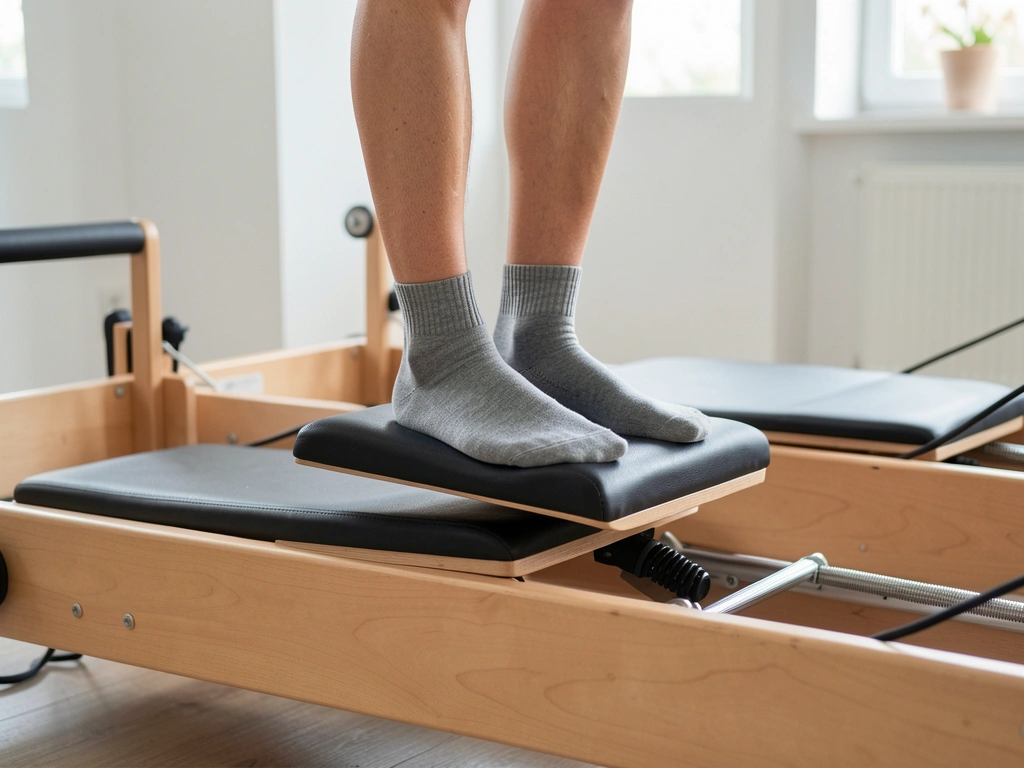
Fitted clothes without zips, buckles or belts that could catch or scratch the upholstery, plus grip socks, which are required on the machines. Socks are sold at the desk for $12.
Some people find that slow, controlled exercise helps them feel stronger, but a class is not treatment and nobody at the studio can promise it will ease pain. Back pain that is new, severe or still being investigated needs a doctor or physiotherapist first.
Say so in the booking request and the desk adds you to the waiting list. If a carriage opens up, the studio gets in touch, and nothing is charged unless you take the place.
Often, especially early in the morning. Eight is the most the room ever holds, because the teacher must see every carriage from the front.
Two introductions sounded like a lot, but the second one is where the springs finally made sense. The first group class felt calm rather than chaotic.
Back after a knee operation, with the physio's go ahead. The teacher swapped two exercises and lightened the springs without any fuss in front of the class.
The 07:00 Foundations never has more than eight and usually has six. Easy to ask a question when the teacher can see every carriage.
Choose the day you could first come in and whether mornings or evenings suit. Within one working day the desk confirms introduction one and pencils in introduction two, or proposes other slots.
Phone while the desk is staffed or email whenever it suits; a teacher answers questions about health or the machine.
Second floor of a converted print works beside the canal, with a lift from the courtyard
| Monday to Friday | 06:45 to 20:30 |
| Saturday | 08:30 to 13:30 |
| Sunday | Closed |
Arrive ten minutes early to fill in a short health form and put on grip socks. There are lockers, two showers and a quiet corner to wait in before class.
Book your introductionsThis reformer pilates studio website was built by AI from two sentences. Tell us about your business and yours is built the same way, with its pages, photos and booking in place, ready to preview in minutes.
About this sample page
Carriage Reformer Studio is invented, and its single page shows how a reformer studio might win over people who have never used the machine. The opening view describes the reformer in one sentence and promises eight clients at most, with a corner ribbon saying the same. Six cards then name the parts, four steps explain the two introductions, and a table sorts the classes by pace. A gallery shows the room, and a split on injuries and pregnancy sets out what a teacher can and cannot do. Prices, six questions, example reviews and the introduction request close the page once the reader is ready.
Your studio's own page begins with a few lines about your machines, your classes and the way newcomers start. The builder drafts the page from them, and each introduction request goes to the desk, where a teacher says yes, picks a different morning or turns it down, while payment stays between client and studio. Hosting begins only on publication, at $119 a year, with the domain bought as a separate item. Below, the full sample page explains why Carriage is laid out the way it is. Keep the plain description of the machine and the honest health advice, and replace everything else with your own studio.
The whole sample website of a reformer pilates studio, explained ·