Background checks
Identity, career history, directorships and public court records checked for a business partner, a senior hire or a landlord vetting a tenant, with consent wherever the law asks for it.
Standard checkfrom $290
Background checks, tracing and evidence gathering for private clients, solicitors and businesses. Every case begins with a check that the work is lawful and ends with a written report you can put in front of a lawyer.

Prices are starting points for a straightforward case in one country. You receive a fixed fee or an hourly budget in writing before any work begins.
Identity, career history, directorships and public court records checked for a business partner, a senior hire or a landlord vetting a tenant, with consent wherever the law asks for it.
A debtor, a missing beneficiary, a witness or a lost relative located from lawful sources. Where someone may not want to be found, we pass on a message rather than an address.
Observation in public places, witness statements and dated photographs gathered for your solicitor, with notes kept in the order a court expects to see them.
Company records, ownership, litigation history and reputation checked before you sign with a supplier, a buyer or an investor.
Court and tribunal documents handed over in person, followed by a signed statement of service saying when, where and how it happened.
Claims looked into for insurers and employers through interviews, records and site visits, always reported as findings rather than accusations.
Travel, court attendance and the search fees that registries charge are billed at cost and listed on your quote.
Laws on surveillance, privacy and personal data differ from one country to the next, so each request is checked against the rules where the work would happen. Some requests we refuse everywhere.
| You ask us to | Our answer | The reason |
|---|---|---|
| Check the history of a new business partner | Yes | Company filings, court records and references are open sources when used for a fair purpose |
| Find a debtor who has moved away | Yes | We trace lawfully and give the address to you or your solicitor for the legal process |
| Gather evidence for a court case | Yes | Observation in public places and signed witness statements, prepared for your lawyer |
| Follow a partner or a former partner | No | Watching or tracking someone for personal reasons can be harassment, and we will not do it |
| Read someone's messages, email or phone | No | Getting into another person's accounts or devices is against the law in most countries |
| Obtain bank, phone or medical records | No | Those records go only to the person concerned or to whoever a court orders |
| Hide a tracker on someone's car | No | Covert trackers on another person's vehicle are unlawful in many places and put people at risk |
Tell us what you need to know and why. The first conversation costs nothing and commits you to nothing.
Before accepting, we confirm the purpose is legitimate and the methods are allowed where the work takes place.
You receive the scope, the fee or hourly budget and what the report will cover. Work starts once you agree.
Records, interviews and observation exactly as agreed, with a short update each week on longer cases.
Findings, sources and photographs set out plainly, followed by a call to go through what they mean.

Every finding in a Greyline report says where it came from: a public register, a named witness, a dated photograph or the investigator's own notes. Your solicitor can follow the trail, and so can the other side, which is exactly the point.
Most instructions come from people who need facts for a decision or for a legal process.
We act for the person who instructs us and nobody else on the same matter, so a conflict check comes before every case.
Most of an investigation happens at a desk, on the telephone and in records offices, far more than in parked cars.




The report on our proposed distributor separated what was proven from what was rumour, page by page. It stopped us signing a contract we would have regretted.
They traced a cousin our family had lost touch with twenty years ago, then passed on our letter first so she could decide whether to reply. She did.
Statements and photographs arrived in the order our barrister asked for, every time and place noted. Nothing had to be redone before the hearing.
Rules differ by country. Some require investigators to hold a licence, while others regulate the work through privacy and data protection law. Our investigators hold whatever licence the place of work requires, and we show it before you instruct us.
No. We do not watch, track or investigate partners or former partners for personal reasons, because it can amount to harassment and can put people in danger. If you are worried about your own safety, call your local emergency number or a support service.
Often, from lawful sources, and we release it only for a legitimate reason such as a debt, a legal claim or an estate. If a person may be avoiding contact for their own safety, we decline or offer to forward a message instead.
No. Those records belong to the person and are released only to them or by court order. Anyone offering to obtain them for you is likely breaking the law, and evidence gathered that way can sink a case.
We gather evidence in ways courts generally accept and record how each item was obtained. Whether it is admitted is a matter for the judge, and your lawyer is the best guide to what your case needs.
You agree a fixed fee or an hourly budget in writing before work begins. Cases over $1,000 take half up front, the rest is invoiced with the report, and payment is arranged directly with us.
Describe the question in a few lines. A senior investigator reads every enquiry, answers within one working day and tells you plainly if it is work we cannot take.
Calls are answered by an investigator, never by a call centre.
| Monday to Friday | 08:30 to 18:00 |
| Saturday | By appointment |
| Sunday | Closed |
Cases across the country from our city office, and abroad through investigators we have worked beside for years. Clients meet us by appointment, at our office or at their solicitor's.
This private investigator website was built by AI from two sentences. Tell us about your business and yours is built the same way, with its pages, photos and booking in place, ready to preview in minutes.
About this sample page
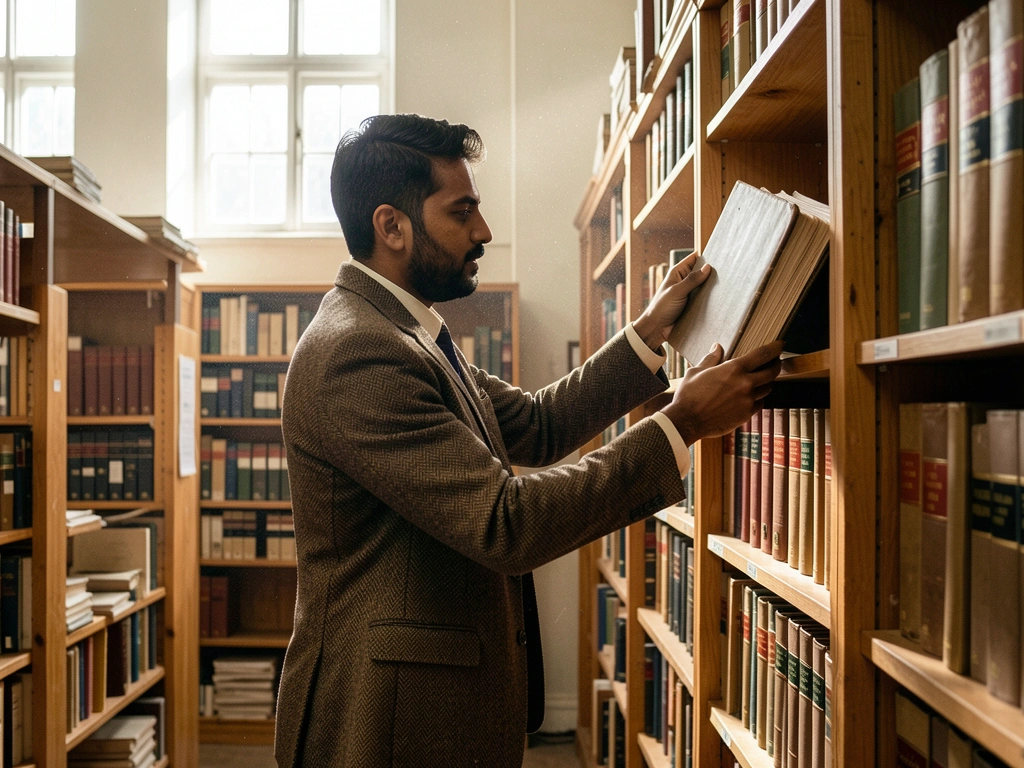
Greyline Investigations is a made up agency whose one page site shows how a lawful investigation firm can present its work on AI Web Maker. The opening view promises a reply within a working day, a fixed written quote and lawful methods, with a Confidential stamp pressed onto the hero photo. Six service cards follow with starting fees for background checks, tracing, evidence, due diligence, serving papers and insurance enquiries. A table then lists seven requests with an answer and a reason, and four of them are firm refusals. That candour about limits is the feature most worth borrowing.
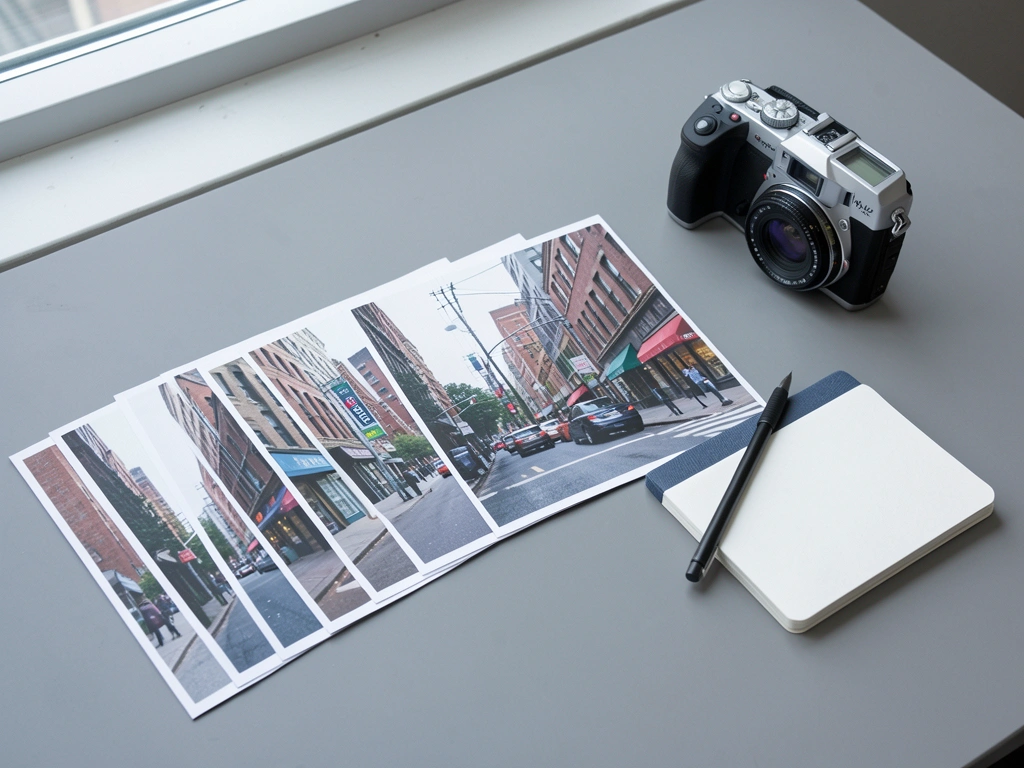
Further down, the case process runs in five steps and a reports section explains how each finding is sourced. A client list, a gallery of desk and archive work, example reviews and six questions settle the usual doubts before the enquiry form. On AI Web Maker, an agency writes a short account of its services and boundaries, and the builder lays out the pages and the form around that account. Enquiries arrive by form or phone, and fees are agreed with the client directly. An agency can rename the case types or reorder the sections and keep the same backbone.
The whole sample website of a private investigator, explained ·