Baby development
Babies who always turn their head one way, dislike tummy time or seem slower to roll, sit or crawl than you expected.
Little Steps Physiotherapy sees babies, children and teenagers about movement, development and sports injuries. A parent or carer stays for every session, and each plan is built from play and the routines your family already has.

Worried right now? If your child is badly hurt, struggling to breathe or hard to wake, call your local emergency number. For a sudden limp with a fever, or a baby who stops moving an arm or a leg, see a doctor today rather than waiting for physiotherapy.
These are the reasons families most often get in touch. If yours is not here, ask anyway: we will say honestly whether we are the right first step.
Babies who always turn their head one way, dislike tummy time or seem slower to roll, sit or crawl than you expected.
Toddlers who are late to walk, walk on their toes most of the time or seem to fall more often than other children their age.
Children who find running, jumping, catching or riding a bike harder than their friends, and are starting to avoid playground games.
Knee, heel and back pain in active children and teenagers, where growth and training load both need thinking about.
Getting back to the playground and to sport once the doctor or surgeon has said that physiotherapy can begin.
Help with movement and everyday activities alongside your child's medical team, for conditions that affect muscles, joints or nerves.

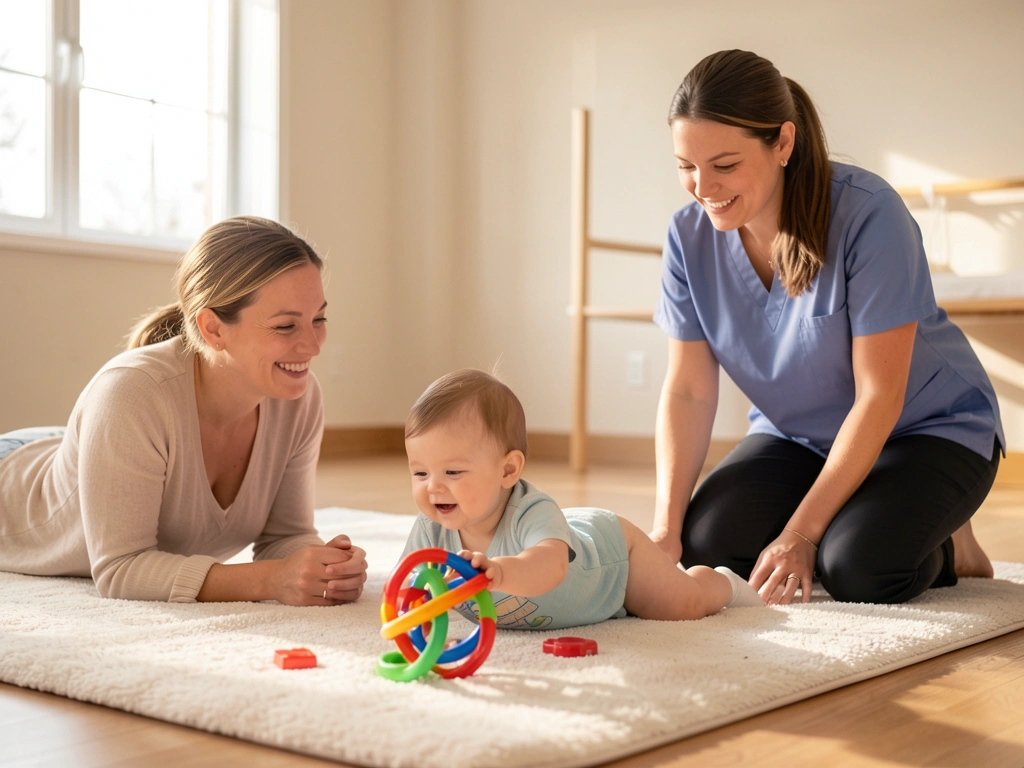
A parent or carer is in the room for every session, whatever the child's age. With babies you are often the one holding them while we guide your hands; with older children you join the games, and teenagers lead the conversation with you beside them.
Children develop at their own pace, and physiotherapy cannot cure a condition or promise a date for a milestone. What we can do is explain what we see, set small goals with you and say honestly when progress is slow or another professional should be involved.
From your first message to a written summary usually takes about a week.
Tell us your child's age and, in your own words, what you have noticed and when it started.
Within one working day a physiotherapist phones to listen, ask a few questions and check we are the right place to start.
About an hour of play, watching how your child moves, gentle handling and talking with you, always with you in the room.
What we found in plain words, two or three goals agreed together, home games, and a written summary within five working days.
Every child starts with an assessment. After that, families book one follow up at a time, as the plan calls for it, and nothing is paid in advance.
from$120
from$85
from$140
from$95
Cover for children's physiotherapy through insurance or public services differs from one country to the next, and some schemes want a doctor's letter first. Fees are settled directly with the practice after each appointment.
Sessions change with the child in front of us. This is roughly how an hour goes at each stage, and what we ask of you.
| Age | What we do | What you do |
|---|---|---|
| Babies, birth to 12 months | Floor play, positioning and gentle handling to see how your baby moves and what they enjoy | Hold, play and practise positions you can use at changing time and bath time |
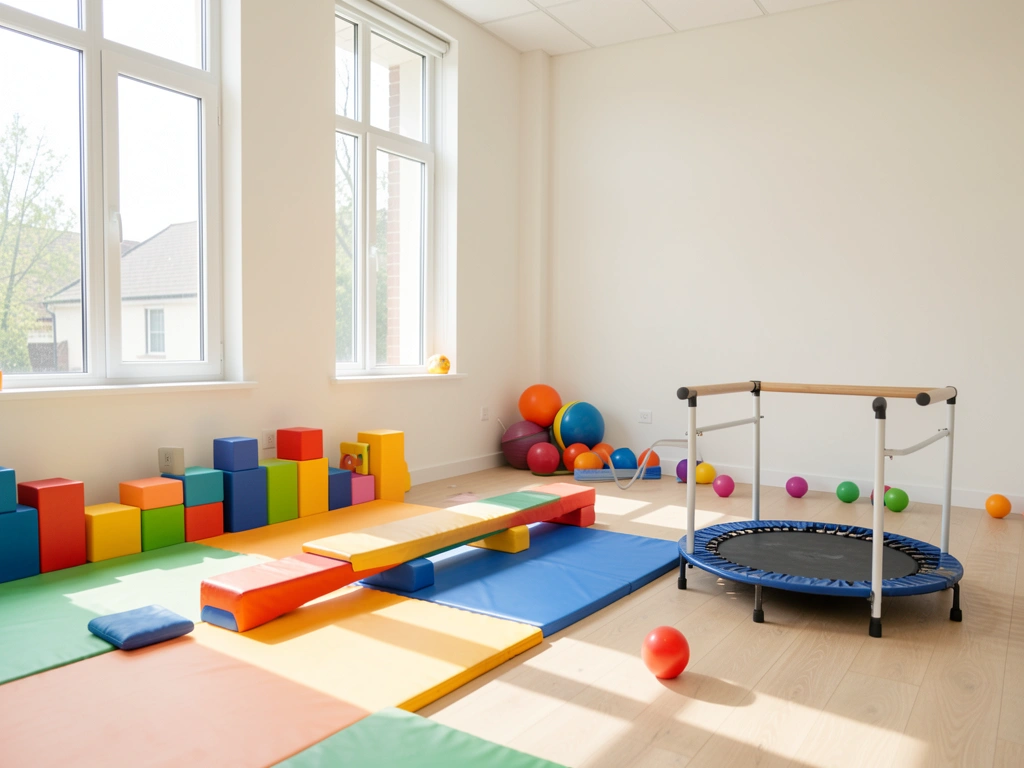
| Toddlers, 1 to 3 | Obstacle courses, steps, ball play and balance games on soft mats | Join the games and learn two or three to repeat at home |
| Children, 4 to 11 | Games for balance, coordination, strength and confidence, often linked to school sport | Help with short home games and tell us what school has noticed |
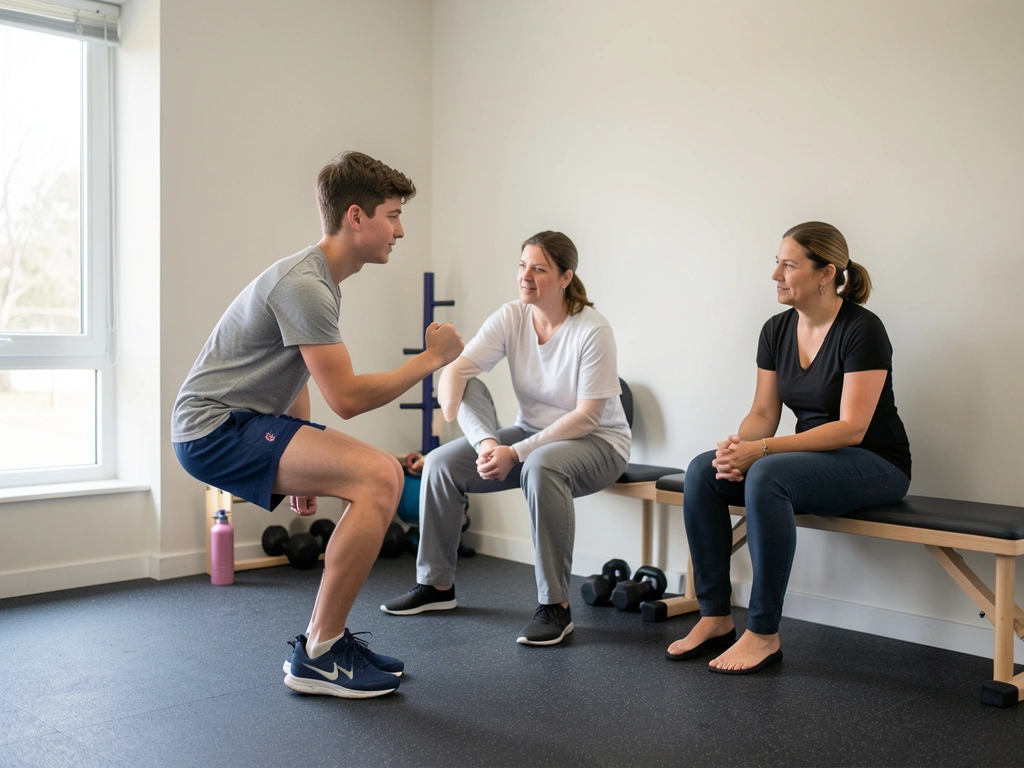
| Teenagers, 12 to 18 | Injury rehabilitation, strength work and a gradual plan for returning to sport | Stay in the room while your teenager leads the conversation |
Most sessions happen in the play room. Some happen at home, and a few in the small gym for young athletes.



Our son walked on tiptoe most of the time. The physio explained what she saw without frightening us, and the games at home were short enough to actually do.
Heel pain was keeping our daughter out of football. The plan balanced rest and training sensibly, and her coach got a clear note too.
Being in the room for every session mattered. Our baby was never handed to a stranger, and we left each time knowing exactly what to practise.
Yes. A parent or carer is present for every session, including home and nursery visits. It keeps children settled, and you learn the games and positions that matter most between appointments.
Families can book with us directly. Whether an insurer or a public service will contribute, and whether it wants a doctor's letter first, depends on the country and the scheme, so check with them. If we see something that needs a medical check, we tell you and, with your agreement, write to your doctor.
No, and we never claim to. Physiotherapy can help with movement, strength, balance and confidence. We set small goals with you, review them honestly and work alongside your child's doctor and other professionals.
It is one of the most common reasons families ask us, and an assessment can help. If your baby also seems unwell, feeds poorly or stops moving an arm or a leg, see a doctor first.
Comfortable clothes they can move and roll in, with bare feet or socks for the mats. For a young athlete check, bring the trainers they play their sport in.
When a child is unwell, has a fever with pain, a sudden limp, a hot swollen joint or pain that wakes them at night, see a doctor first. If it cannot wait, ring your local emergency number straight away.
Tell us who the appointment is for, their age and, in your own words, what you have noticed. A physiotherapist phones you within one working day to talk it through and offer a time.
Little Steps sits at street level, with no step at the door and a corner inside where buggies can wait. Ring while the practice is open; emails are read every weekday.
Ground floor practice near the town centre, with home visits within 8 km
| Monday to Friday | 08:30 to 18:00 |
| Saturday | 09:00 to 13:00 |
| Sunday | Closed |
With a family's agreement, we can visit a nursery or school, or talk with staff about a child's movement and play. A parent or carer joins every visit.
Ask about a visitThis paediatric physiotherapist website was built by AI from two sentences. Tell us about your business and yours is built the same way, with its pages, photos and booking in place, ready to preview in minutes.
About this sample page
Little Steps Physiotherapy is made up, and its one page shows how a children's physiotherapist on AI Web Maker can speak to parents with care. The opening chat answers the question parents ask first, whether they stay in the room, and a red band below it says when to see a doctor instead. Six reasons families get in touch follow, then a section that says plainly what physiotherapy cannot promise. Four steps, four fees and a table of sessions by age then deal with the practical questions. The page earns a parent's trust in that order, from safety to honesty to cost.
Setting up a page like this on AI Web Maker starts with a few lines about the children a physio sees, the appointments on offer and the rule on parents. From that the builder drafts the page, and parents' requests then arrive for the practice to take, shift to a different slot or turn down. Fees pass between the family and the physiotherapist alone, and AI Web Maker keeps no part of them. Nothing is billed while the draft is shaped; publishing brings hosting at $119 for twelve months or $19 month by month, and the domain is bought on top. Keep the safety band near the top and the parent rule repeated, and change every name, fee and photo to the practice's own.
The whole sample website of a paediatric physiotherapist, explained ·