Children's everyday skills
Handwriting, cutlery, buttons, scissors and the coordination that school, play and getting ready in the morning ask for.

Occupational therapy for children and adults who find dressing, writing, cooking, working or moving around the home harder than it used to be, or harder than it should be. We find out what gets in the way, then work on skills, equipment and small changes to the places you spend your time.
Occupational therapists look at the whole task, the person doing it and the place it happens. These are the reasons people most often come to us.
Handwriting, cutlery, buttons, scissors and the coordination that school, play and getting ready in the morning ask for.
Children who find noise, clothing labels or busy rooms hard to bear, and calm routines that suit home and the classroom.
Relearning washing, dressing and cooking after a stroke, a fall, an operation or a hand injury, at a pace you agree.
Pacing, energy saving and joint care, so arthritis, fatigue or pain take up less of the day you want to live.
Workplace assessments, desk set ups and a graded return plan agreed with you and, with your consent, your employer.
Bathing, stairs, getting out of bed and rising from a chair, with fewer risks of a fall for older adults.
Our therapists do not diagnose medical conditions or change medication. If something needs a doctor first, we tell you plainly and help you find the right service.
Most people go from the first message to a written plan in about ten days.
Tell us who the therapy is for, which tasks have become difficult and where you would like to meet.
Within one working day a therapist rings for ten minutes to check we are the right service and to choose a place.
Up to 75 minutes watching and talking through real tasks, at the clinic or on a visit to your home, school or work.
Within a week you receive goals written in your words, the sessions we suggest and any equipment worth trying.
Every client starts with an assessment. Sessions are booked one at a time, so there is never a course to pay for upfront. An assessment at home or at work is booked as a visit.
from$165
from$110
from$190
You pay the practice directly once each appointment is over. Insurers, employers and public schemes each have their own rules about paying towards therapy, and those rules differ between countries, so please check before the first visit. Appointments moved with less than 24 hours' notice are charged at half the fee.
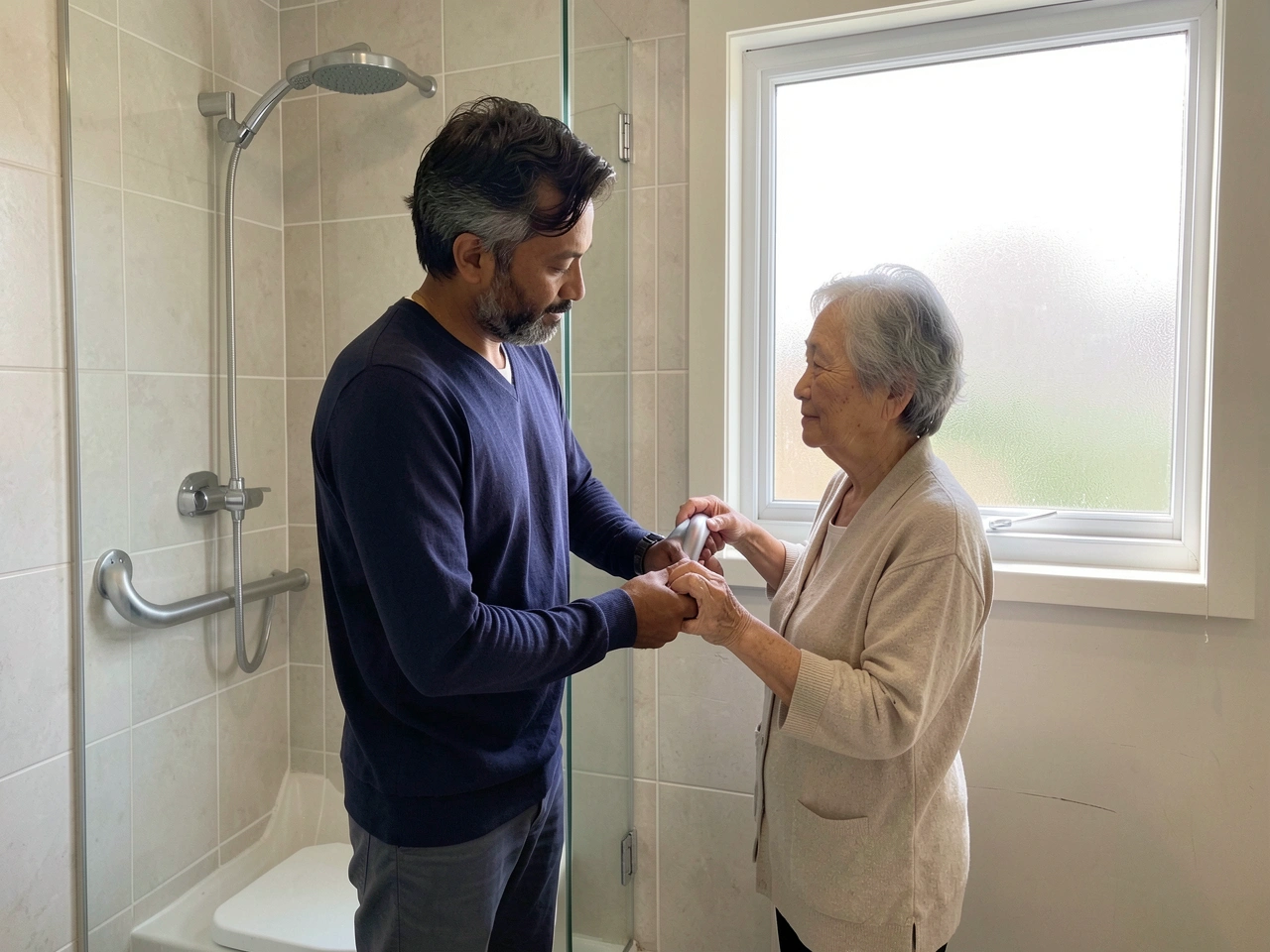
Many struggles and falls happen in the bathroom, on the stairs and when getting up from a low chair. On a home visit we watch how you move through an ordinary day, then suggest the simplest change first, such as a grab rail, a raised seat or a new way of doing the task.
When a bigger adaptation is worth considering, such as a level access shower or a stair lift, we write a clear summary that builders, landlords or funding bodies can work from. Funding for adaptations depends on your country and region, and we explain what we know about the options where you live.

Children come to us for help with handwriting, cutlery, getting dressed, riding a bike or coping with the noise of a classroom. Sessions look like play because play is how children practise, yet every activity is picked for a goal agreed with the family.
A parent or carer joins every session. With your consent we share ideas with the teacher too, so the same strategies are used at home and at school.
A few everyday examples. Every plan is built around the person, so the ideas below are a starting point rather than a prescription.
| Everyday task | What we look at | What might help |
|---|---|---|
| Getting dressed | Balance, reach, grip and the order of steps | Sitting to dress, simpler fastenings, a long shoehorn |
| Bathing | Getting in and out, standing time, wet floors | A bath board, a shower seat, well placed rails |
| Handwriting | Posture, pencil grip, letter shapes and speed | A sloped board, a pencil grip, short daily practice |
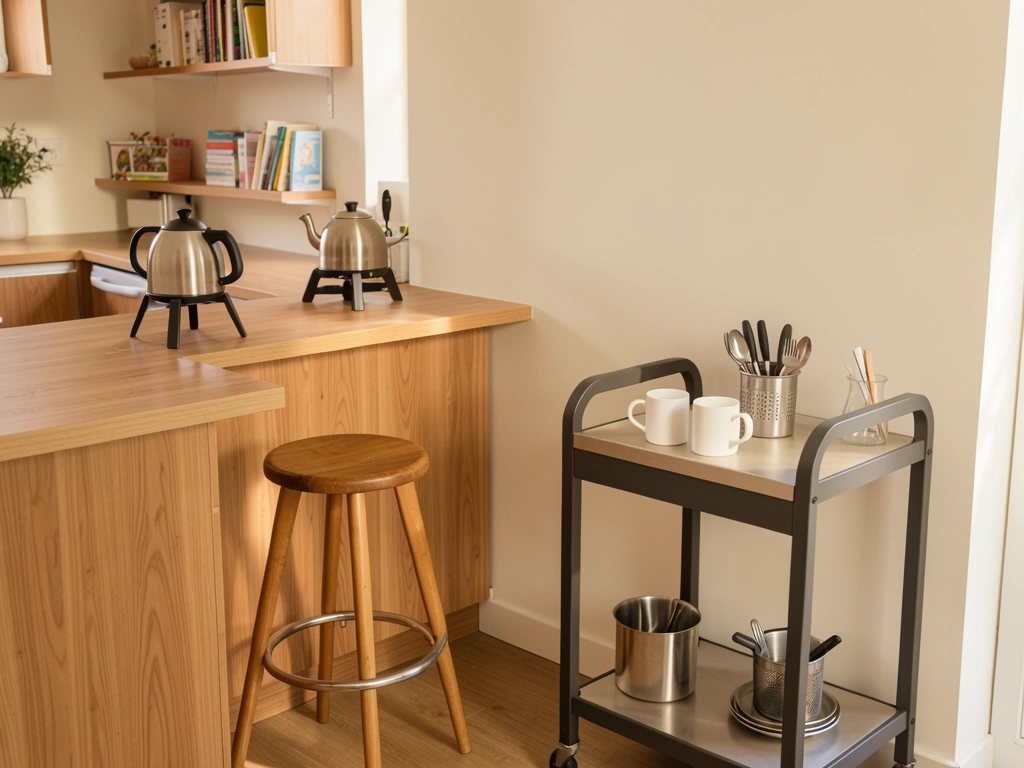
| Cooking | Standing time, carrying and planning the steps | A perching stool, a kettle tipper, a trolley |
| Desk work | Chair, screen height, breaks and pain | A new desk set up and a paced return plan |
We recommend equipment but never sell it, so the advice stays independent. We tell you where each item can be borrowed, hired or bought locally.
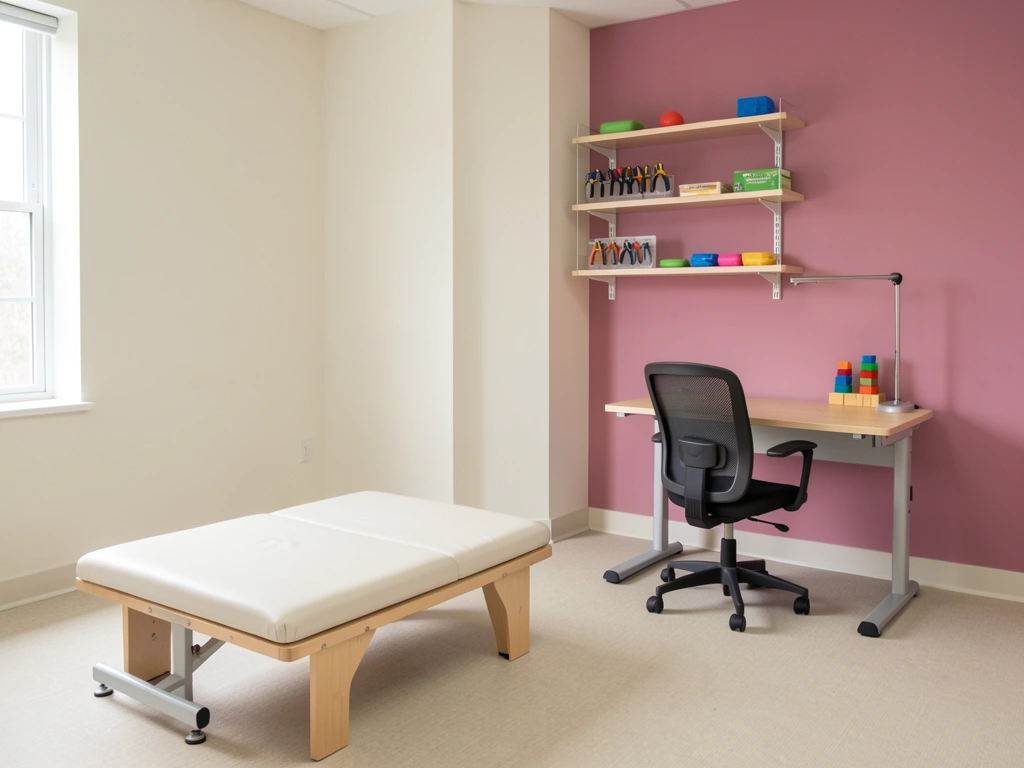
A quiet clinic room, a practice kitchen for trying out equipment, and visits wherever the difficulty actually shows up.

Getting out of the chair and into the shower felt risky after the hip operation. One home visit, two rails and a bath board later, mornings feel ordinary again.
Homework used to end in tears over handwriting. The games were fun, the school used the same ideas, and now a full page gets written without a fight.
The return plan started with three short days a week and a new desk set up agreed with the manager. Clear, steady and never rushed.
Not to book with us privately. Some insurers, employers and public funding schemes want a referral before they contribute, and the rules vary by country, so check before the first appointment. With your consent we keep your doctor informed.
Physiotherapy focuses mainly on movement, strength and pain. Occupational therapy starts from the tasks you need and want to do, such as washing, cooking, writing or working, and makes them possible through practice, equipment or changes to the setting. The two often work side by side.
Yes. Home and workplace visits within 15 km cost $190 and take about 90 minutes. School visits are arranged with the family and with the school's agreement.
Each therapist holds a degree in occupational therapy and is registered with the regulator for occupational therapists where we practise. Titles and registration differ from one country to another, so if you see a therapist elsewhere, look them up on the register that covers that country.
No. We do not diagnose conditions or change medication, and we ask you to see your doctor about any new or worsening symptom. Our role is the practical side of daily life, alongside the care your doctor gives.
We are not an emergency service, and messages are read during clinic hours only. After a fall with an injury, sudden weakness or confusion, or any other emergency, call your local emergency number straight away.
Tell us who the appointment is for, where you would like to meet and the day that suits you. A therapist replies within one working day to confirm a time or offer the nearest open one.
This form is read during clinic hours only. If it is an emergency, call your local emergency number.
Call during clinic hours, or email at any time and a therapist answers the next working day.
A ground floor clinic with level access beside the community library, plus visits to homes, schools and workplaces across the city
| Monday | 08:30 to 17:30 |
| Tuesday | 08:30 to 19:30 |
| Wednesday | 08:30 to 17:30 |
| Thursday | 08:30 to 19:30 |
| Friday | 08:30 to 15:00 |
| Saturday and Sunday | Closed |
Everything is on one level, with an entrance that has no steps, wide doors and an accessible toilet. Two parking bays sit beside the entrance, and the community bus stops outside the library.
This occupational therapist website was built by AI from two sentences. Tell us about your business and yours is built the same way, with its pages, photos and booking in place, ready to preview in minutes.
About this sample page
Everyday Ability Occupational Therapy is not a real practice; its one page site shows how an occupational therapist might present services, fees and appointments on AI Web Maker. The opening view carries a band of everyday tasks, so visitors see their own difficulty before they read a single professional term. Cards for children, adults returning to work and older people at home follow, along with a plain note about what the therapists do not do. Fees, home visits and a table of tasks and ideas answer the practical questions that usually delay a booking. The result is a calm page that leads from a familiar problem to a short request form.
Setting up a site like this starts from a few sentences about the practice, from which the builder produces a draft with services, fees and a request form in place. Requests then arrive for the practice to confirm, reschedule or decline, and clients pay the practice themselves. Hosting at $119 a year starts on the day the site goes live, and the domain is a separate purchase. A fuller tour of every section, with the reasons behind each one, sits on the sample page linked below. Any practice can reorder these parts so that its strongest service comes first.
The whole sample website of an occupational therapist, explained ·