Antenatal visits
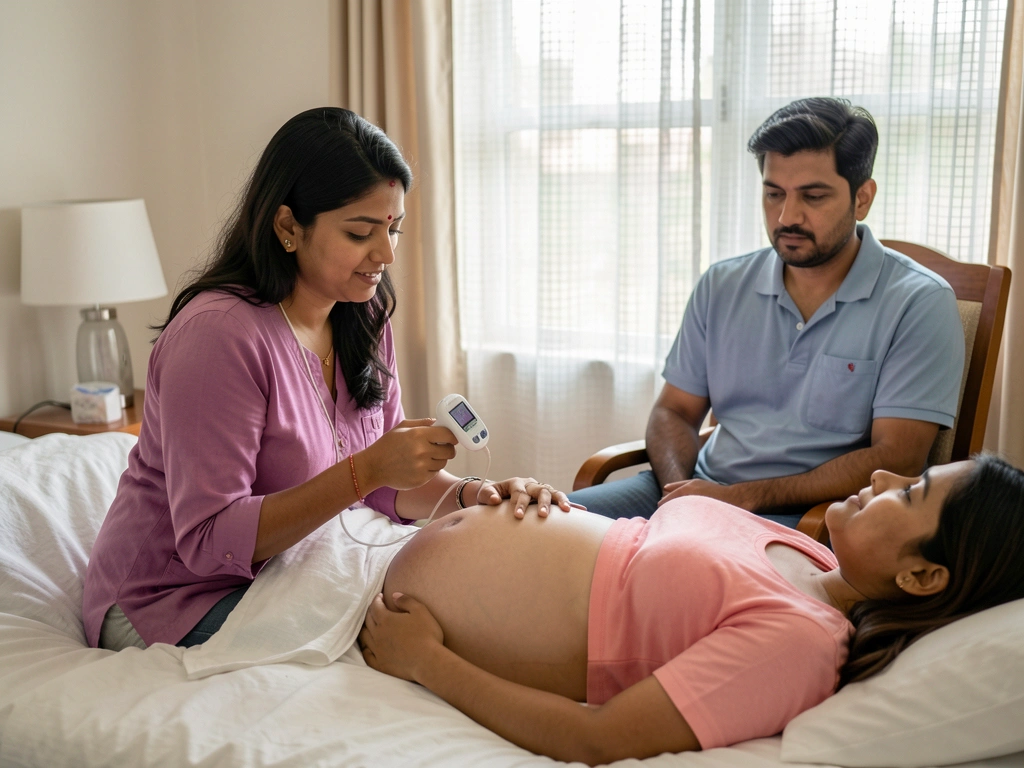
Hour long visits at home: checks for you and your baby, time for questions and a birth plan written together.

An independent midwife who gets to know you over months, attends your birth at home or comes with you to hospital, and visits through the weeks after. Riverbend works alongside your local maternity services and does not replace emergency care.
Every family has a named midwife and a named second, so the faces at the birth are faces you already know.
Hour long visits at home: checks for you and your baby, time for questions and a birth plan written together.
Two midwives attend, bring the equipment and stay until you, your baby and the room are settled.
We come with you as a companion, or as your midwife where the hospital has agreed it, and speak up for your plan.
Home visits on the first, third, fifth and tenth days, then weekly until six weeks after the birth.
Help with breast, bottle or both, at the kitchen table and at whatever pace suits you.
A visit to go over what happened and why, with the notes in front of us, whenever you are ready.
Riverbend works alongside your local maternity services and does not replace them or emergency care. You stay booked with your local hospital or birth centre the whole way through.
| Part of your care | Your local maternity service | Riverbend |
|---|---|---|
| Scans and screening tests | Arranges and carries them out | Explains the choices and comes with you if you wish |
| Checks in pregnancy | Available to you as usual | Longer visits at home, with notes shared with you |
| Birth at home | Informed, and ready to receive you if a transfer is needed | Two midwives attend, with a transfer plan agreed beforehand |
| Birth in hospital | Hospital staff lead your care | Comes as your companion, or as your midwife where allowed |
| An emergency at any stage | Emergency services and the hospital take over | Calls for help, stays with you and hands over clearly |
| After the birth | Usual checks for you and your baby | Home visits to six weeks, feeding help included |
If something feels wrong, such as bleeding, strong pain, your baby moving less than usual or your waters breaking early, call your maternity unit or your local emergency number straight away, day or night, and then let us know. What an independent midwife may do, and where, is set by each country's own rules; the first meeting covers how they work in this area.
Every plan is agreed in writing at the first meeting. The figures below are example fees in US dollars, paid in stages as care goes on.
from$1,400
from$4,600
from$950
A plan can be paused or stopped at any stage, and you pay only for the part of it that has been given.
An hour at your home with no commitment, to talk about what you hope for and what worries you.
Monthly at first, then every two weeks, each one about an hour long.
A visit at 36 weeks to plan the room, the route to hospital and who to ring.
From 37 weeks a midwife answers the on call line at any hour.
Two midwives come to you at home, or one meets you at the hospital.
Visits on days one, three, five and ten, then weekly until six weeks.

A home birth is planned weeks ahead: where the pool or mat goes, how an ambulance would reach the door, and which hospital you would go to if plans change. We talk openly about the times hospital is the safer place, and a plan can change at any point, including on the day.
On the day, two midwives bring the equipment, watch over you and your baby, and keep clear notes that go with you if you transfer.
Our second baby came at home in the small hours, with the same two midwives who had sat at our kitchen table since spring. When labour slowed they were calm and clear about our options.
The plan was a home birth, and in the end it was a transfer to hospital. Our midwife came in the ambulance, handed over to the hospital team and was at our door three days later.
Feeding was the hard part for us. Six visits after the birth, each one unhurried, and a phone call when we needed one in between.



The first meeting is an hour at your home, at no charge and with no commitment. Tell us roughly when your baby is due and which kind of care you have in mind.
Expect an answer inside two working days: a day that suits, another to choose from, or an honest word if our diary is already full for your due month.
Yes. You stay booked with your local maternity service, and its scans, tests and care stay open to you. We share notes with them when you agree, so nothing falls between us.
The midwives call emergency services, keep caring for you and your baby, and travel with you to hospital or hand over in person. Every home birth plan names the route and the hospital before the day.
We stay with you as your companion and keep supporting you and your partner. The hospital team carries out the operation and leads your care while you are there.
Both midwives are registered with the national regulator and hold the professional cover the local rules require, and you can see the details at the first meeting. Rules on registration and cover vary by country.
Any time in pregnancy. Full care is easiest to arrange before 30 weeks, and postnatal care can be booked right up to the birth.
Call your local emergency number first, then our on call line. Talking through this case is part of every birth plan, so you know what to do.
The office phone is answered on weekdays. Families in full care from 37 weeks have the on call number, which a midwife answers at any hour.
Homes within about 40 minutes of the river towns, and both local hospitals
| Office | Weekdays, 09:00 to 17:00 |
| On call line | Any hour from 37 weeks |
| Home visits | By arrangement |
Homes within about 40 minutes of the river towns, and both local hospitals for births. Further away, ask and we tell you plainly whether we can reach you in labour.
This midwife website was built by AI from two sentences. Tell us about your business and yours is built the same way, with its pages, photos and booking in place, ready to preview in minutes.
About this sample page
Riverbend Midwifery is a fiction, and its page shows how two independent midwives could present their care on AI Web Maker. Stars and a crescent moon sit over the opening photo, beside a line saying the practice works alongside local maternity services and does not replace emergency care. Six care cards follow, then a table dividing each part of care between the local service and Riverbend. Three plans with example fees, a timeline to six weeks after birth and a band on home births come next. Each part answers a question a family would otherwise save for the first meeting.
A midwife on AI Web Maker describes the care on offer and the area covered, and gets back a drafted page, meeting request form included, to rework. Families send the care they want, a due date and a day to meet, and the practice confirms, moves or declines each request, settling fees directly. Hosting the finished page costs $119 for a year or $19 for a month, the domain is bought separately, and drafting is never billed. The notes further down this sample page explain why the shared care table sits so high and why one review describes a transfer. A real practice could keep that order and bring in its own names, fees and photos.