Homework help
A weekly hour that works through the class topic before the homework is due, so the evening at home is practice rather than panic.
60 minutesfrom $50
One to one tutoring for school and college students aged 10 to 19, in person or online, matched to each student's age, level and course. Homework stops being a battle, revision gets a plan, and confidence grows with every problem solved.
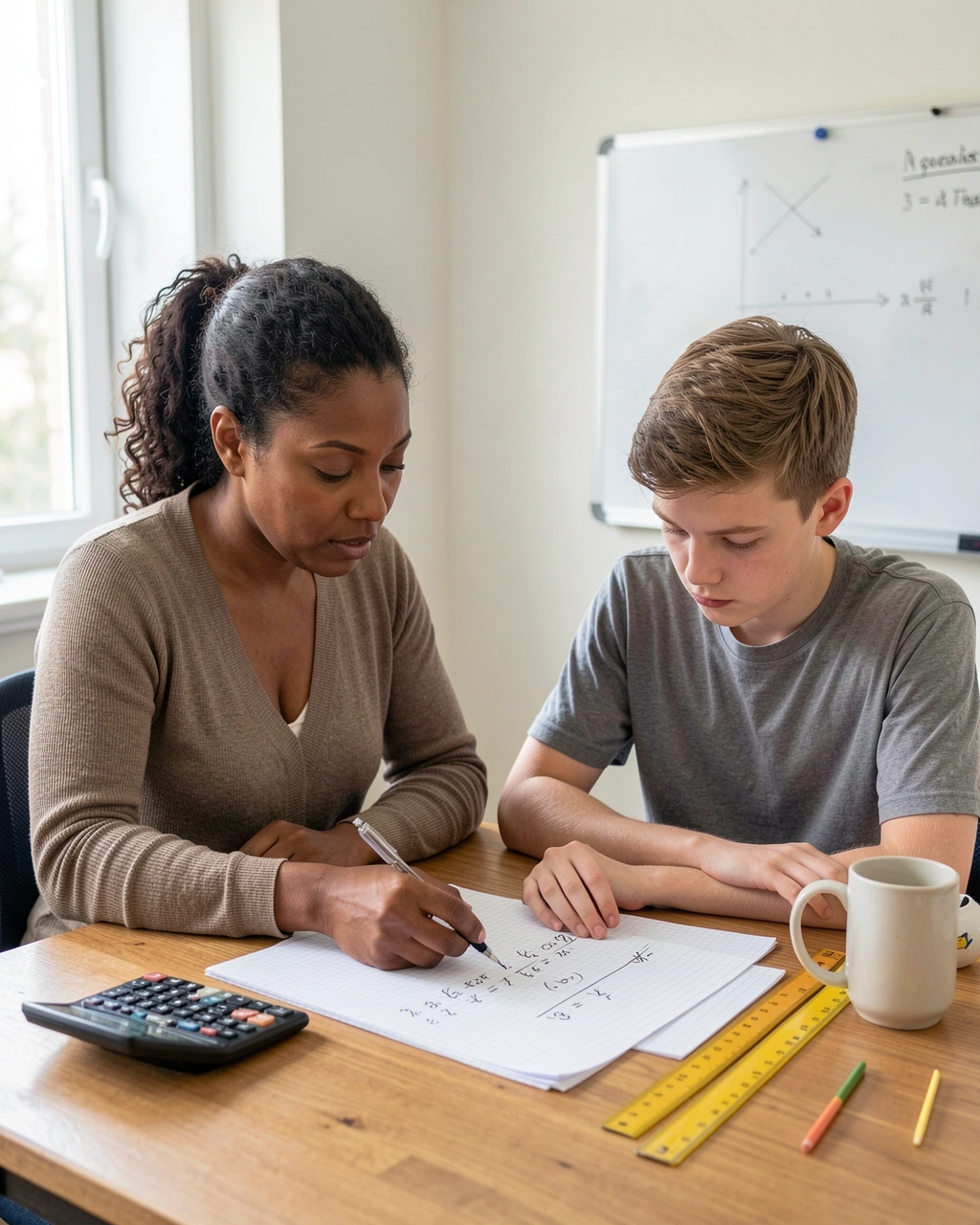
Leila Haddad taught secondary maths for eleven years before tutoring full time. These are the topics students most often bring at each stage.
| Ages | Typical topics | What sessions focus on |
|---|---|---|
| 10 to 11 | Fractions, place value, times tables, word problems | Number fluency and reading the question carefully |
| 11 to 14 | Negative numbers, first algebra, ratio, angles | Neat working and habits that last |
| 14 to 16 | Quadratics, simultaneous equations, trigonometry, probability | Exam style questions and timing |
| 16 to 19 | Calculus, statistics, mechanics, proof | College courses and longer problems |
Curricula, course names and exams differ from country to country, so the first session maps every topic to the course the student actually follows.
A weekly hour that works through the class topic before the homework is due, so the evening at home is practice rather than panic.
A topic plan worked back from the exam date, past style questions under timed conditions and a short list of mistakes to stop repeating.
For students who have decided they are bad at maths. Slow sessions that go back to the missing piece, often years old, and build forward from there.

Most maths trouble starts with one topic that never quite landed, and everything built on it wobbles. The first session is a relaxed, untimed check of earlier topics, mixed with a conversation about how maths feels, so the student is never put on the spot.
Afterwards parents receive a short written note: what is secure, where the gap seems to be and the three priorities for the next few weeks. That note becomes the plan, and it is updated every fourth session.
Last week's hardest question, done again without help, to check it stuck.
One new idea, explained two ways and drawn on the board or the shared screen.
Guided questions that get gradually harder, with every line of working shown.
A recap in the student's own words and three questions to try before next week.
Every session lasts 60 minutes. Online and in person sessions follow the same plan, so a student can switch between them.
a session$50
a session$58
ten hours$480
Sessions are paid to the tutor directly, before each month or block begins. Move or cancel with 24 hours notice at no cost; a session missed without notice is charged.
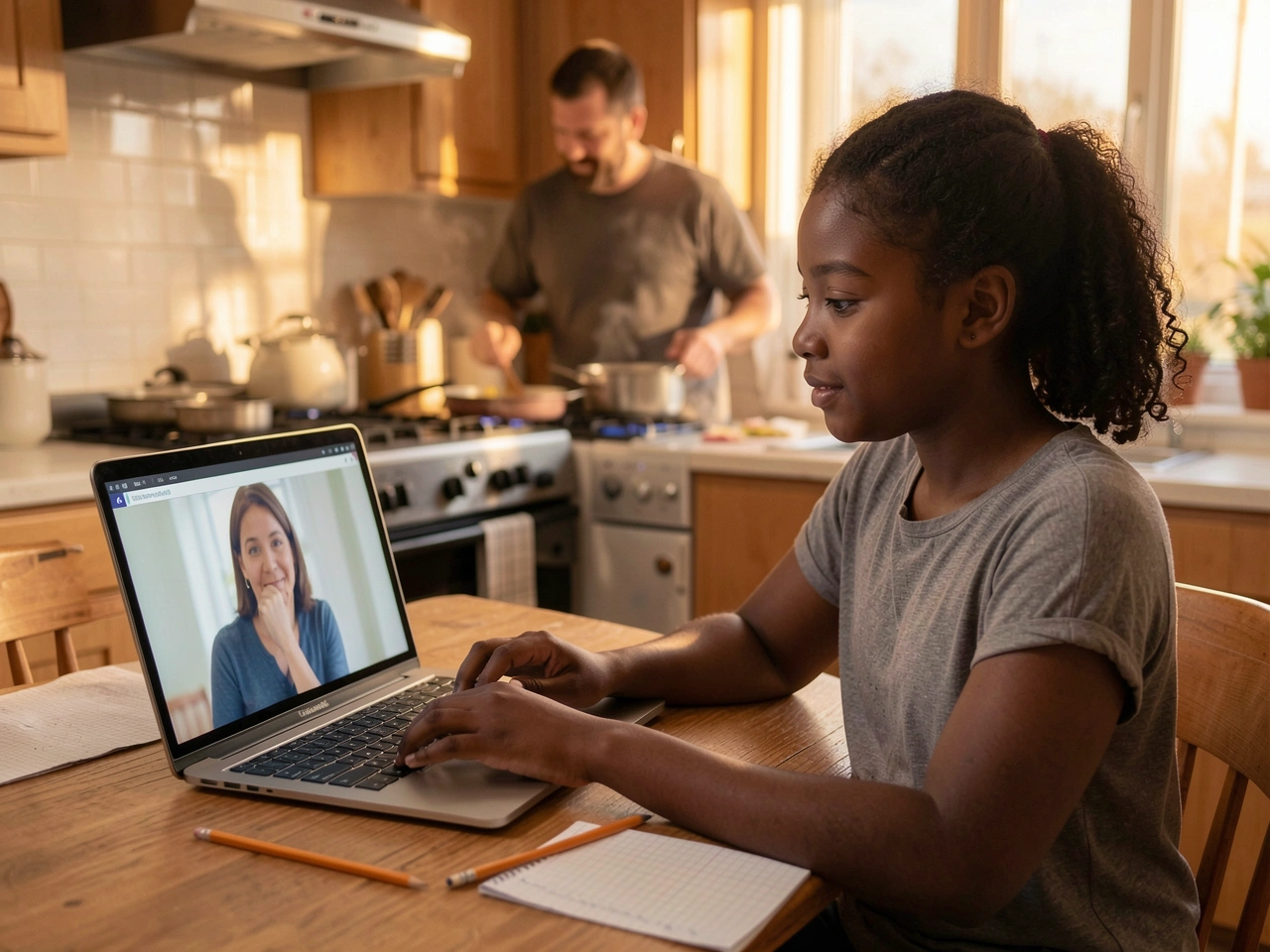
Leila holds the background check required for anyone tutoring children where she works, and renews it as the rules require. Those rules vary between countries, and a copy is shown to any parent who asks before the first session.
Any parent can join a session, beside the desk or on the screen. The study room door has a glass panel, home visits only go ahead with another grown up somewhere in the house, and online sessions happen with the camera on in a shared room. Progress is reported honestly, and no tutor can promise an exam grade.


Fractions homework used to end in tears. After a term of Tuesday sessions our daughter explains her working to us, and the arguments at the kitchen table have stopped.
The online revision block was calm and organised: one topic a week, timed questions and a note to us at the halfway point. Our son went into his college exams knowing how to start every calculus question.
She arrived convinced she was bad at maths. The first session found the missing piece, negative numbers from years ago, and the topics after it finally began to click.
Every student moves at a different pace, and no tutor can promise a mark or a grade. What Proof Point does promise is an honest note every fourth session saying what is now secure, what still wobbles and what comes next.
For most students over eleven, yes. A shared whiteboard shows every line of working, and photographed homework comes back marked. Younger children and very anxious students often settle better in person at first.
A laptop or tablet with a camera, a quiet corner of a shared room, squared paper, a pencil and the student's calculator. A phone works for the video but is small for the whiteboard.
Yes, and many do. Bring the homework sheet or describe the class topic in the request, and the hour is built around it while still closing older gaps.
Sessions start with something they can already do, questions are never timed until they are ready, and mistakes are treated as the useful part. Parents are welcome to sit in while trust builds.
Ideally two terms ahead, which leaves time to fix gaps before revision begins. A ten hour block in the final weeks still helps, but it can only focus on the most important topics.
Choose online or in person, say what kind of help is needed and pick a day and a time. Leila writes back within a working day, confirming the session, proposing another slot or explaining that her week is already full.
Leila is usually mid session in the evenings, so email is the quickest way to reach her during teaching hours.
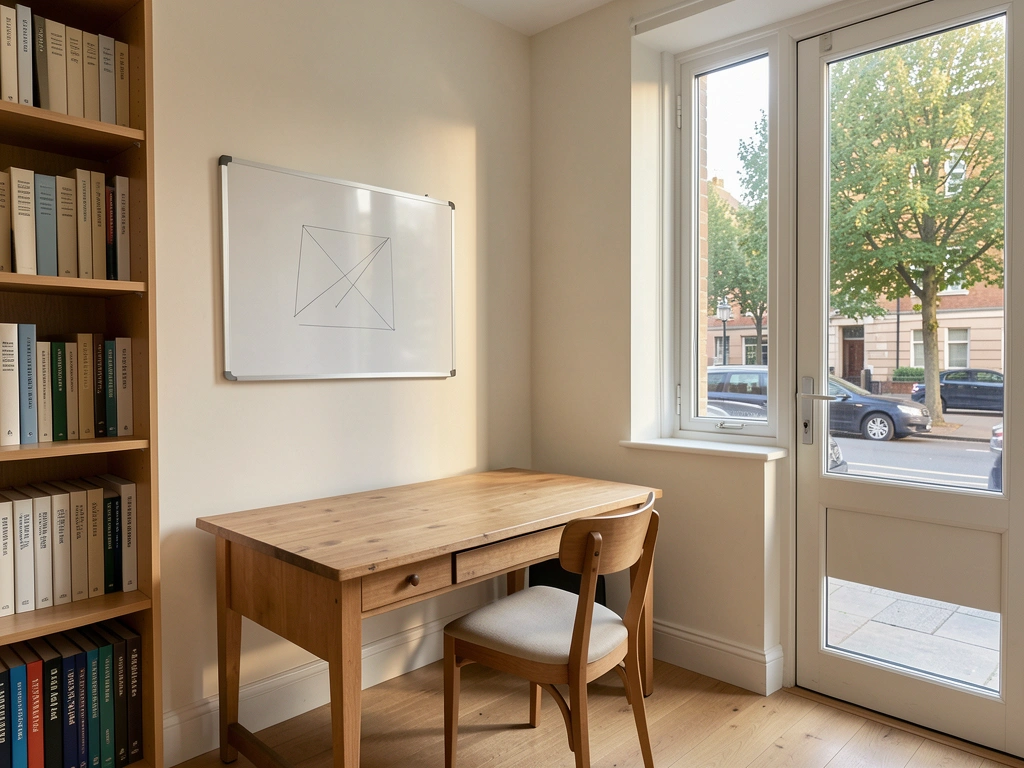
A ground floor study room a short walk from the high street, home visits within about four miles, and online anywhere
| Monday to Friday | 15:30 to 20:30 |
| Saturday | 09:00 to 14:00 |
| Sunday | Closed |
Online sessions run in the same hours from anywhere with a steady connection. A link for the video and the shared whiteboard is emailed to a parent the day before.
This maths tutor website was built by AI from two sentences. Tell us about your business and yours is built the same way, with its pages, photos and booking in place, ready to preview in minutes.
About this sample page
Proof Point Maths Tutoring is invented, yet the single page it lives on shows a maths tutor winning a parent's trust before the first session. A ruler wipes the mist from the hero photo, a small picture of what tutoring should do for a confused student. A table of topics by stage lets parents find their child's level, and three cards name the usual reasons families get in touch. The first session, the shape of one hour and the fees for online, in person and block sessions follow in turn. By the time the safeguarding section and the booking form appear, a parent knows exactly what they are asking for.
Any maths tutor could set up a page in this mould on AI Web Maker, starting from the ages, topics, formats and fees they offer. The builder drafts the page and its booking form, and the tutor edits both in preview before publishing. Session requests then arrive for the tutor to accept, move or decline, while fees stay between tutor and family. Once public, the site carries a hosting charge of $119 yearly or $19 monthly, and its domain is bought apart from that. The section notes further down explain why each part sits where it does, so a real tutor can adapt it with confidence.