Naming ceremony
Namkaran, a blessing and the naming of a new baby, usually held in the weeks after birth.
InThe temple or at home
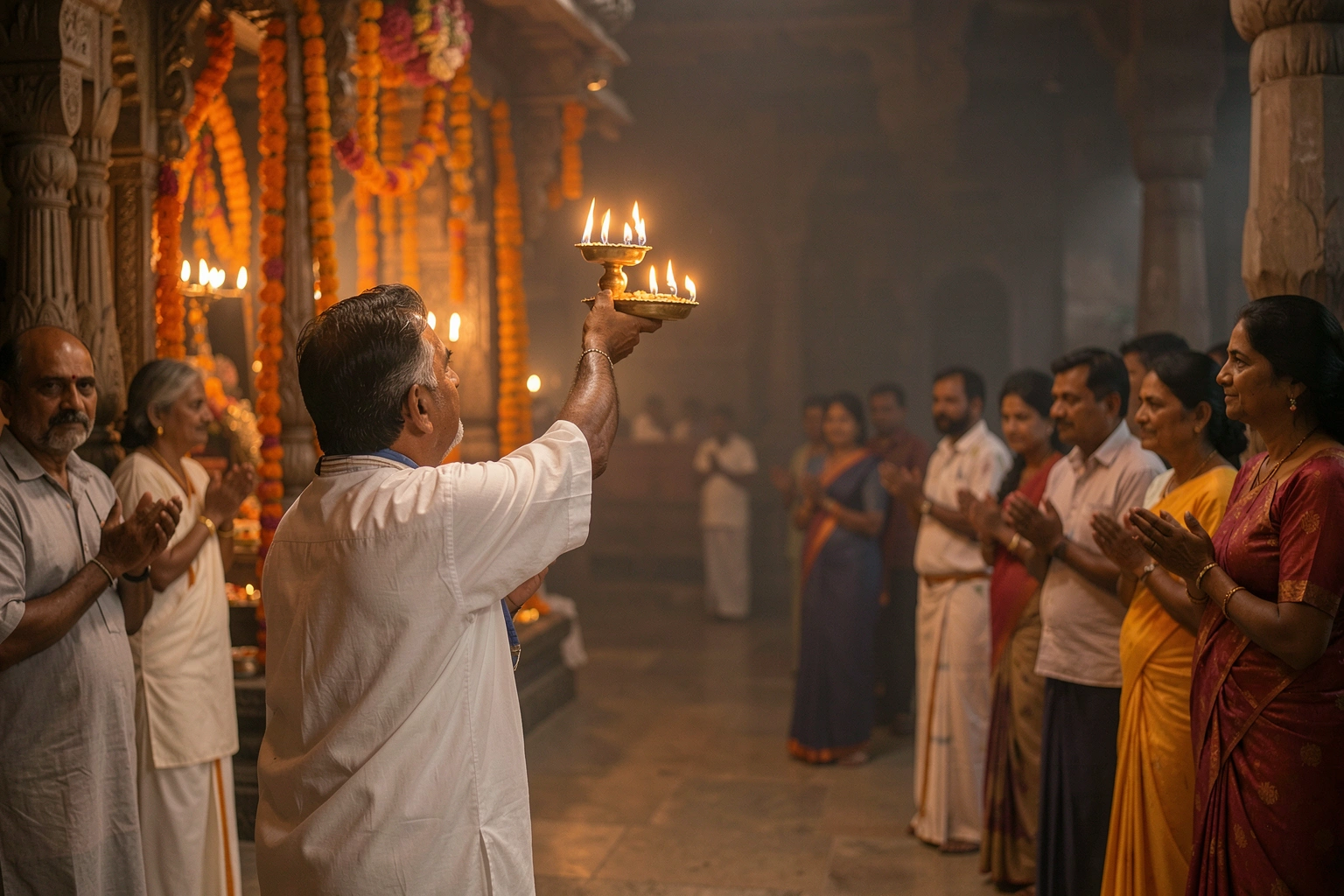
Shanti Mandir Hindu Temple holds aarti every morning, noon and evening, keeps the festivals of the Hindu year, teaches classes for children and adults, and serves a vegetarian meal every Sunday. Guests from every faith and from none are welcome; come to an evening aarti or ask the office to arrange a guided visit.
These times show how a normal day runs; they are an example, not a promise for today. The hours change with the seasons and stretch on festival days, so please check the sheet for the week, posted in the shoe room and on the notice board, before you travel.
| Monday to Friday | Weekends | |
|---|---|---|
| Temple opens | 07:00 | 08:00 |
| Morning aarti | 07:30 | 08:30 |
| Midday aarti | 12:00 | 12:30 |
| Shrines rest, hall closed | 12:30 to 16:30 | 13:00 to 16:00 |
| Evening aarti | 19:00 | 19:00 |
| Temple closes | 20:30 | 21:00 |
Darshan, the chance to stand before the shrines, is possible whenever the temple is open and the shrine curtains are drawn back. On festival days extra pujas are added and the evening aarti may start later.
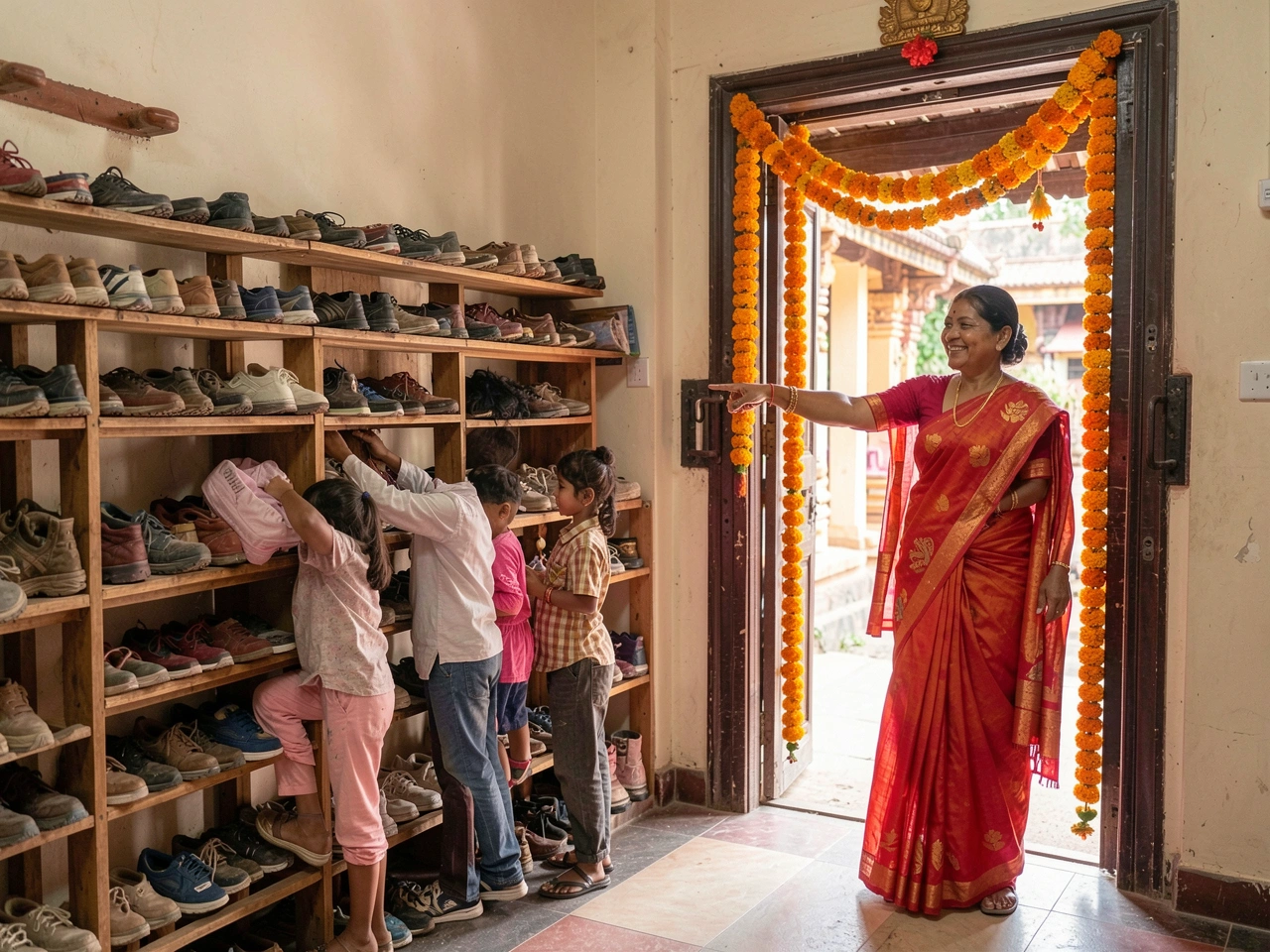
Please wear clothes that cover the shoulders and knees; scarves and wraps can be borrowed at the entrance, and covering the head is not required. Shoes come off in the shoe room before you step into the hall, and many visitors leave leather belts and bags in the lockers there too. Please bring no meat, fish, eggs or alcohol onto the temple grounds.
During aarti the priest brings the lamp round; you may pass your hands over the flame and touch them to your eyes, or simply stand and watch. You may be offered prasad, food that has been blessed, which is taken with the right hand. Photos are welcome in the hall outside aarti, but please do not photograph the shrines or anyone at prayer.
The temple priests lead ceremonies for the turning points of family life, in the temple or at home. Call the office first, and a priest will talk through what the family would like.
Namkaran, a blessing and the naming of a new baby, usually held in the weeks after birth.
Annaprashan and mundan, small family ceremonies for a child's early milestones.
A vivah ceremony around the sacred fire in the hall, planned with a priest over several meetings.
Griha pravesh, a puja held at the family's new home before they move in.
A fire ceremony for a birthday, an anniversary or a family occasion, in the temple's havan room.
Prayers with the family, help with funeral rites and a gathering at the temple in the days that follow.
Families are asked for a suggested offering towards the priest's time and the materials used, and the office explains it plainly when you call; nobody is turned away. Whether a temple wedding is also a legal marriage depends on the country, so couples check with the local registrar.
Classes run in term time and are open to anyone, whether or not they come to the temple.
Sunday school for ages 5 to 14: stories of the festivals, simple prayers, crafts and values.
Reading the script and everyday conversation for children and adults, in separate groups.
Devotional singing with harmonium and tabla, for any voice; the words are shared on paper.
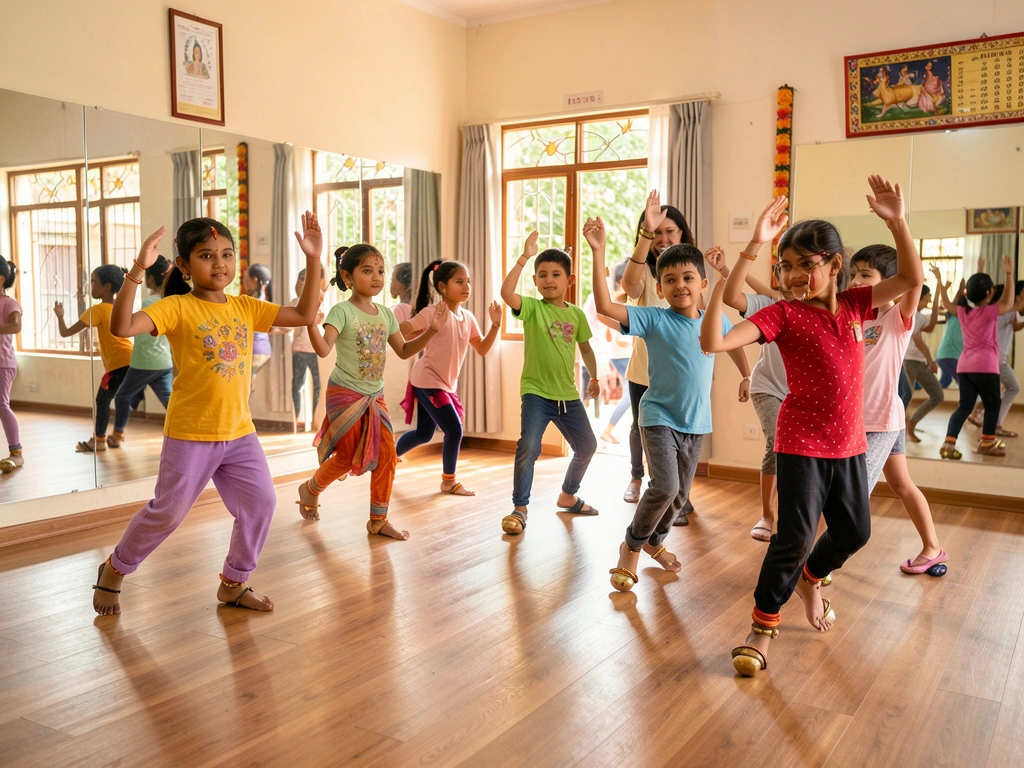
Classical dance for children from age six, taught in levels by a trained teacher.
A slow reading of the Bhagavad Gita, a few verses at a time, with tea and conversation.
Tea, a short talk, gentle chair exercises and a chance to sit together after the morning aarti.
Bal Vihar asks $20 a month for each child and dance $8 a class towards costs, and cost keeps no child out: speak quietly to the office. Volunteers who teach children are vetted as the law here requires.
Families and community groups hire the rooms for celebrations that suit a temple: weddings, birthdays, engagements and memorial gatherings.
a day, from$900
For a wedding or a large family celebration, with the mandap set up by the temple team.
a day, from$550
For a birthday, an engagement, a memorial gathering or a community event.
an hour, from$30
For a class, a meeting, a baby shower or a small family puja with lunch.
The kitchen is vegetarian: no meat, fish, eggs or alcohol may be brought onto the grounds, and food is cooked in the temple kitchen or brought by a vegetarian caterer. On the biggest festival days the halls are kept for the temple's own events.
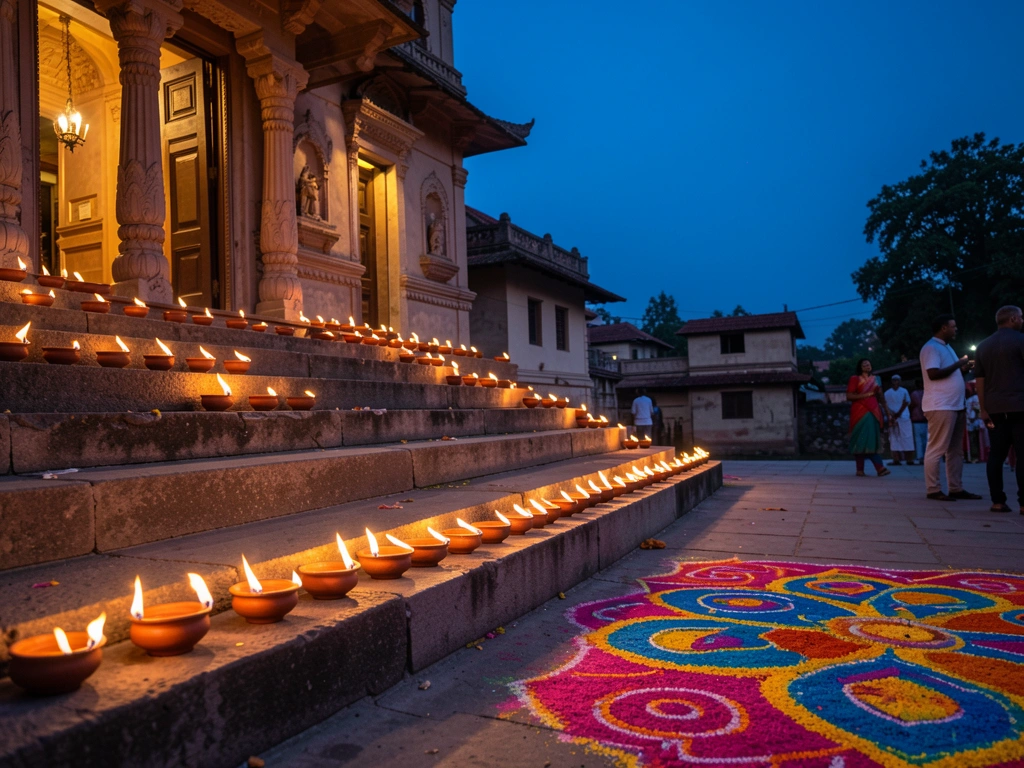
Everyone is welcome at the festival gatherings, and most end with food for all.
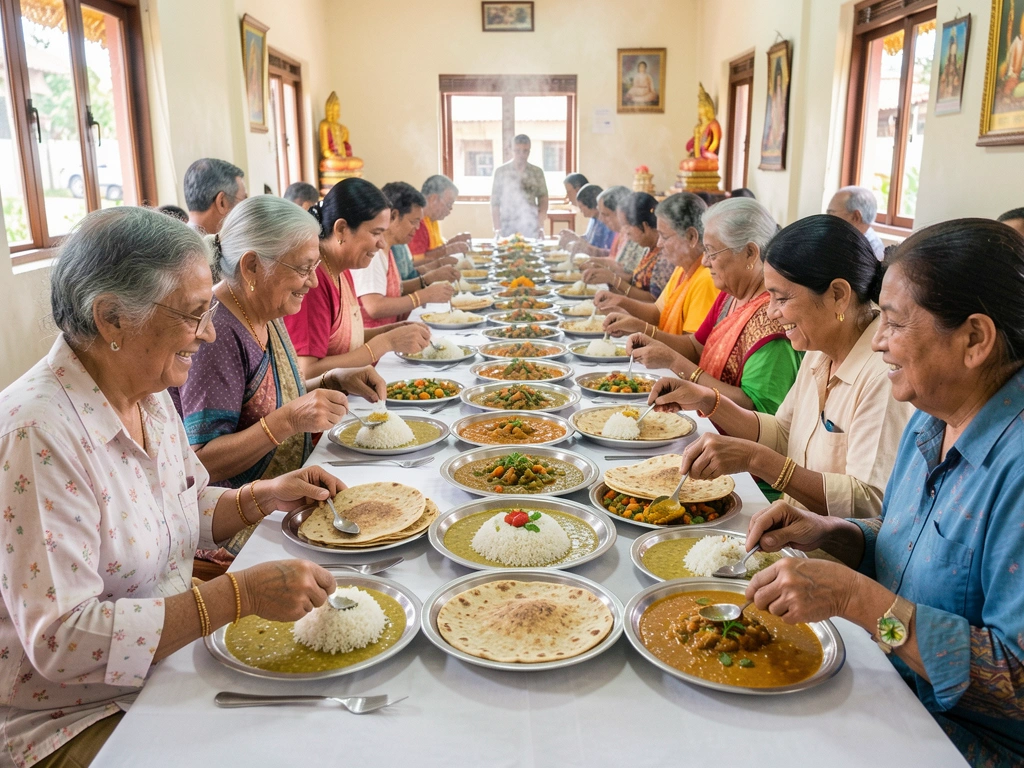
Festival dates follow the Hindu lunar calendar, so each one falls on a different civil date every year; the weekly sheet gives them about a month ahead. Every Sunday after the midday aarti, volunteers serve a vegetarian meal in the dining hall to anyone who comes, with no charge and no need to book.
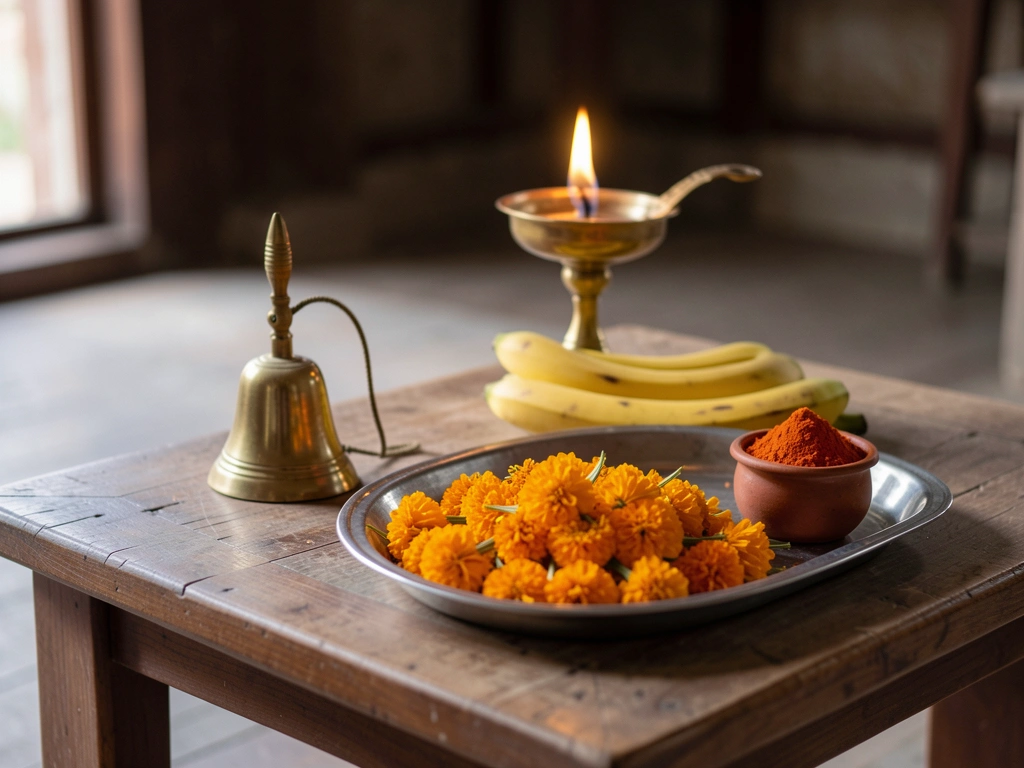
Pictures from an ordinary week and a festival evening, taken away from the shrines.
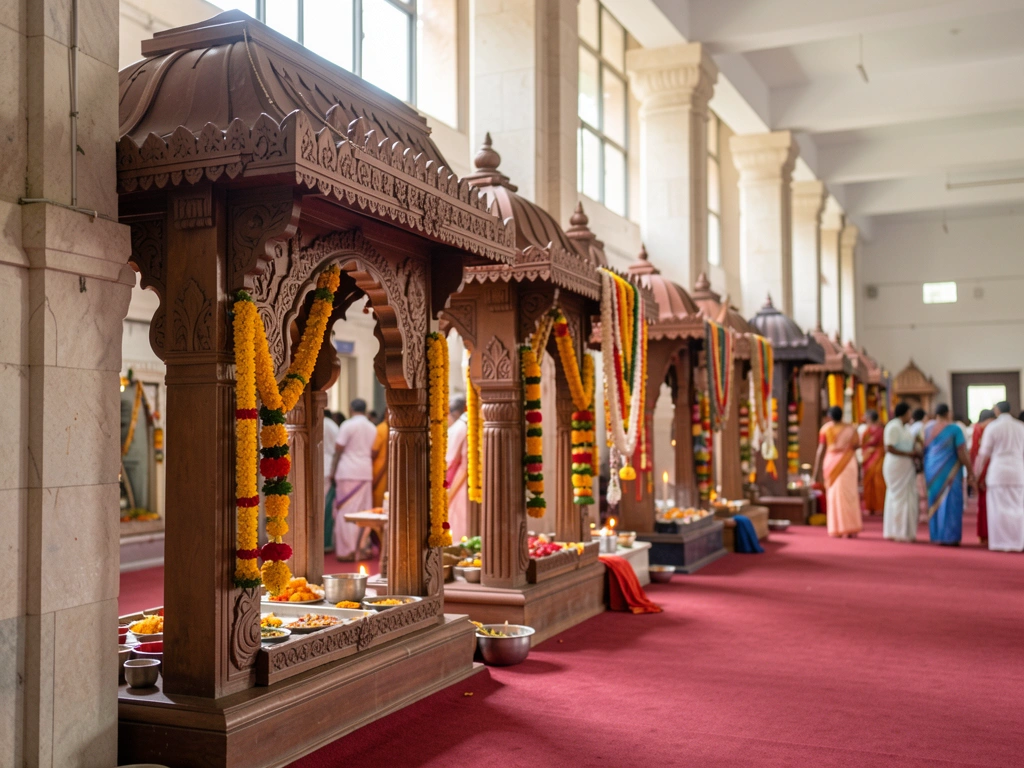
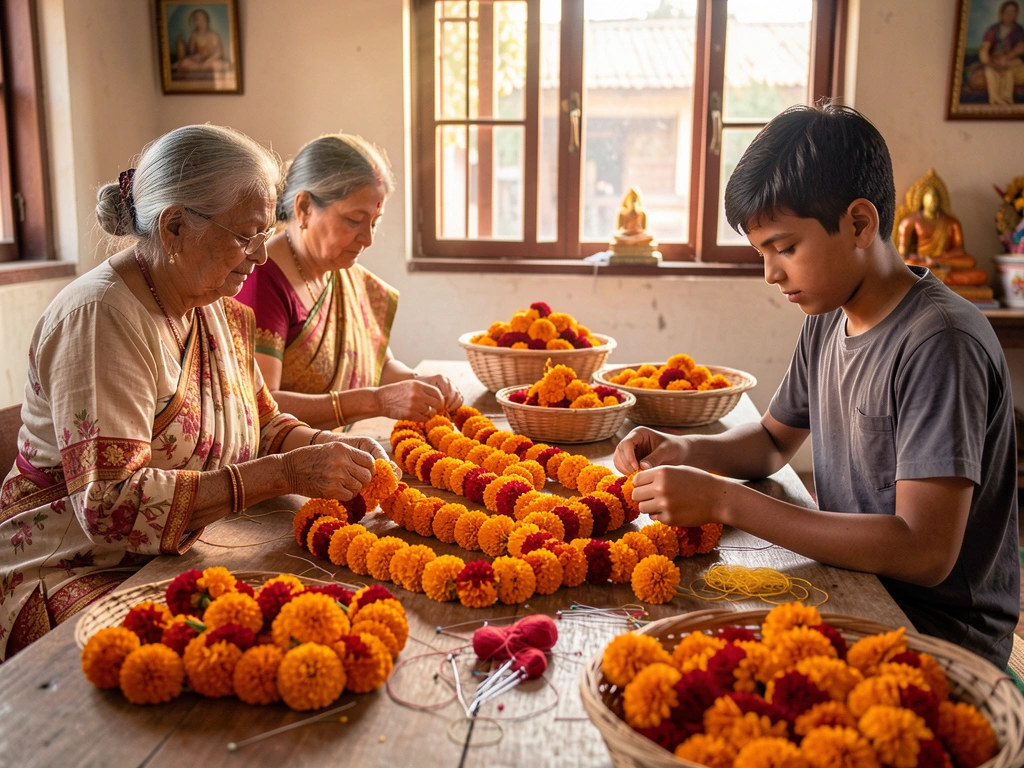
A class of nine year olds came for the midday aarti. The volunteer explained the lamp, the bell and prasad in words the children understood, and every one of them wanted to try the bell afterwards.
The priest met the family twice before our daughter's naming ceremony and explained each step, so the grandparents and the friends who had never been to a temple all felt part of it.
Came alone to the Sunday meal after moving here, was handed a plate, sat between two families and left with an invitation to the bhajan group.
Yes. Anyone, of any faith or of none, may look round, watch aarti and join the Sunday meal. Groups are asked to use the form so a volunteer can show them round.
Clothes that cover the shoulders and knees. Shoes are left in the shoe room because the hall is kept clean as a place of worship, and many people sit on the floor.
In the hall outside aarti, yes. Please do not photograph the shrines or people at prayer, and ask a volunteer if you are unsure.
Bells ring and a hymn is sung while the priest circles a lit lamp before the shrines. Afterwards the lamp is brought round, and people pass their hands over the flame; visitors may join in or simply watch.
Anyone at all. The food is vegetarian, cooked by volunteers, and served after the midday aarti with no charge.
By donations from the people who worship here and offerings for pujas. There is a donation box in the hall, the yearly accounts are pinned up by the office, and nobody is asked for money to visit, pray or eat.
Tell the office what you have in mind, the date you would prefer and roughly how many people will come. A reply comes within three working days, confirming the date, offering another or explaining when a festival is already planned for that day.
Phones are answered on weekdays during office hours, and a volunteer checks the inbox daily.
On the north side of the town park, with parking behind the hall and a bus stop at the gate
| Temple, Monday to Friday | 07:00 to 12:30 and 16:30 to 20:30 |
| Temple, weekends | 08:00 to 13:00 and 16:00 to 21:00 |
| Office, Monday to Friday | 10:00 to 16:00 |
| Festival days | Longer hours, see the weekly sheet |
Shanti Mandir is supported by donations from its community and by offerings made for pujas. A donation box stands in the hall, the office will describe other ways of giving if asked, and the yearly accounts hang by the office door for anyone to read.
This hindu temple website was built by AI from two sentences. Tell us about your business and yours is built the same way, with its pages, photos and booking in place, ready to preview in minutes.
About this sample page
Shanti Mandir is an invented temple, created so committees can see a complete page before planning their own. Marigold petals drift across its opening view, where a priest raises the aarti lamp in a warm, dark hall. An example day of aarti times comes next, labelled as an example and pointing to the weekly sheet. Guidance for first visits, family ceremonies, classes, the hall and the festivals of the year follow in plain words. A request form and a single honest note about giving close the page.
A real temple can put the same page together by describing its aartis, ceremonies and rooms to the builder in a few lines. The draft comes back with the aarti table, notes for guests and a form that carries every request to the temple office. That office accepts a request, offers another day or declines it, and offerings and hall fees are paid to the temple itself. From the day it is published, the site costs $119 a year to host, and the domain is a separate purchase. Trustees who want to look closer will find every section explained further down.