Acoustic
Open chords, strumming patterns and fingerpicking, then a capo to play in any key. The quickest route to singing along with friends.
45 minutesfrom $36
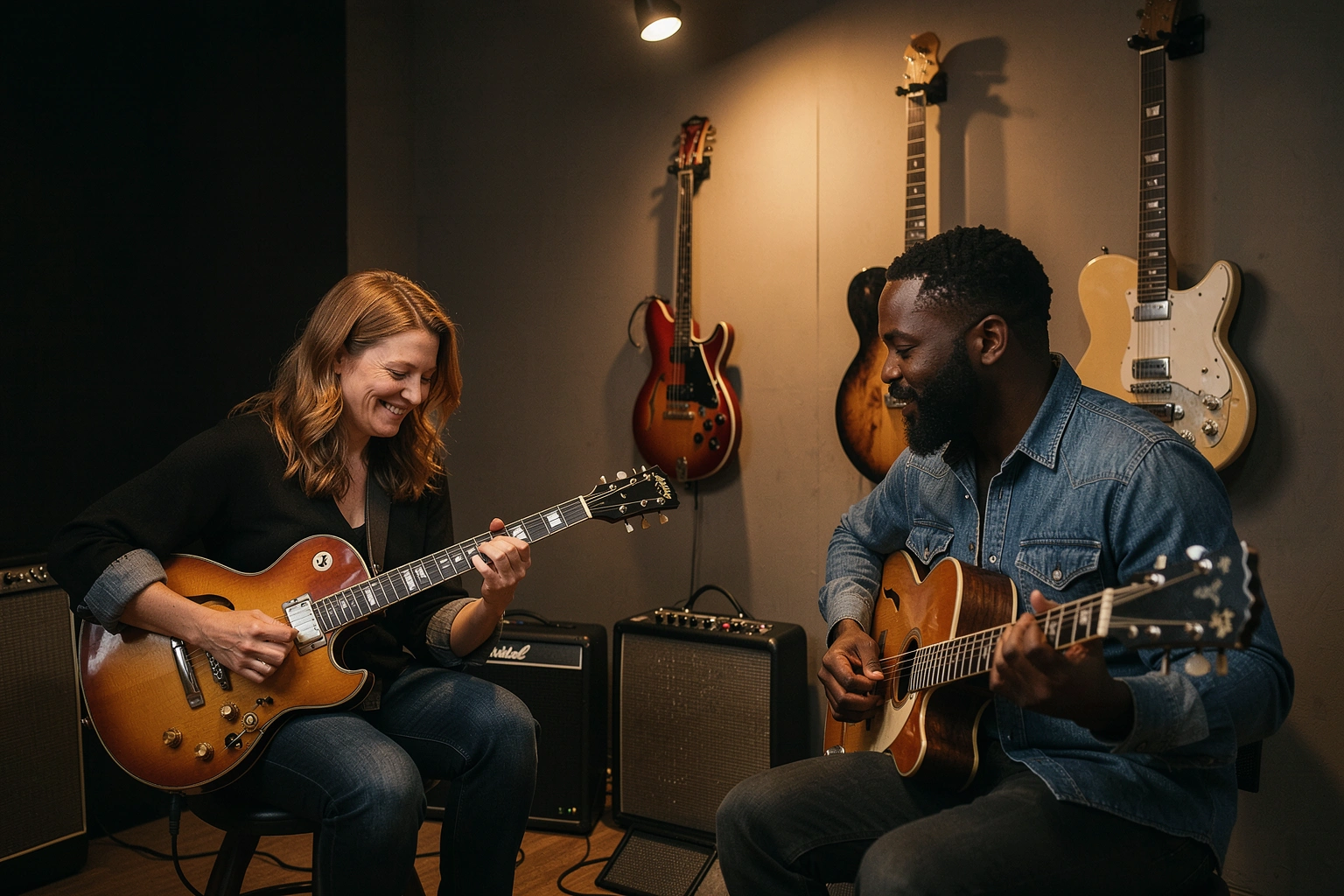
Acoustic, electric and bass lessons for complete beginners and players picking a guitar back up after years away. Every lesson is built around songs you choose and pitched at your age and level, in a room full of amps or online.
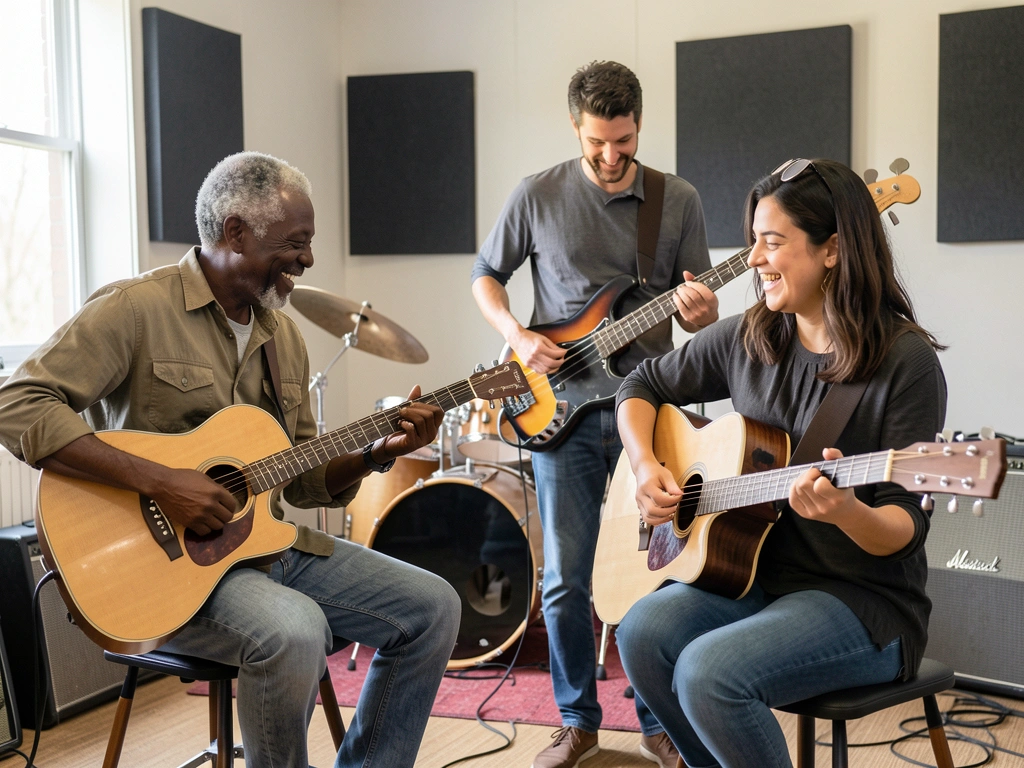
Jonah teaches acoustic and electric, and Priya teaches bass and electric. Bring your own instrument or borrow one of ours for the first few weeks; changing your mind later is normal, and the songs come with you.
Open chords, strumming patterns and fingerpicking, then a capo to play in any key. The quickest route to singing along with friends.
Riffs, power chords, palm muting and your first solos, with time spent on tone, volume and how to set up an amp at home.
Root notes, groove and locking in with a drummer. Taught by Priya, who has played bass in function bands for twelve years.
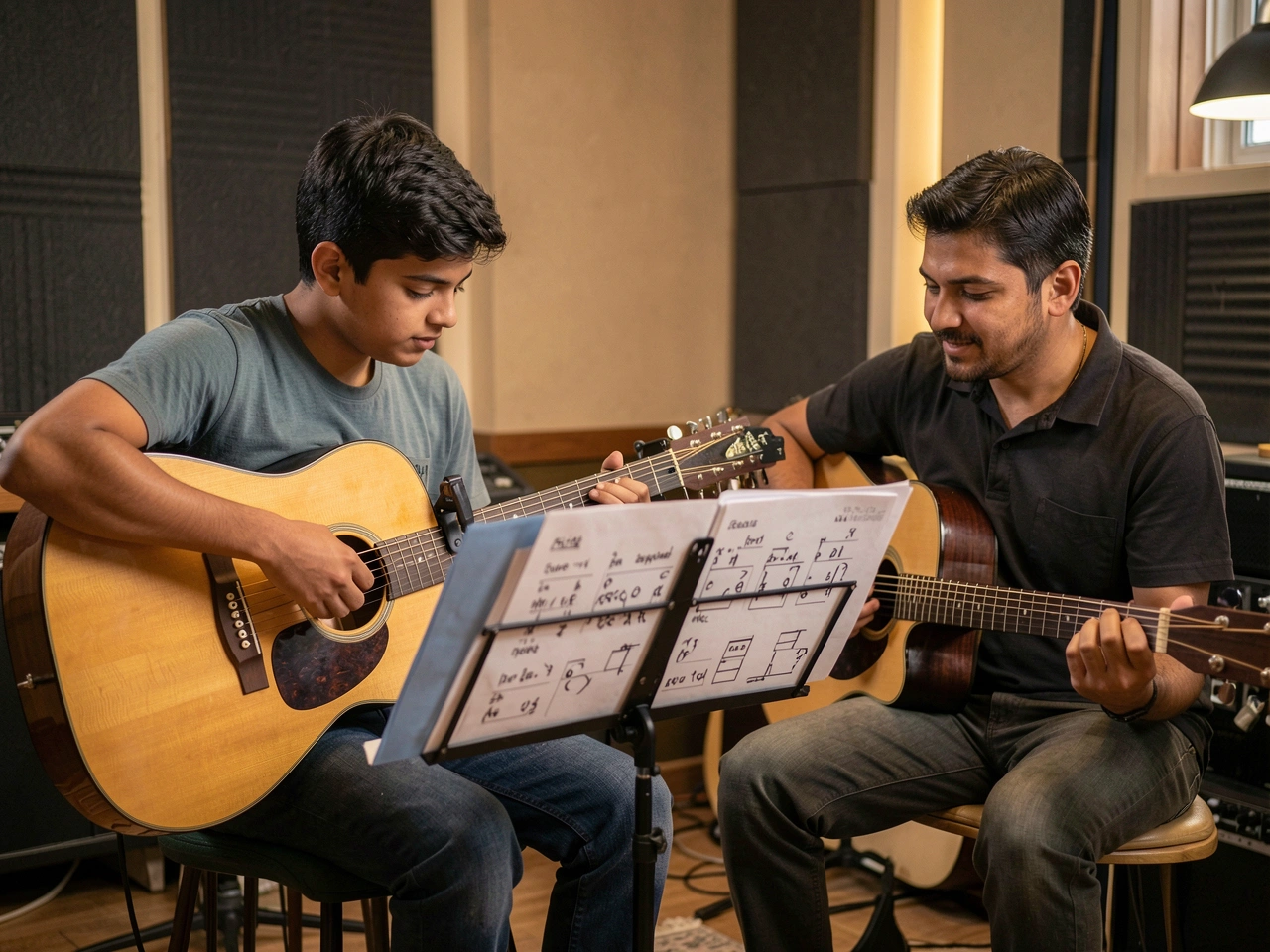
At the first lesson you name three songs you would love to play. Jonah or Priya writes each one out as a version you can manage now, then makes it harder as your hands catch up, so you are always playing real music rather than exercises.
Theory turns up when a song needs it: why a chord sounds sad, how a riff fits a scale, what the numbers in a tab mean. Pupils who want to read notation learn it too, and nobody is made to.
A typical start for a complete beginner. Returning players skip ahead to wherever their hands remember.
Tune up, hold the pick, learn two chords and play a simple song all the way through.
Change chords in time with a beat, add a strumming pattern and a third or fourth chord.
Your first riff or bass line, plus a short daily routine that keeps fingertips toughening up.
Play a whole song from your list with the backing track, and record it to hear how far you have come.
Start with a short taster, then pay lesson by lesson or save with a block. Online lessons cost a little less because there is no room to heat.
once$20
each$40
six lessons$216
each$36
Payment goes straight to the teacher. Move a lesson with at least a day's notice and it is rebooked; a lesson missed without notice counts as taught.
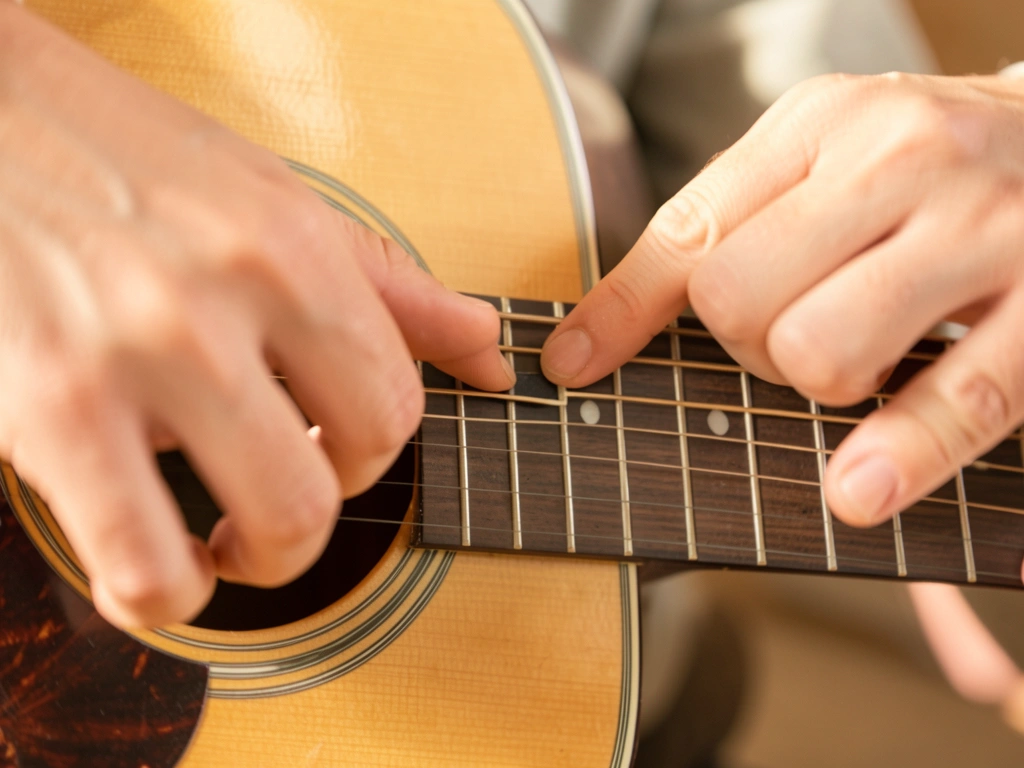
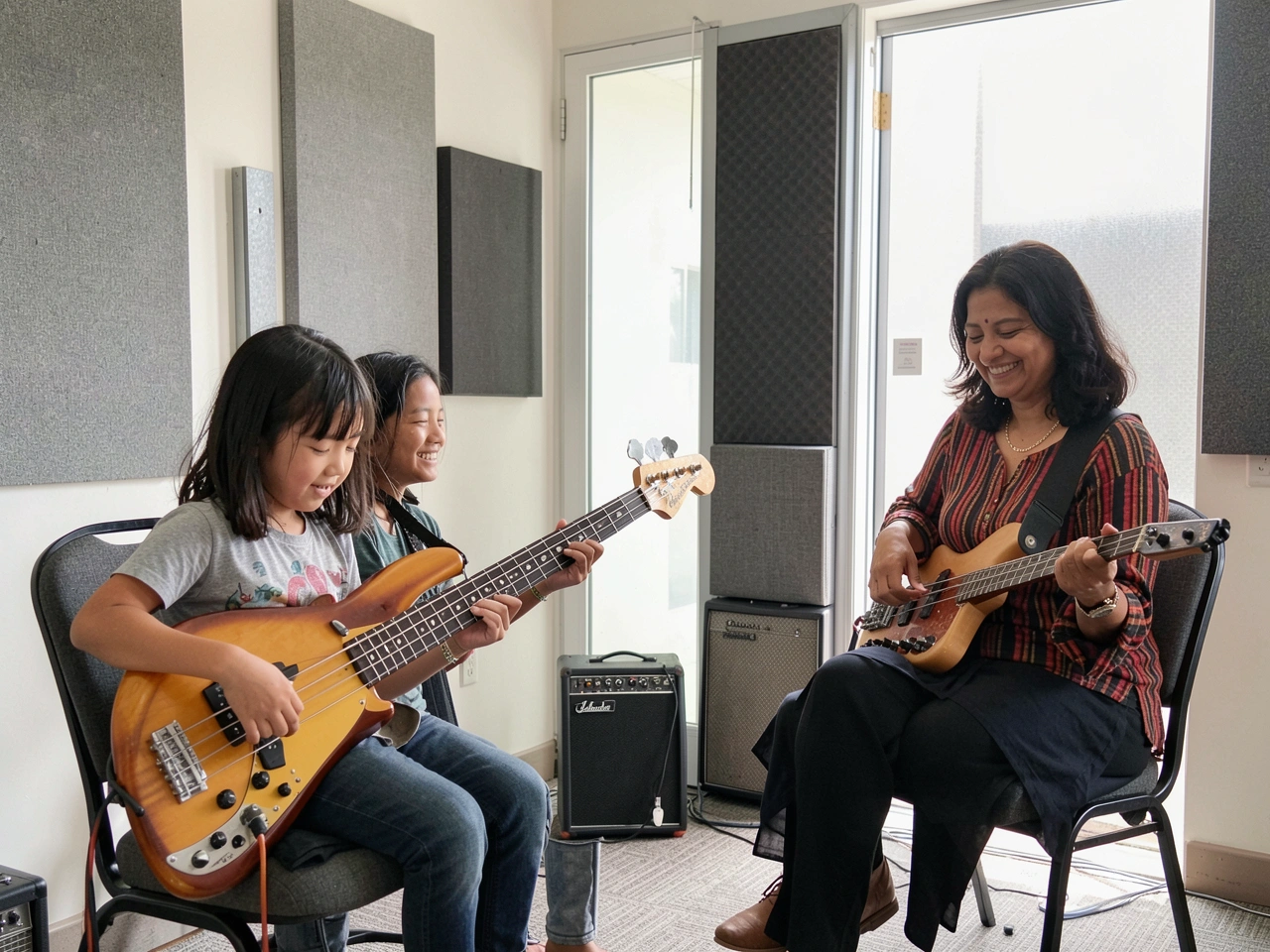
Children start from about eight, on a smaller guitar or a short scale bass, with 30 minute lessons matched to their age, hand size and attention span. Both teachers hold the background checks that the law sets for anyone teaching children where they work, and renew them as those rules require; what is required differs between countries.
Parents of pupils under 16 can stay and watch any lesson, and there is a chair by the door for exactly that. The teaching room door has a glass panel, and messages about lessons go to a parent rather than to the child.
Most pupils mix several. Bring the playlist and we find the guitar part.
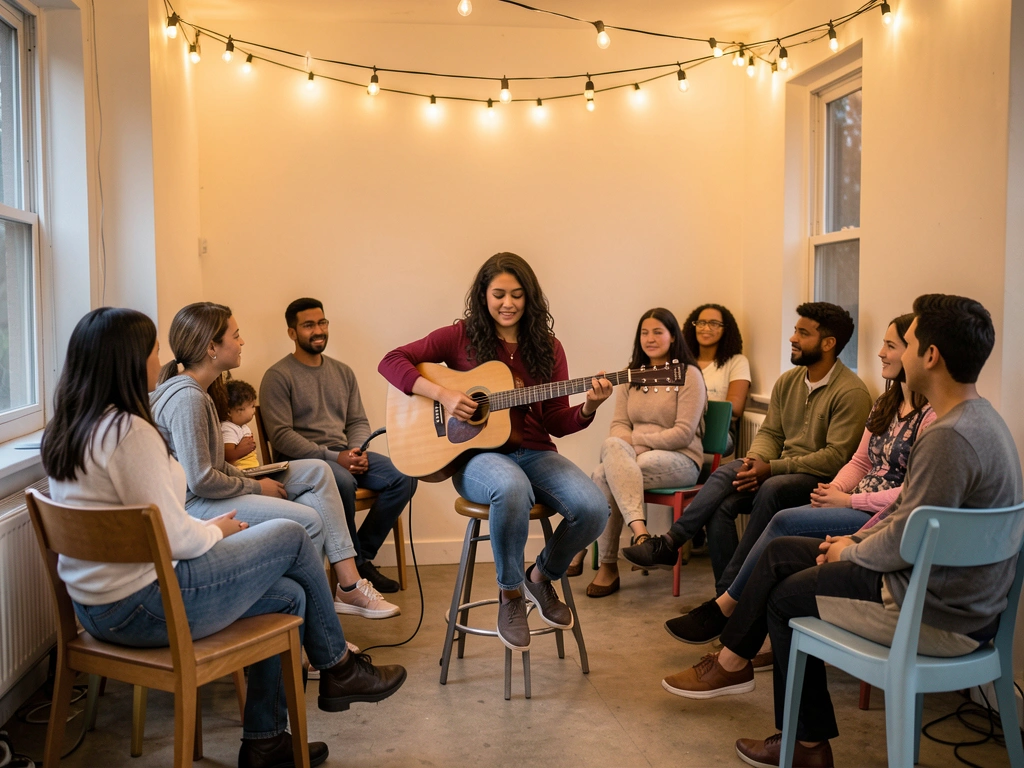
Once a term the room becomes a student open mic. Playing is optional, cheering is expected.
Picked up a guitar again at forty six after twenty years in a loft. The first lessons were built around three songs from university days, and the calluses came back within a month.
Our son wanted bass, not guitar, which surprised everyone. Priya had him playing along with a full song by week two, and the chair by the door means we can see how it is going.
Six weeks in and the strumming finally sits on the beat. Practice never feels like homework, because every exercise comes from a song already on the playlist.
Whichever one plays the music you love. Electric strings are lighter and easier on new fingertips, while an acoustic needs no amp and goes anywhere. The taster lets you try both.
For a week or two, a little. Short daily practice builds calluses faster than one long session, and the teachers keep early songs to chords that are kind to new hands.
Yes. Most pupils learn from chord charts and tab, which are written out for each song. Notation is taught to anyone who wants it, never forced on anyone who does not.
Most eight to ten year olds manage a three quarter size guitar, and many eleven year olds move to full size. Bring the child to a taster and the teacher will check their reach before you buy anything.
It gets simplified, not dropped. The teacher writes a version that keeps the sound of the song with fewer or easier chords, then adds the tricky parts back as your playing grows.
Once a term, at the student open mic in the rehearsal building. Pupils play alone, in pairs or with a teacher on bass, and anyone who would rather listen is just as welcome.
Pick the guitar, the kind of lesson and a time that suits you. Jonah or Priya confirms the slot within one working day, or comes back with the closest open hour in the amp room.
The building door is buzzed open for lessons, so ring the Six Strings bell and someone comes down.
A sound treated teaching room on the first floor of a shared rehearsal building, five minutes on foot from the train station
| Monday to Thursday | 14:00 to 21:30 |
| Friday | 14:00 to 19:00 |
| Saturday | 10:00 to 17:00 |
| Sunday | Closed |
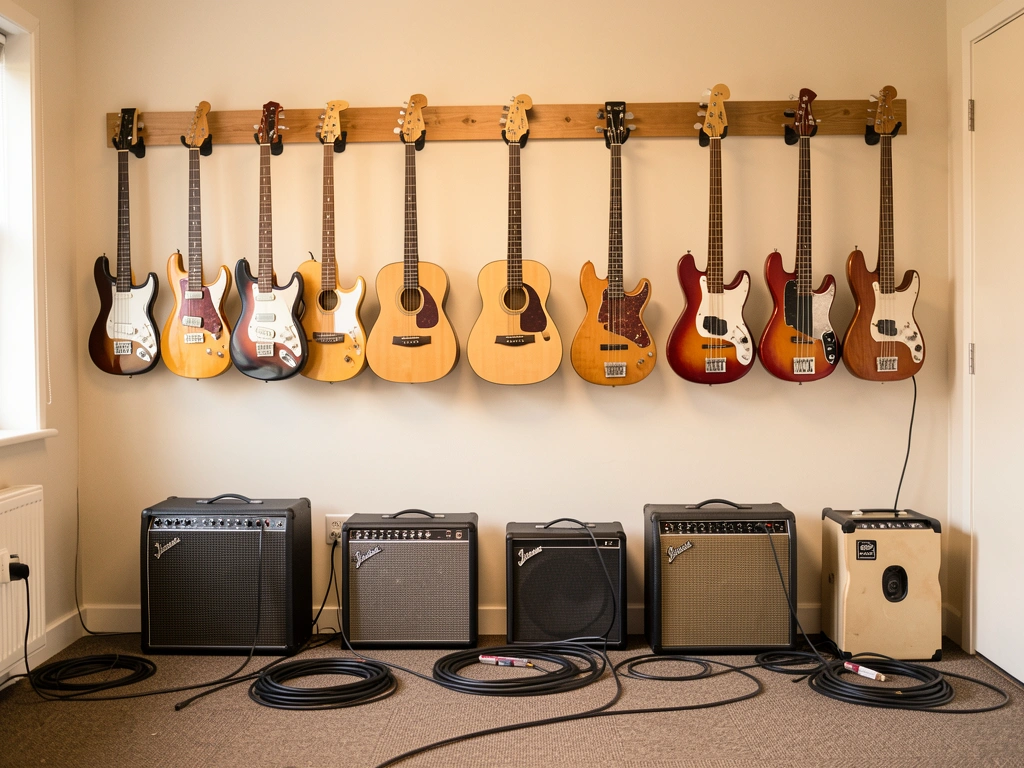
Street parking is easiest after 18:00, and the station is a short walk. Leave the amp at home: the room has amps, leads, tuners and spare strings for every lesson.
This guitar teacher website was built by AI from two sentences. Tell us about your business and yours is built the same way, with its pages, photos and booking in place, ready to preview in minutes.
About this sample page
Six Strings Guitar Lessons is imaginary, and its one page site is arranged the way a song based teacher talks to new players. The opening view throws a moving spotlight over a lesson among the amps, and its heading speaks to the songs a player already loves. Cards for acoustic, electric and bass come next, followed by a section on the method and a path through the first eight weeks. Prices, a gallery of the amp room and a section for younger players and their parents fill the middle. The order mirrors a beginner's questions, so the taster form at the foot feels like the obvious next move.
A guitar teacher can create a similar site on AI Web Maker by describing the instruments, the method and the prices. The builder lays out a draft with instrument cards, price cards and a request form, which the teacher reworks in preview before going live. Lesson requests then come in for the teacher to accept, shift or decline, while payment stays between teacher and pupil. Going public adds hosting, $119 for the year or $19 each month, and the domain on top. The guide further down explains each section, so a real teacher knows what to keep and what to replace.