Time and feel
Playing to a click at slow tempos, counting out loud, and grooves that sit in the pocket instead of racing ahead. Rudiments such as paradiddles and flams build even hands.
Every lessonten minutes on the click
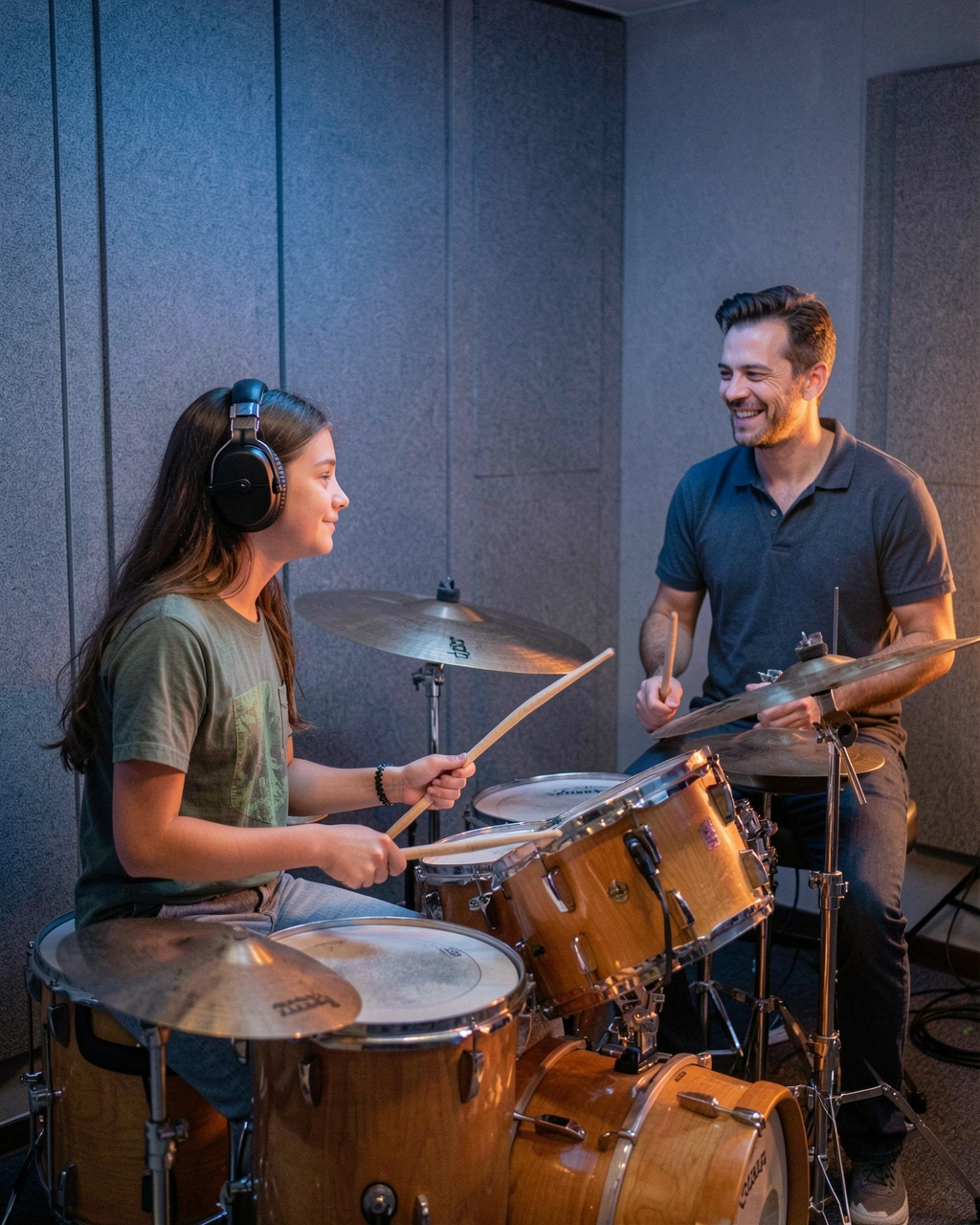
Drum lessons for children from seven and adults at any age, in a soundproofed room with two full kits. Ezra Kanu teaches steady time first, then reading and band skills, and everyone in the room wears hearing protection from the first beat.
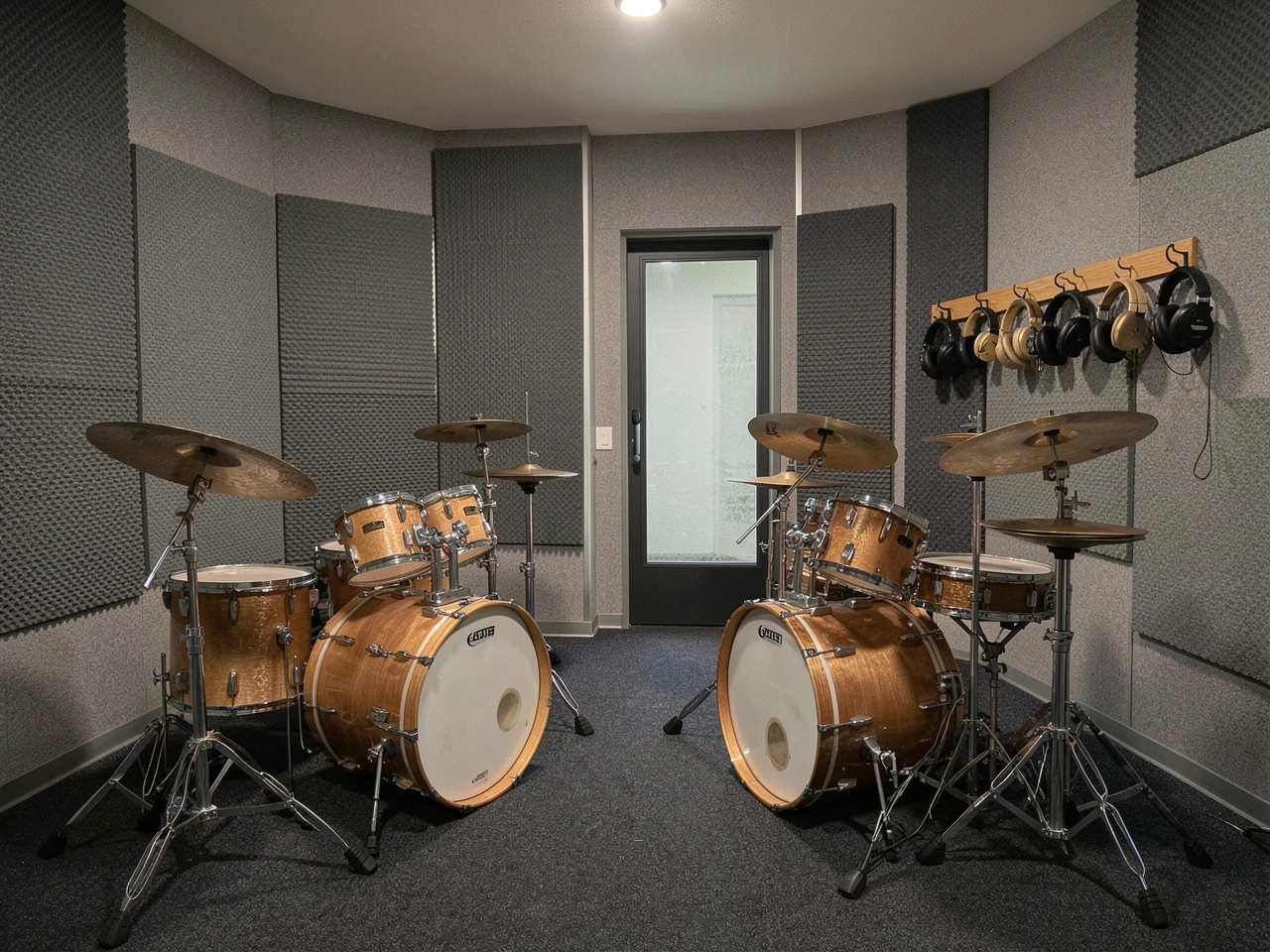
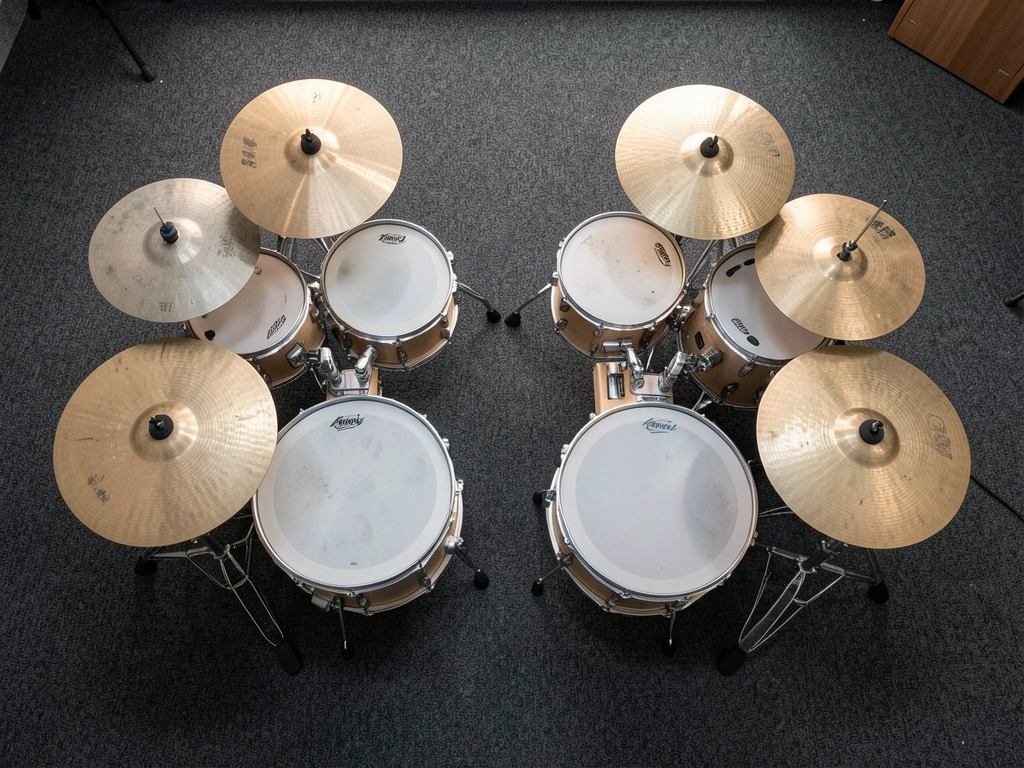
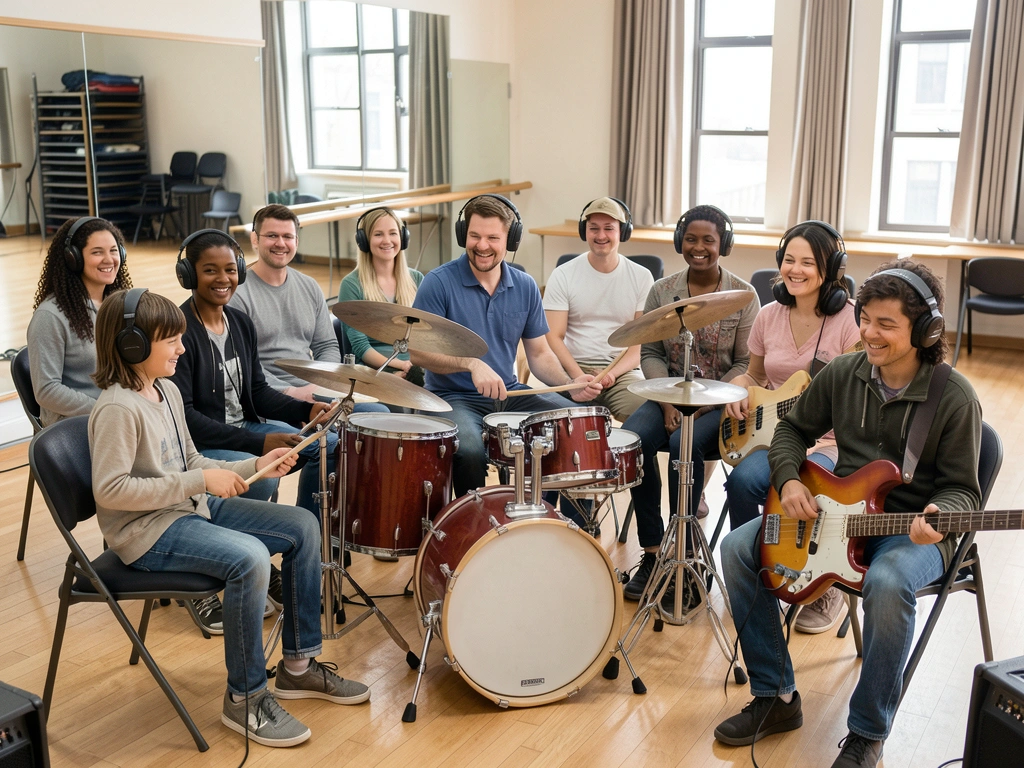
The studio is a room inside a room: a floating floor, double doors and lined walls, so the neighbours hear nothing and the player hears every stroke clearly. Two full acoustic kits face each other, which lets Ezra play along, trade fills and show a groove without taking the sticks away.
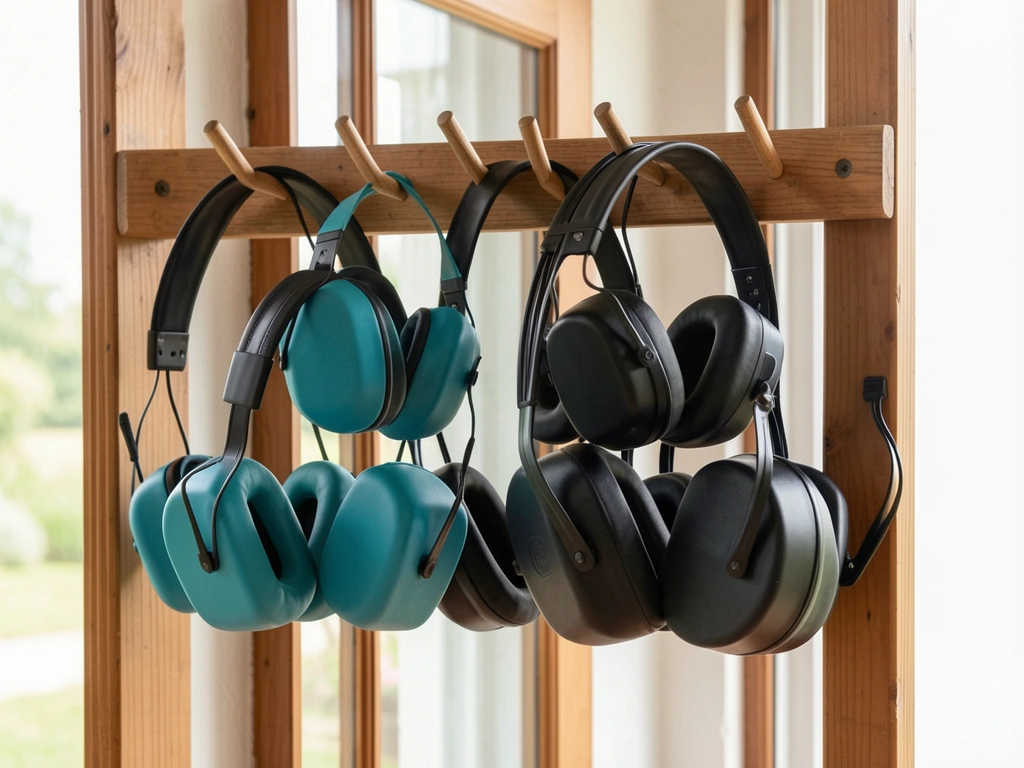
Drums are loud enough to harm hearing over time, so everyone in the room wears protection, the teacher included. Children get padded ear defenders in small sizes, and older players can try musicians' earplugs that lower the volume evenly instead of muffling it. Parents who sit in are handed a pair at the door.
Lessons rotate between three strands, weighted toward whatever the player needs most. A rock fan who rushes the beat spends longer with the click; a confident reader who never plays with others gets more band work.
Playing to a click at slow tempos, counting out loud, and grooves that sit in the pocket instead of racing ahead. Rudiments such as paradiddles and flams build even hands.
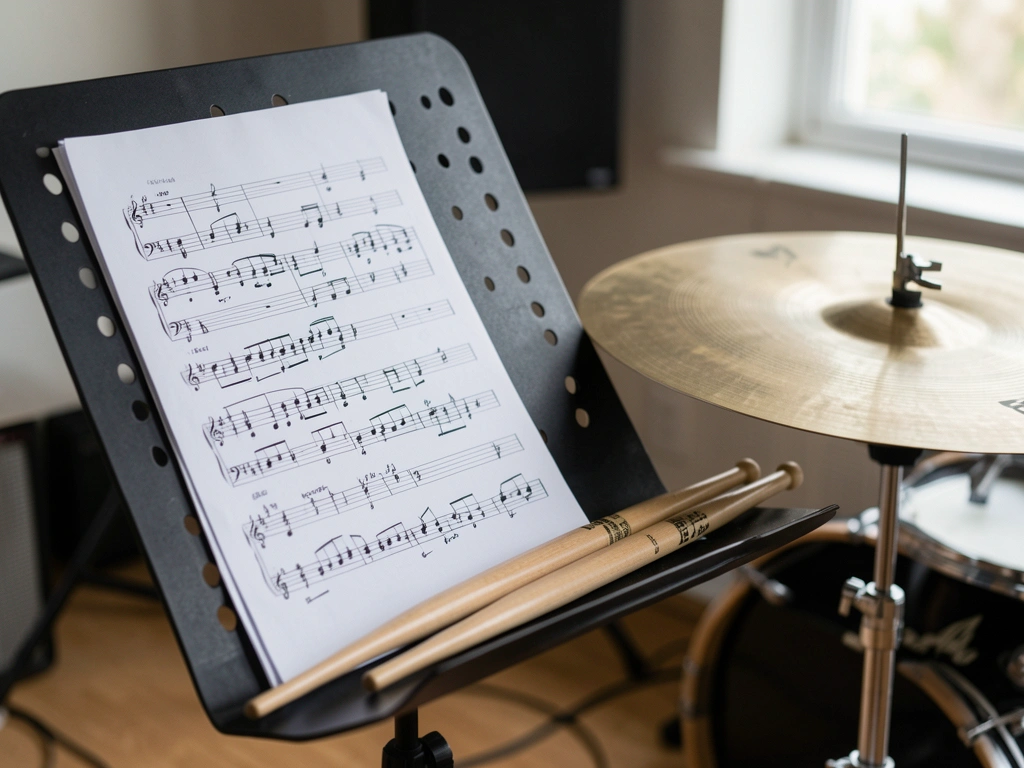
Drum notation one line at a time, from simple rhythms on the snare to full kit charts with repeats and endings. Players who learn by ear are taught to read as well, at a pace that keeps it fun.
Counting a band in, following a singer, ending together and recovering when something goes wrong. Practised with backing tracks in lessons and with real players at the Saturday workshop.
Daily practice matters more than lesson length, but a full kit is rarely the place to start. These are the options Ezra talks families through at the first lesson.
| Setup | Noise in the house | Rough cost | Good for |
|---|---|---|---|
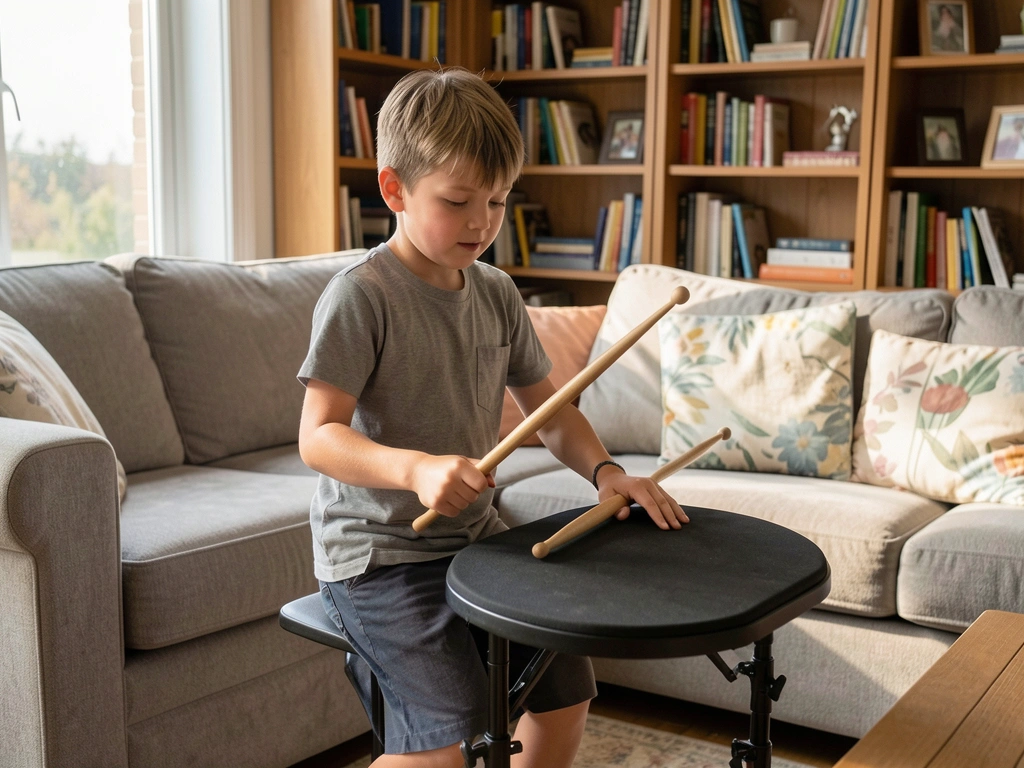
| Practice pad and sticks | Quiet tapping | from $30 | Hands, reading and the first months |
| Electronic kit with headphones | Thuds from the pedals | from $350 | Daily kit practice in flats and terraces |
| Acoustic kit, mesh heads | Moderate | from $500 | A real kit feel with quiet cymbals |
| Full acoustic kit | Very loud | from $450 used | Detached houses, garages and rehearsal rooms |
Costs are rough starting points for new or used gear and differ widely from country to country. Whatever the setup, ear protection stays on for acoustic practice at home too.
Pay as you go, or save with a block of eight. Children under eleven usually start with 30 minutes, because concentration and wrists both tire.
once$22
each$38
eight lessons$272
a Saturday$20
Payment goes to Ezra directly. Give a day's notice to move a lesson; a lesson missed without notice is charged.
Players bring the music they love, and these are the patterns that turn up again and again underneath it.
Pupils heading for a school concert or a covers band set get help with that list too.
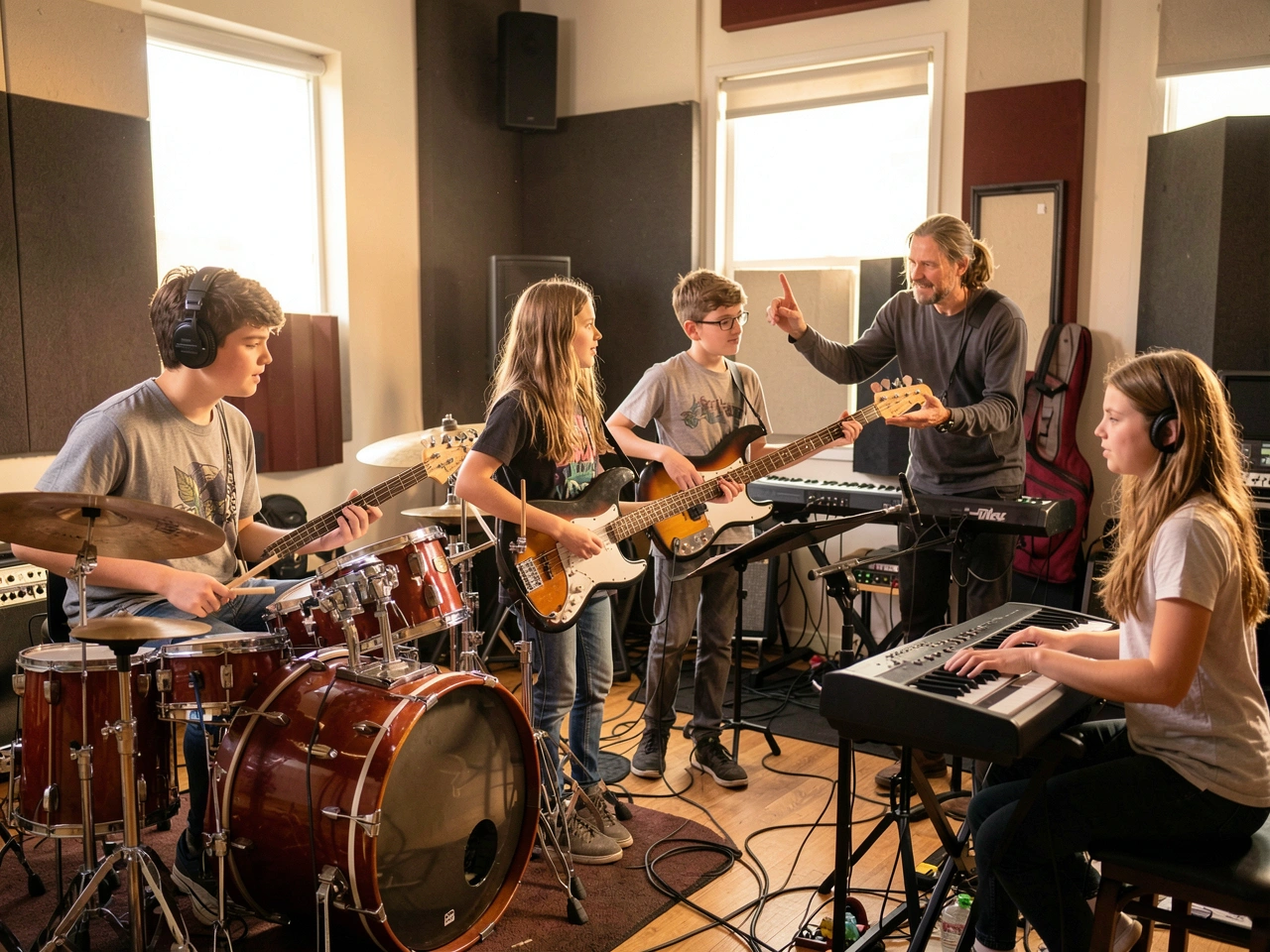
After about six months most drummers are ready to play with other people, which is a different skill from playing alone. Once a month the studio fills with pupils on drums plus a bass player, a guitarist and keys, and two songs are learned and played start to finish in two hours.
Groups are sorted by age and level, so a nine year old is never counted in by a sixteen year old. Parents can stay for the last half hour, when each band plays its songs through, and everyone in the room, audience included, keeps ear protection on.
Our son used to drum on every table in the house. Now he practises on a pad and an electronic kit with headphones, the neighbours still wave, and he can read a whole chart.
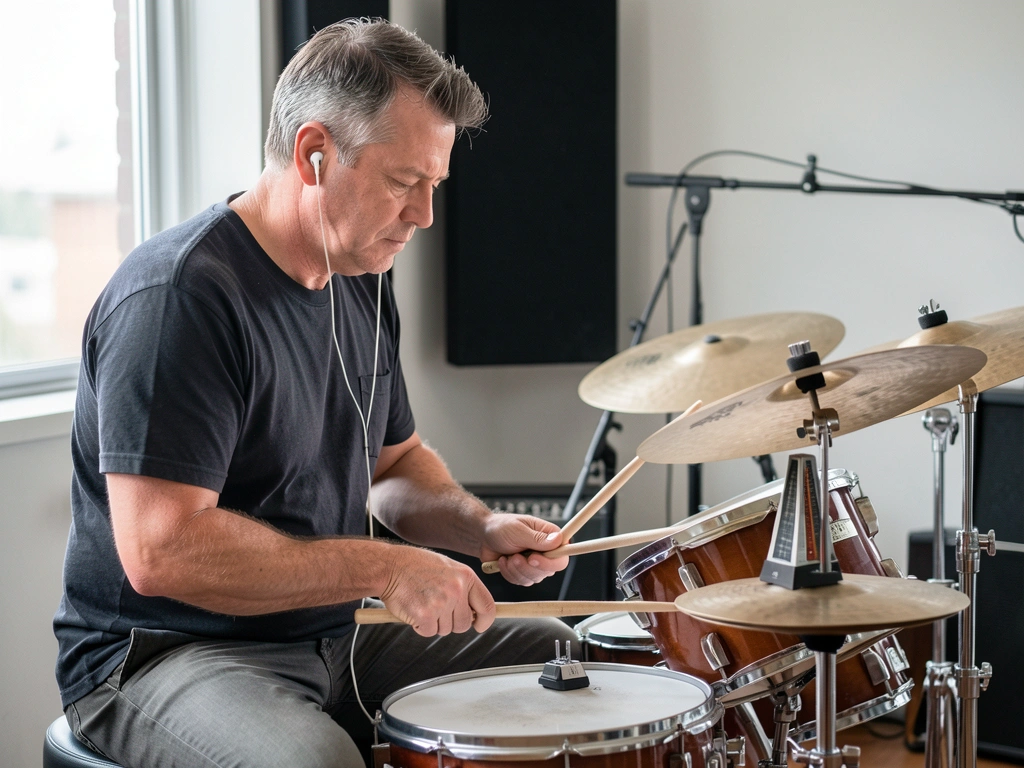
Started at forty two with no music background at all. Weeks of slow grooves with the click felt odd at the time, and that patience is the reason the band workshop felt possible.
The ear defenders were a surprise at first, but our daughter now refuses to play without them. Two band workshops in, she comes out grinning every time.
Around seven is typical, once feet reach the pedals with the stool lowered and the child can follow a short instruction. Younger children can begin on a practice pad, which builds hand control without a kit.
Not at first. A practice pad and a pair of sticks cover the first months, and the practising table above shows the quieter ways to add a kit later.
Acoustic drums are loud enough to damage hearing with regular exposure, and the damage builds up without pain. Ear defenders or musicians' earplugs keep the sound clear while lowering it, and wearing them becomes a habit within a week. Anyone with a hearing concern should ask a doctor or audiologist.
Yes, a chair by the door with a pair of ear defenders waiting on it. Ezra holds the background checks required for teaching children where the studio is based, the door has a glass panel, and lesson messages go to a parent.
Yes. Drum notation is part of every term, starting with simple rhythms on the snare. Players who learn by ear carry on doing so, with reading added alongside.
Nothing for the starter lesson. Sticks, ear defenders and both kits are provided, and after a few weeks most players buy sticks of their own and a pad for home.
Choose the lesson, say who is drumming and pick a start date and a time of day. Ezra gets back to you inside one working day with a time, the nearest open slot, or word that the week is full.
Look for the unit with the teal door; the buzzer rings in the control room, so allow a moment if a lesson is running.
A soundproofed studio in a converted unit on a light industrial estate at the edge of town, with parking outside the door
| Monday to Friday | 15:30 to 21:00 |
| Saturday | 09:00 to 17:00 |
| Sunday | Closed |
There is parking outside the unit, and a small waiting area with a window into the studio. Bring a book: even through two doors, a groove can be felt in the floor.
This drum teacher website was built by AI from two sentences. Tell us about your business and yours is built the same way, with its pages, photos and booking in place, ready to preview in minutes.
About this sample page
Backbeat Drum Lessons is invented, and its single page is built to win over an eager child and a cautious parent at once. The opening view sets a sound level needle settling beside a lesson photo, a quiet signal that hearing matters here. The soundproofed room comes next, followed by three teaching strands, a table of practice options for home and the fees. Grooves, the Saturday band workshop and a gallery show where lessons lead. A short request form closes it, asking what the drummer practises on between lessons.
Any drum teacher could set up something similar on AI Web Maker by writing a few lines about the room, the ages taught and the lesson prices. From those lines the builder produces the sections and a request form, which the teacher reshapes in preview until the voice matches the studio. Requests from families land with the teacher, who takes them, shifts them to another slot or turns them down, and lesson money changes hands between them directly. The hosting bill begins on the day the page goes public, either $119 yearly or $19 monthly, with the domain on top. Notes lower down go through each section and say what job it does for a visitor.