First assessment
60 minutes$85
- Gait, muscle and movement checked on dry land
- A short first swim if your dog is ready
- A written plan sent to your vet
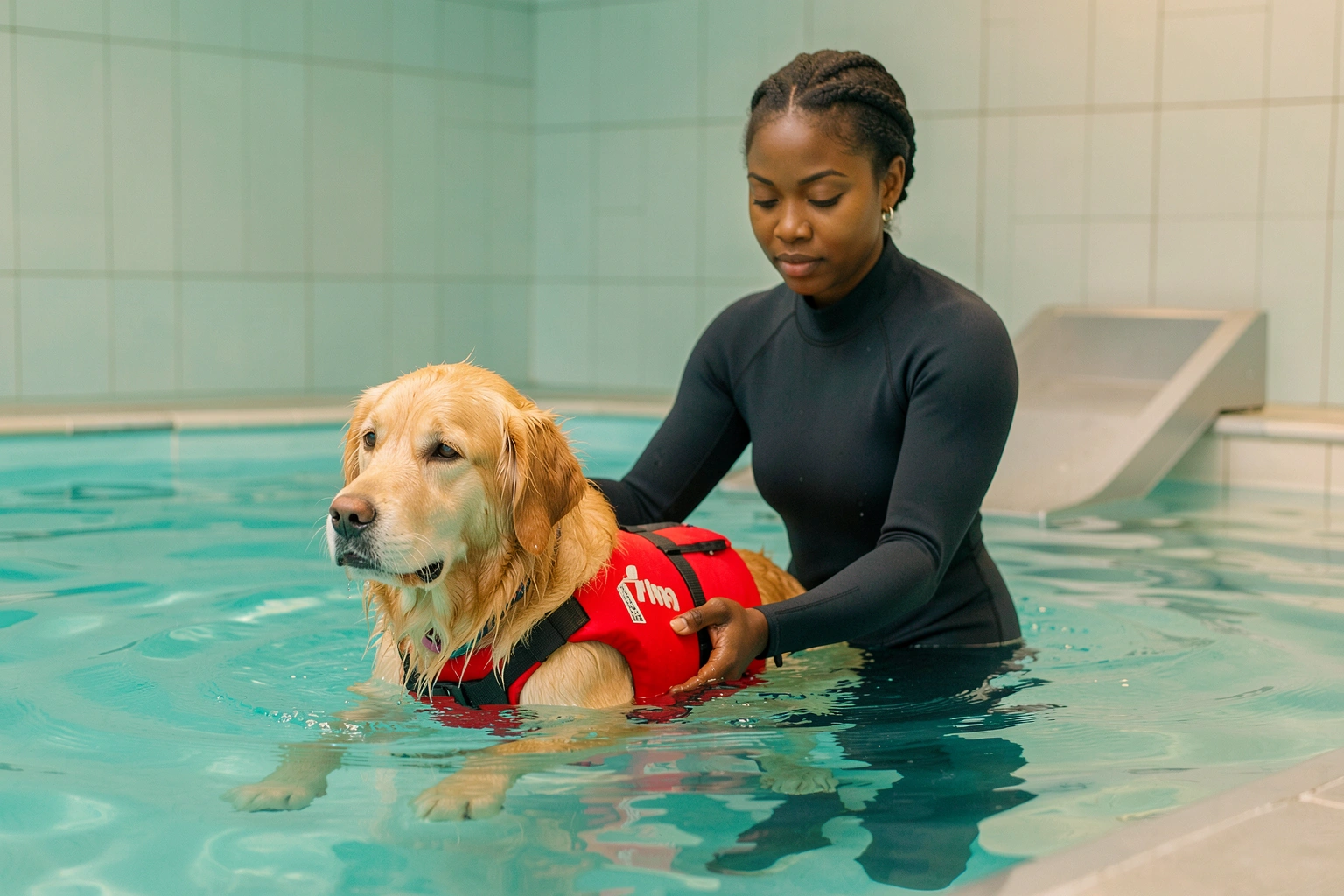
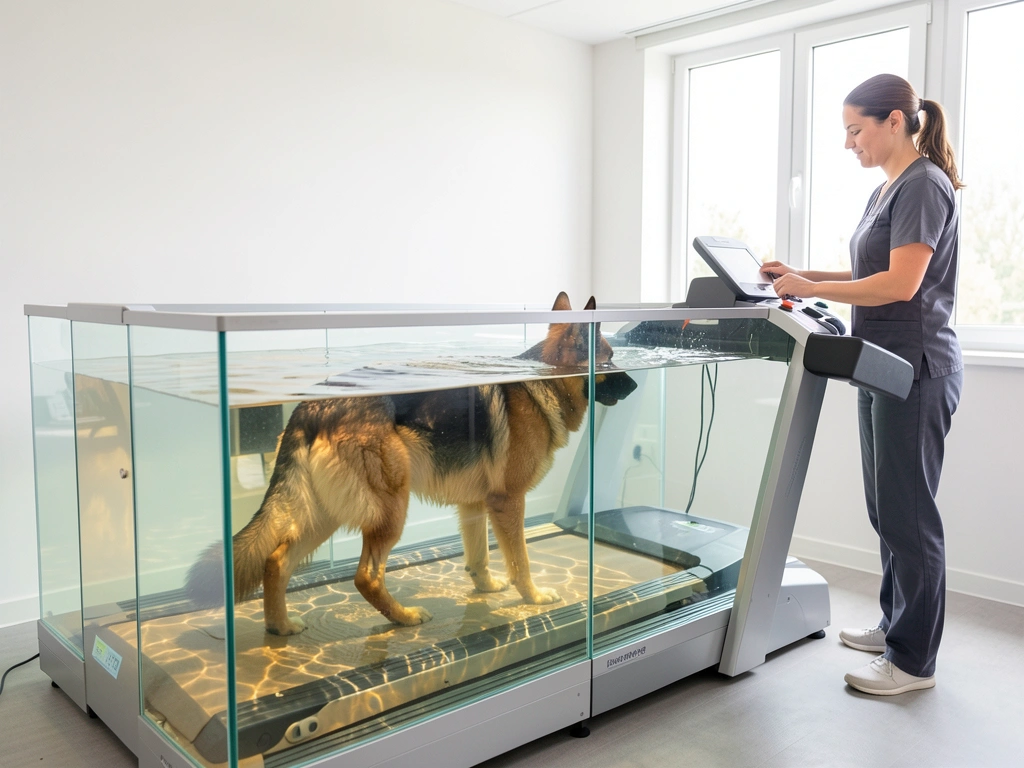
Paddle Paws Hydrotherapy runs a heated pool and an underwater treadmill for dogs recovering from surgery, living with stiff joints or getting fit for work and sport. Every dog starts with a referral from its own vet, every session is one dog at a time, and your vet hears how each block of sessions went.
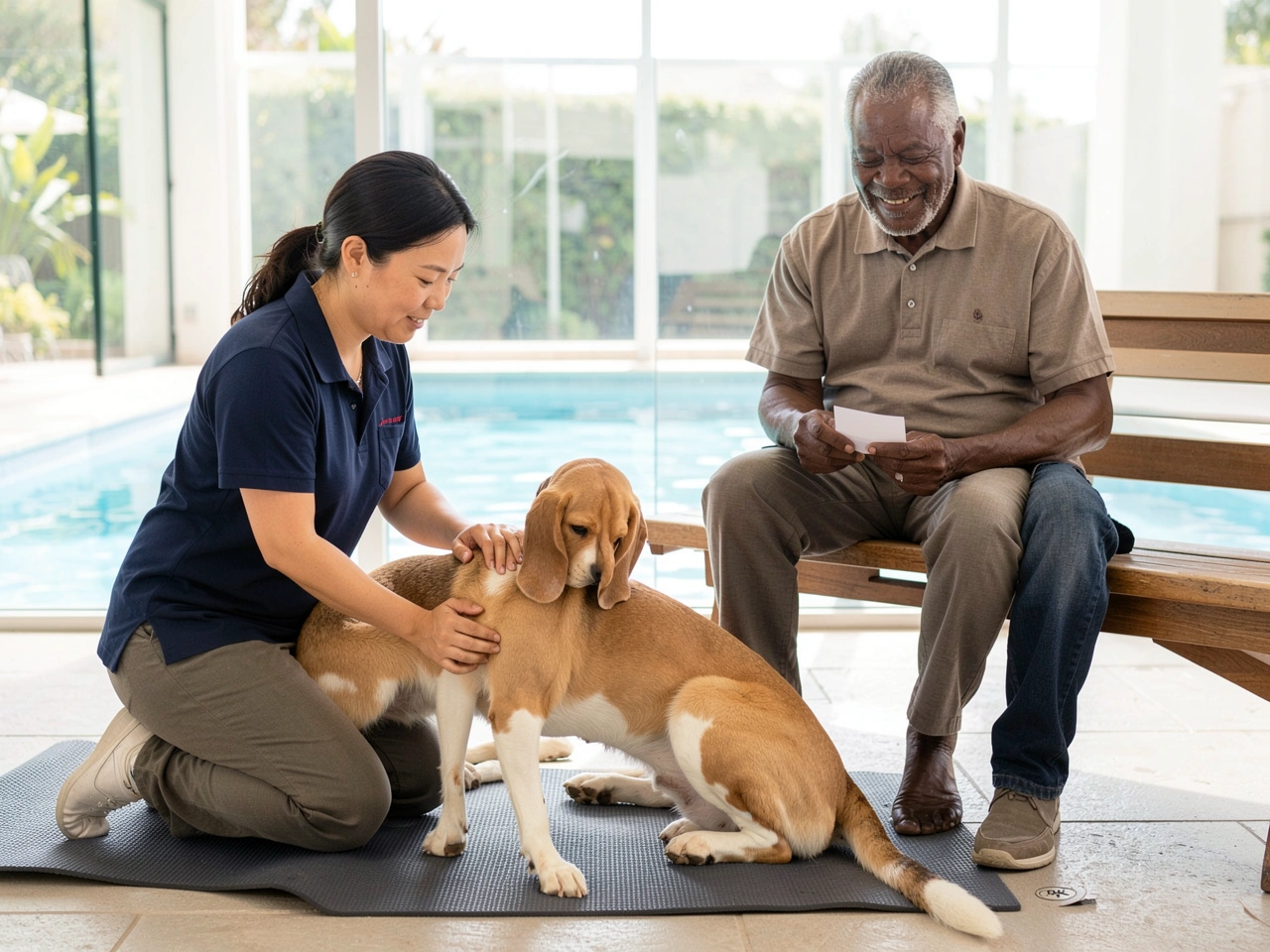
Hydrotherapy is exercise, and for a dog after surgery or with a joint condition the wrong exercise at the wrong time can do harm. So we only start once your dog's own vet has sent a signed referral with the history, any surgery dates and the limits they want us to keep to.
Ask us for the referral form, or ask your practice to contact us directly. After the first assessment and after each block of six sessions we write to your vet with what we did and what we saw, and your vet decides whether the plan changes. Healthy dogs swimming for fitness need their vet's agreement too.
Times include showering, drying and a short rest. Many pet insurance policies include hydrotherapy when a vet refers, but cover differs, so check your own.
60 minutes$85
30 minutes$48
30 minutes$52
pool, treadmill or mixed$264
A session dropped on the day itself is charged in full, unless your dog is unwell. Fees are settled with us at the end of each visit.
Your vet decides whether hydrotherapy suits your dog. These are the reasons we see most often, and how the water is used for each.
| Reason for referral | How the session is used | Usual start |
|---|---|---|
| After cruciate ligament surgery | Treadmill walking with water at hip height, to rebuild muscle with less load on the knee | Once your vet has signed off the wound |
| Hip or elbow dysplasia | Swimming and treadmill work to keep the muscles around the joint strong | Any age, with your vet's agreement |
| Arthritis in older dogs | Short, gentle swims in warm water to support comfortable movement | Five minutes in the water, built up slowly |
| After spinal surgery | Supported treadmill work on balance and walking patterns | Only on a plan from the vet or specialist |
| Weight management | Low impact exercise alongside the diet your vet sets | After a weight check at the assessment |
| Fitness for working and sport dogs | Swim sets for stamina, with recovery between them | With a vet check for dogs in competition |
Hydrotherapy supports the treatment your vet plans. It does not replace veterinary care, and no session can promise a particular result.
Your vet sends the signed form and history, and we ring you to arrange a time.
We watch your dog walk and stand, and measure muscle and movement before any water.
A warm shower, then a buoyancy harness fitted to your dog's size.
Five minutes or less, therapist in the water, ending before your dog tires.
Towel and warm air drying, a quiet rest, then a plan written for you and your vet.
A few simple habits keep the water clean and the session safe.
If your dog seems lame, tired or out of sorts on the day, tell us before the session starts. We would rather rest a dog than push it, and a session missed for a good reason is never charged.
Dogs pictured with their owners' agreement.
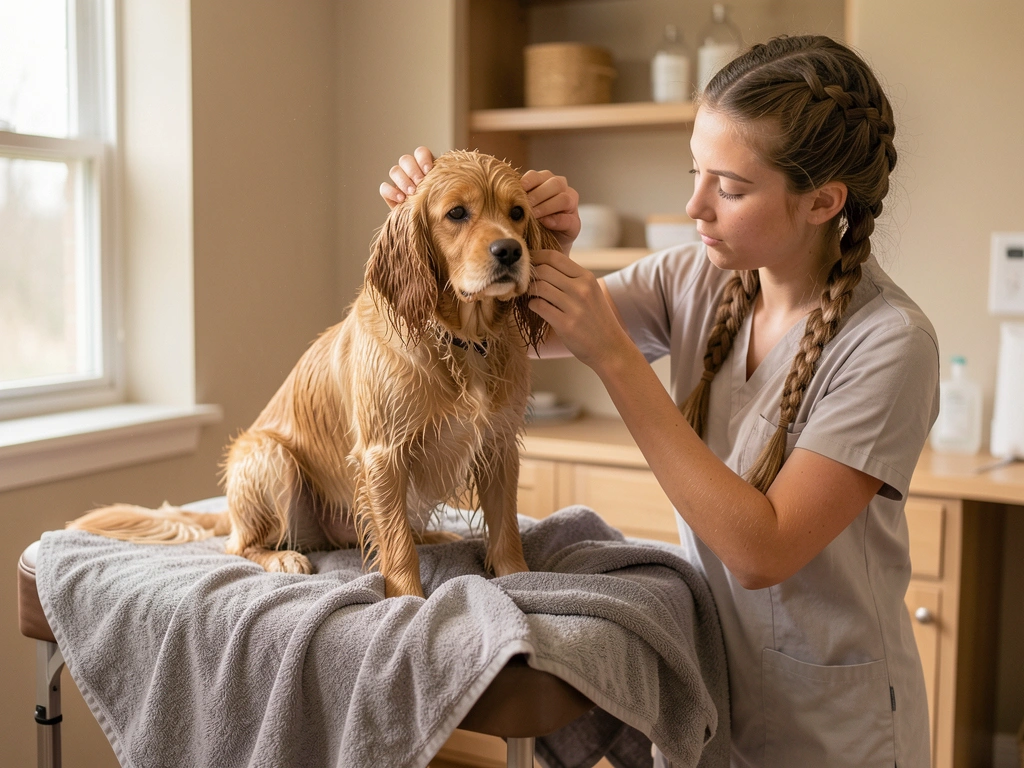
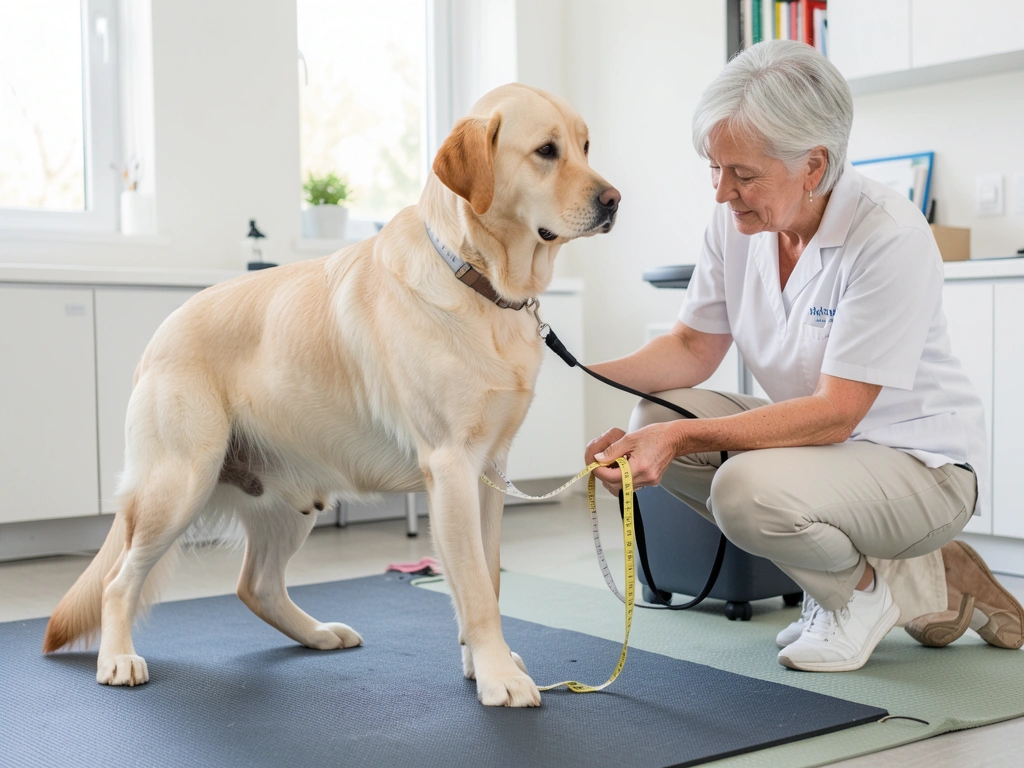
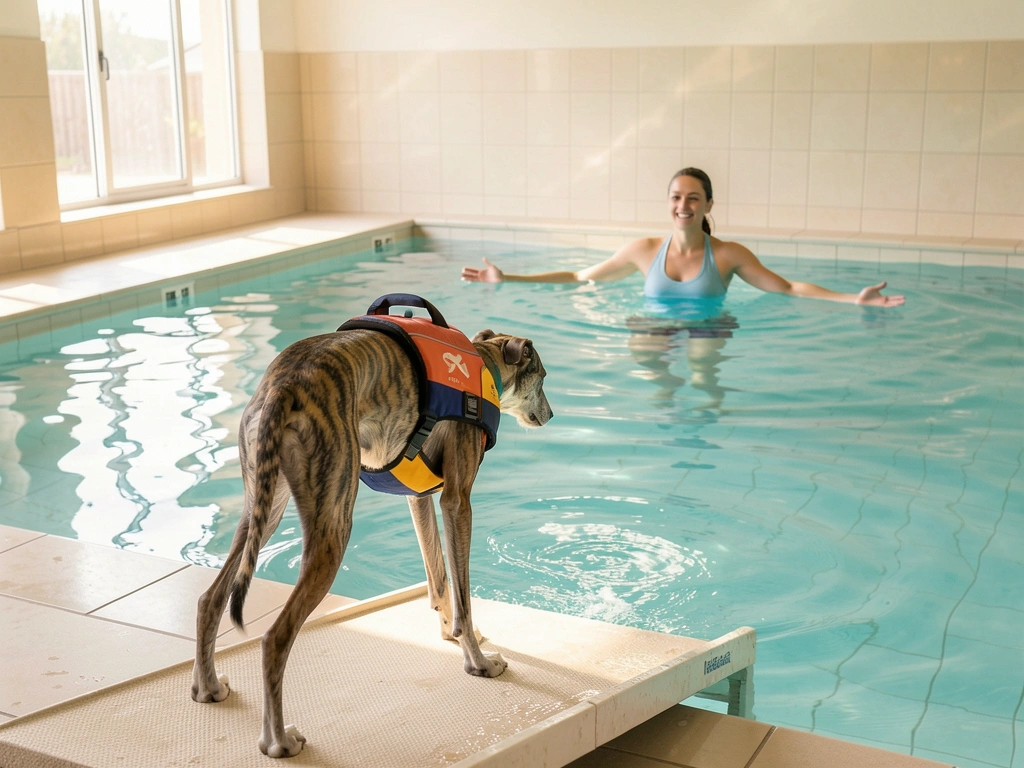
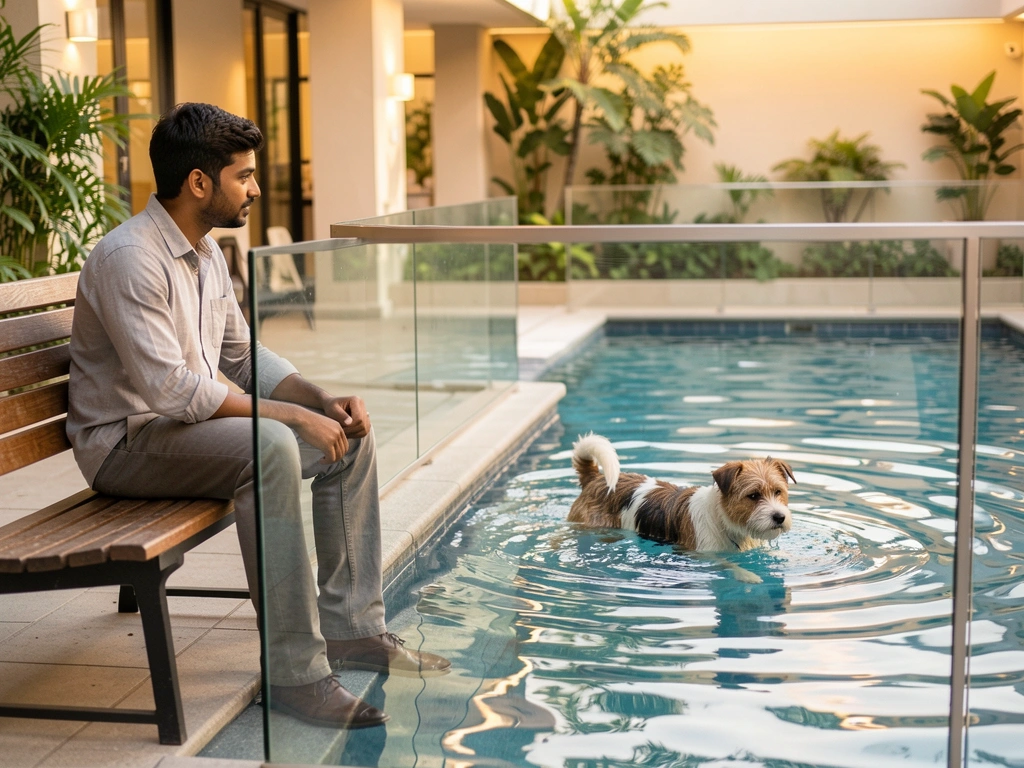
Six weeks after his knee operation our boxer barely put that leg down. By the end of the second block he was happier on it during walks, and his vet had a written note after every stage.
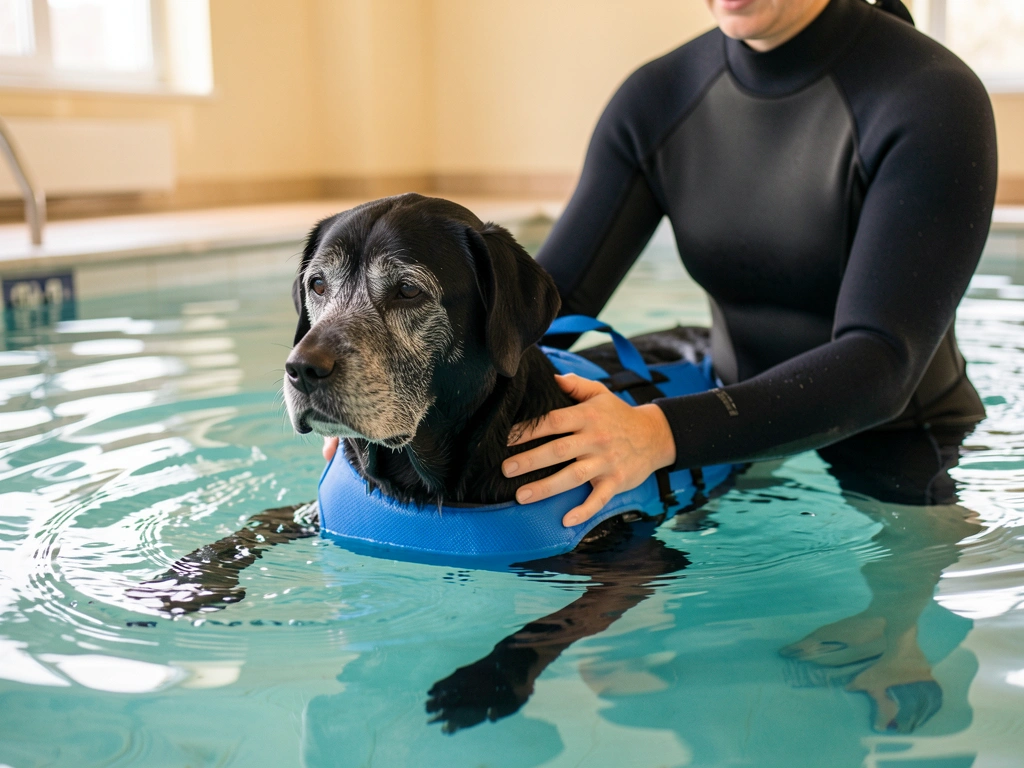
Our old Labrador hates the bath, so we expected a battle. She spent the first session on the step with the therapist, swam on the second, and now pulls towards the door when we arrive.
Our working spaniel swims here through the winter. The sessions are short and hard, the drying room is warm, and the team noticed a slight change in his stride and suggested a vet check.
Yes, including fit dogs swimming for exercise. Your vet knows the history and decides whether water work is safe, and we work within the limits they set.
Many dogs who dislike baths settle in a warm pool, because they are supported and never forced. The first session is short, and an anxious dog can spend it on the step, simply getting used to the water.
No therapy can promise that. Warm water exercise can help a dog keep moving and keep muscle with less strain on the joints, as part of the plan your vet has made. We report what we see, and your vet decides what comes next.
Owners watch from the poolside bench, close enough for the dog to see them. Only our therapists go in the water, which keeps both of you safe.
The pool is filtered all day and tested morning and afternoon, and every dog is showered before going in. The treadmill is drained and cleaned after each dog.
Many policies include hydrotherapy on a vet's referral, but cover varies, so check yours before booking. You receive an itemised receipt after every visit.
Send us your dog's details and the name of your vet practice. If your vet has not sent the referral yet, we will ask for it, then ring you to agree a time for the assessment.
The centre has its own car park, a level path to the door and a grassy patch for a walk before and after.
A single storey unit on the eastern ring road, five minutes from the motorway junction, with parking at the door
| Monday to Friday | 08:00 to 19:00 |
| Saturday | 08:00 to 14:00 |
| Sunday | Closed while the pool is cleaned and tested |
Practices can refer by email or ask us to post the form. Every referral is answered within one working day, and a written note follows each assessment and each block of six.
This dog hydrotherapy website was built by AI from two sentences. Tell us about your business and yours is built the same way, with its pages, photos and booking in place, ready to preview in minutes.
About this sample page
The Paddle Paws page is written for two readers at once, the owner whose vet mentioned hydrotherapy and the vet deciding where to send a patient. It opens with a retriever swimming beside a therapist, waves rolling along the foot of the view and three facts about water, one dog at a time and referrals. A blue strip and a section on referral follow before any price, so the vet's role is settled first. Sessions, reasons for referral, a five step first visit and a list of reasons to rebook then answer the owner's practical questions. Photos, example reviews, six questions, a request form and a card for practices close the page. Each reader finds a route that suits them without losing sight of the other.
A centre using the AI Web Maker builder describes its pool, its treadmill, its referral rules and its sessions, then edits the draft until every line matches its own practice. Photos of its own pool and patients, shown with owners' agreement, should replace the sample images. Prices, cancellation terms and insurance notes need checking against the centre's real policies, and rules on animal therapy and on advertising it vary by country. Assessment requests are accepted, moved or declined by the centre, and fees go to it directly. The sections below look at how each part of the page does its job.