Try dive
from$95
- Pool session, then one shallow sea dive
- Instructor at arm's length the whole time
- Planned to 6 m at the deepest
- No certification needed
Try dives, scuba courses for every level and guided boat dives on the reef, taught to groups of four or fewer. Every dive starts with a briefing, and nobody goes deeper than their training allows.
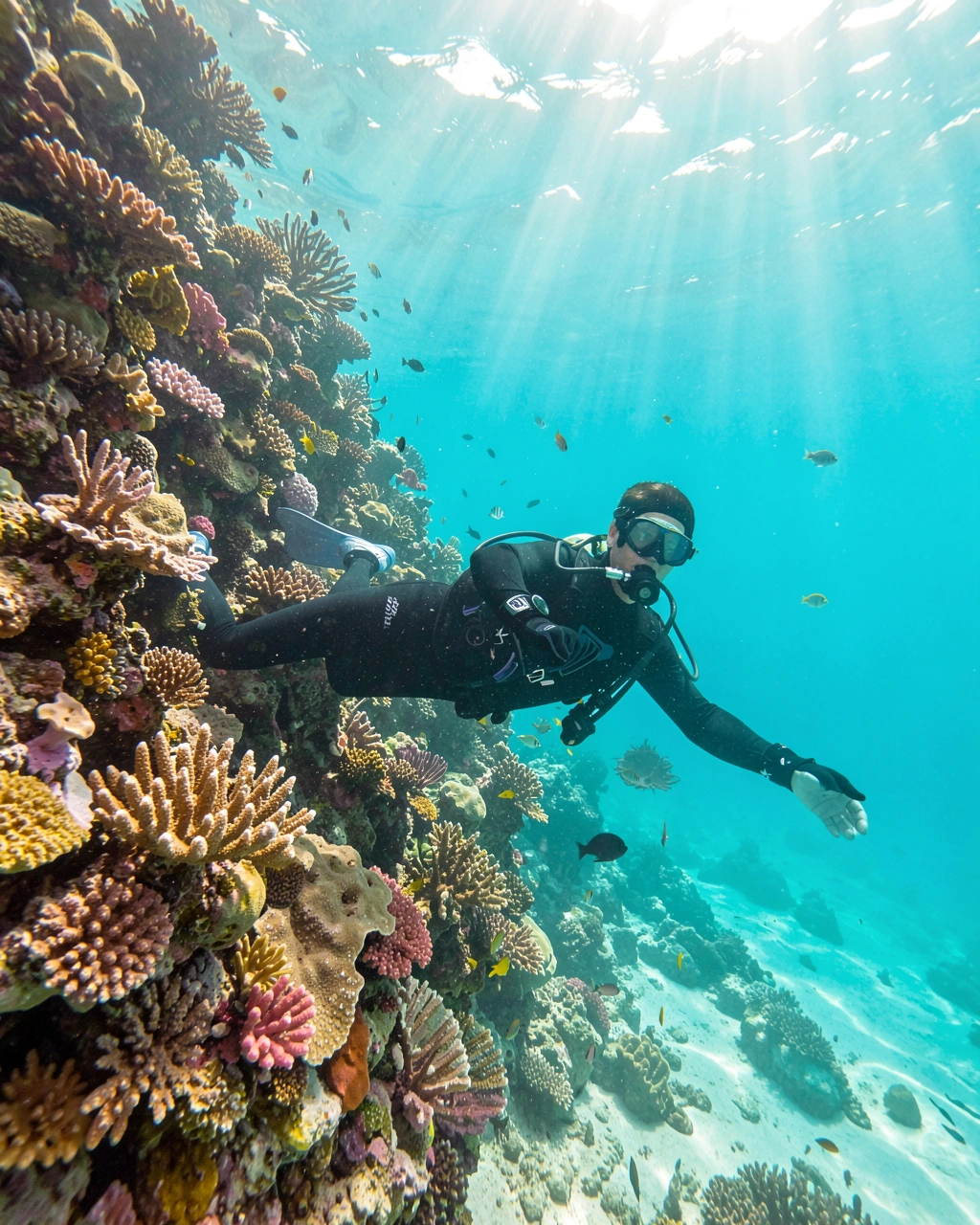
Each course leads to a recognised diving certification that dive centres in many countries accept. Prices cover the instructor, the pool, the boat, the full kit and the certification card.
from$95
from$520
from$420
from$460
A deposit of $100 holds a course place. Cancel up to seven days before the start for a full refund; after that the deposit moves to another date.
These are the deepest dives we plan for each level, based on the standards of a recognised diving certification. Local rules can be stricter and vary by country, and on any day the instructor may set a shallower limit.
| Your level | Deepest we plan | Who goes with you |
|---|---|---|
| Try dive, no certification | 6 m | An instructor beside you on every minute of the dive |
| Junior divers aged 10 and 11 | 12 m | An instructor, or a certified parent with the guide |
| Beginner diver certified | 18 m | A certified buddy, with a guide on our trips |
| Advanced diver certified | 30 m | A buddy and a guide, after a deep dive in training |
| Deep training completed | 40 m | A guide on planned deep sites only; this is the limit for recreational diving |
| Not dived for over a year | Back to your level | An instructor first, for a refresher in the pool or on the house reef |
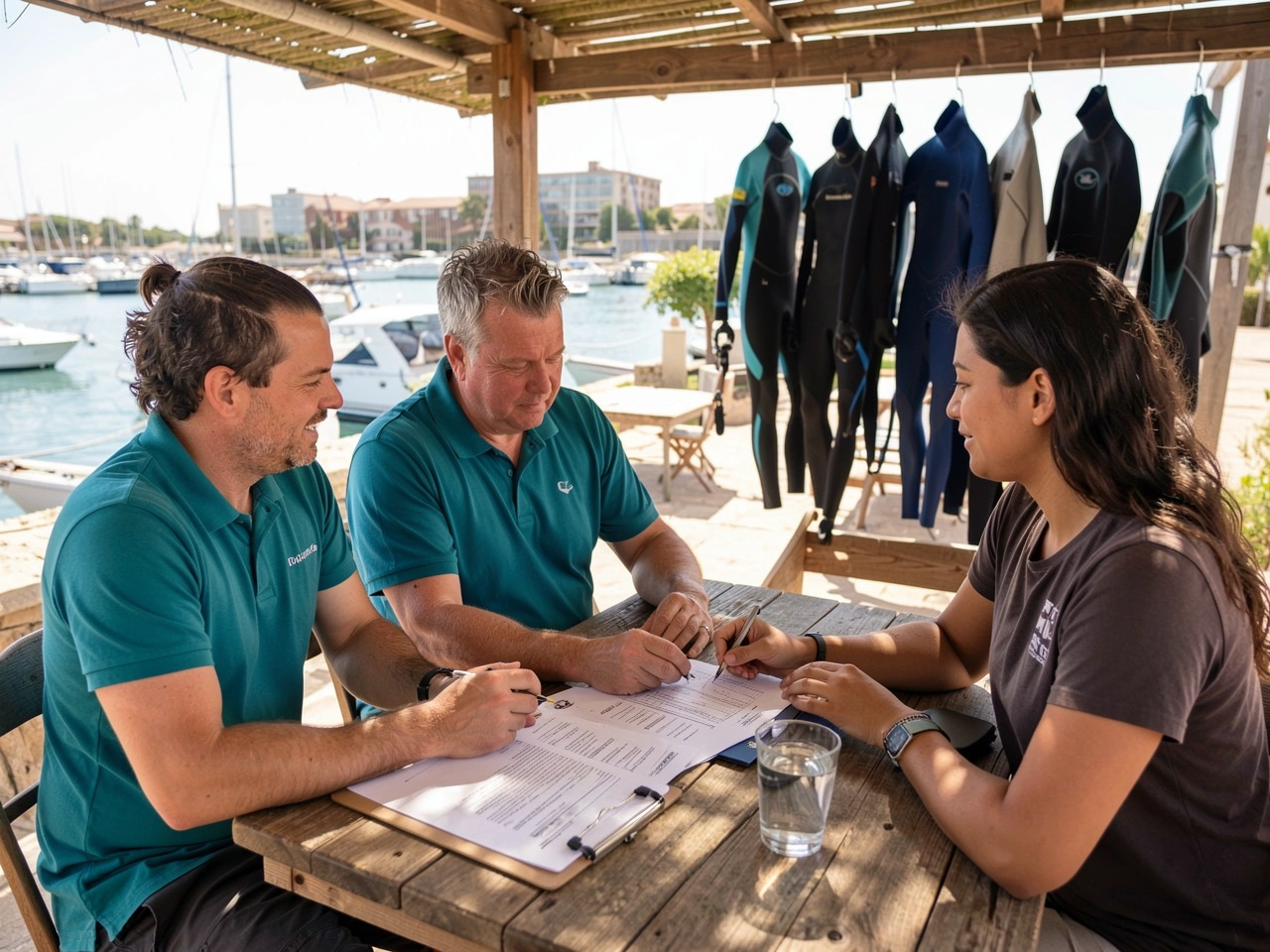
Every student and every certified diver fills in a diving medical questionnaire before entering the water. Some answers, such as asthma, heart or lung conditions, epilepsy, diabetes, recent surgery or pregnancy, mean a doctor must confirm that diving is suitable before you start.
Our instructors are not doctors and cannot judge your fitness, so please speak to your own doctor, ideally one who knows diving medicine, well before the trip. Anyone who feels unwell during or after a dive should tell the crew straight away; when it is an emergency, phone the local emergency number.
Bring your certification card and logbook to check in. We place you in a group that matches your level and your last dive.
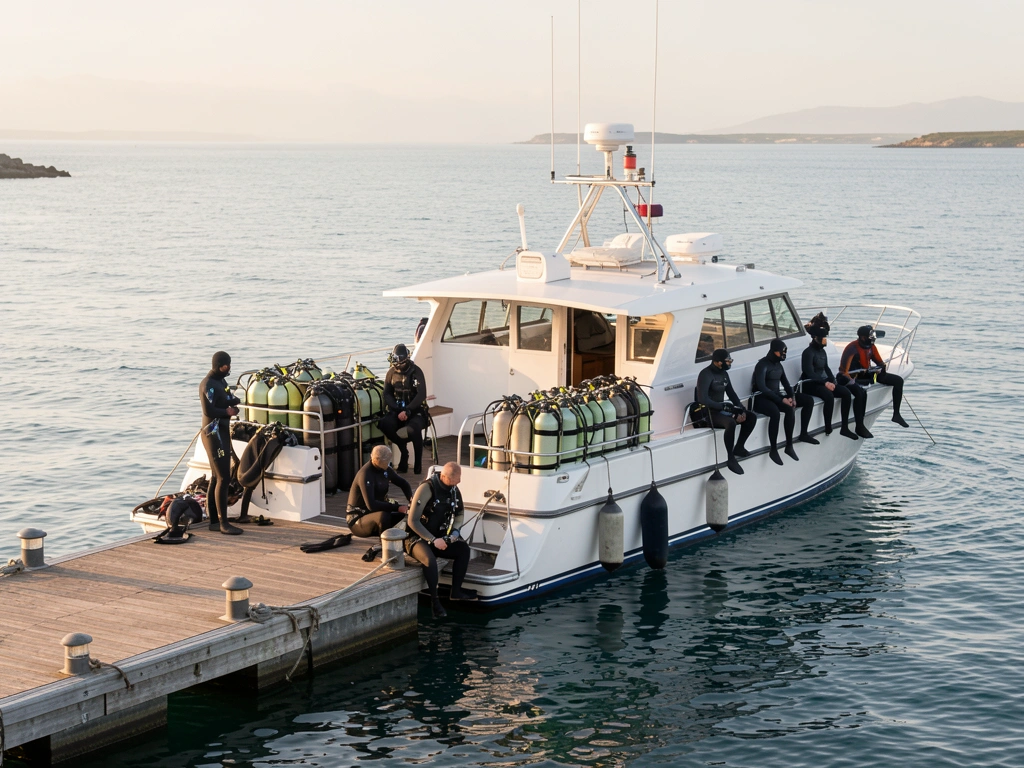
Two reef sites with a surface interval between them, a guide in the water and tea, water and fruit on board.
A gentle slope from the beach down to 14 m, good for a first dive after a break or a long safety stop practice.
Torches, a glow stick on every tank and a guide who knows where the octopus sleeps. Advanced level or a night dive in training.
Skills in the pool and one easy sea dive with an instructor, for anyone who has not dived for twelve months or more.
Wetsuit, mask, fins, buoyancy jacket, regulator, computer and weights, fitted by the crew and rinsed after every dive.
Air fills for your own tanks, and regulators and jackets checked by our technician before your trip.
Boats sail when the skipper and the dive leader agree it is safe. If wind, swell or visibility cancel a trip, we move you to the next boat or refund it in full.
Show your card and logbook, hand in the questionnaire and get fitted for wetsuit, fins and jacket.
The guide draws the site: entry, depth, time limit, the route on the compass and the signals for the dive.
Each pair checks air, straps, weights and releases together before the backward roll off the boat.
Both dives logged and signed, kit rinsed by the crew, and a plan for tomorrow if you want one.
A week at Blue Reef usually covers all of these, whatever your level.
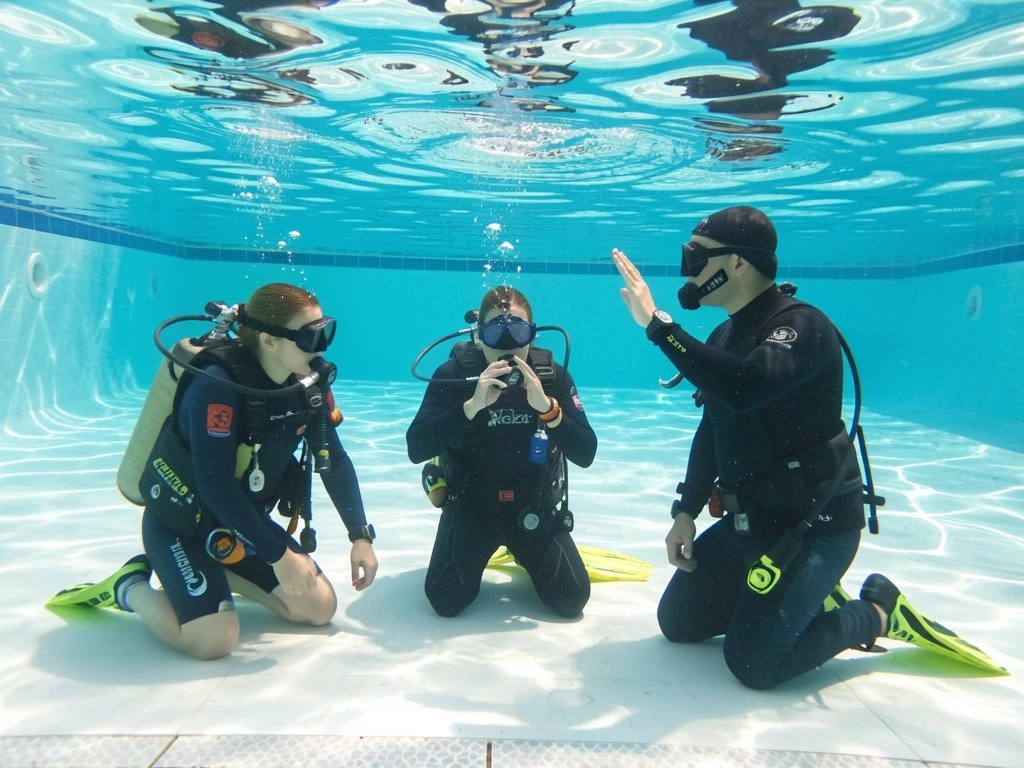
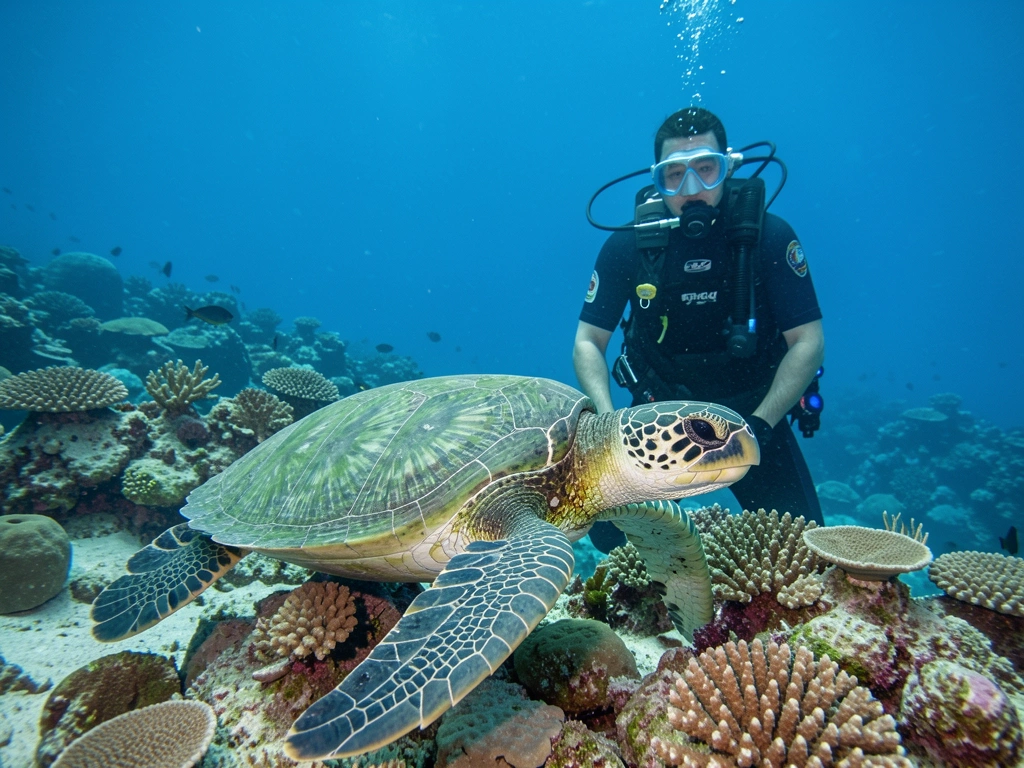
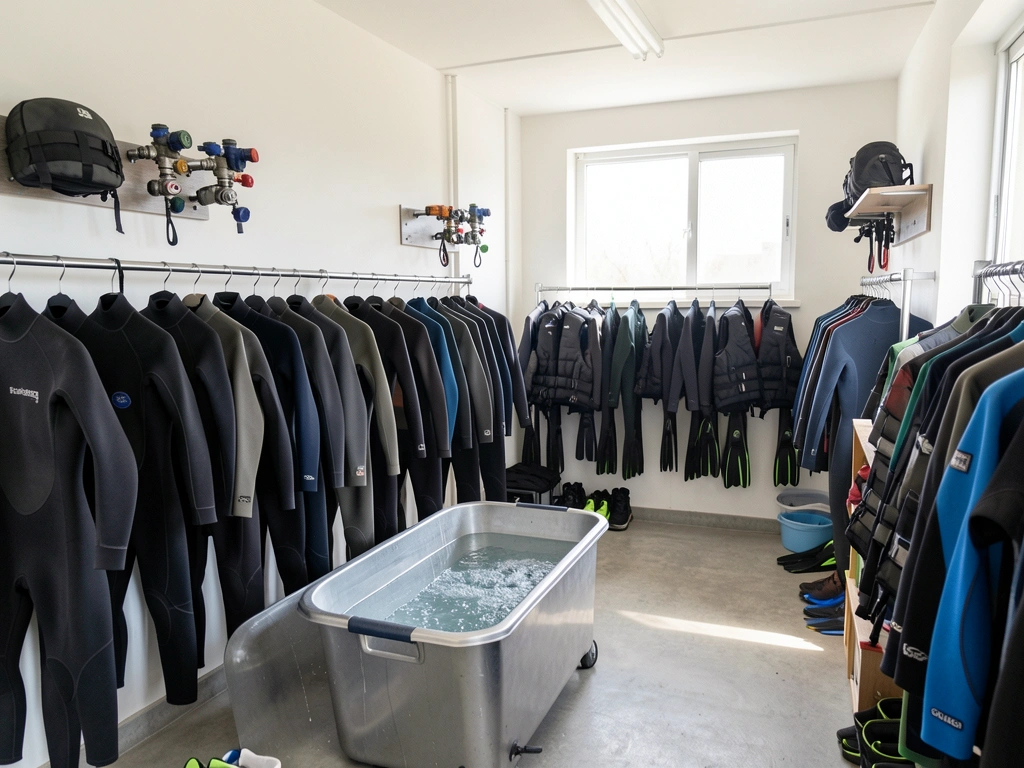
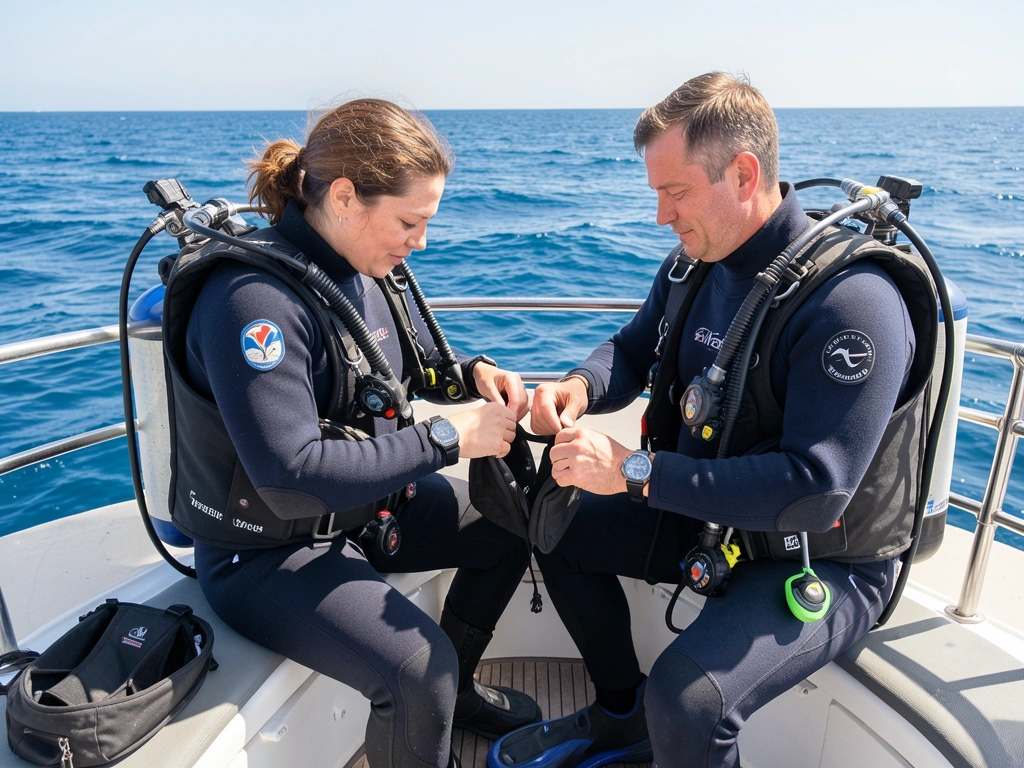
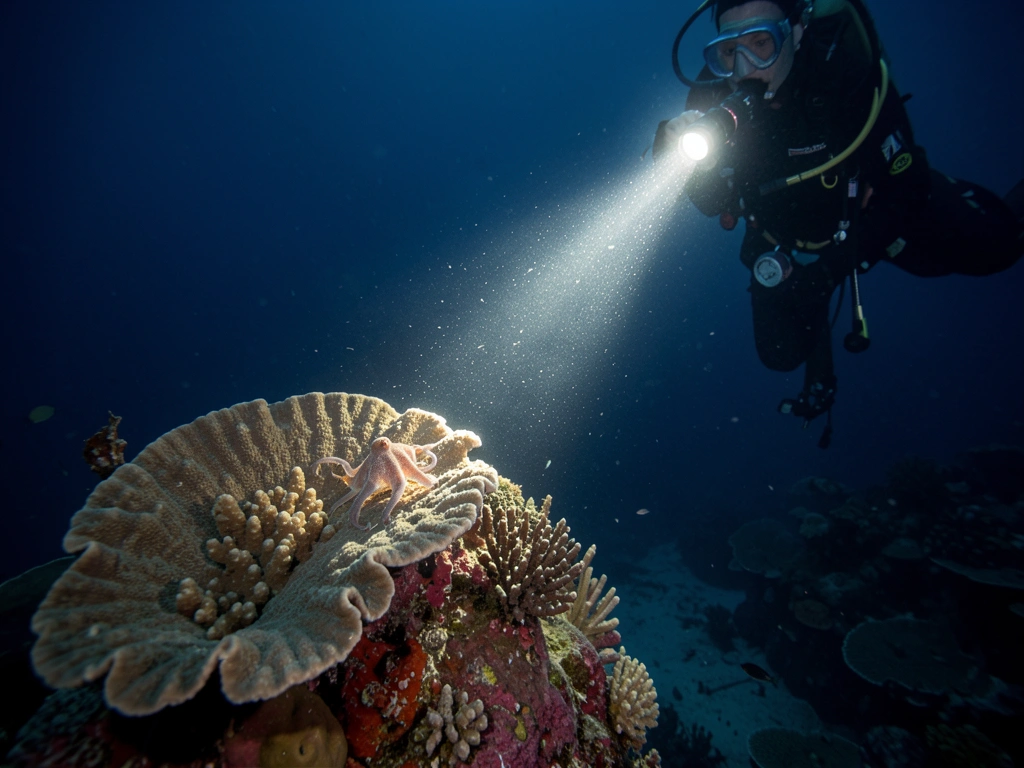
Nervous about the mask, so the instructor kept the first pool session in the shallow end until breathing felt normal. By day four the turtle on the reef felt like the reward.
Six years since the last dive. The refresher in the pool brought the skills back, and the guide kept the first boat dive shallow and slow.
The briefing on the night dive was so clear that the whole group knew the route and the signals before getting wet. Small groups make a real difference.
You need to be comfortable in water. Before the beginner course we ask you to swim 200 metres without stopping, at any stroke and any speed, and to float for ten minutes.
Possibly, but only your doctor can say so. Fill in the questionnaire when you book, and if it flags a condition, bring a note from a doctor saying diving is suitable. We cannot start the course without it.
Ten for the try dive and the beginner course, and twelve for the advanced course. Children aged 10 and 11 dive to 12 m at most, always with an instructor or a certified parent.
Our courses lead to a recognised diving certification that dive centres in many countries accept. Each centre still checks your card, your logbook and your last dive before it takes you out.
The skipper and the dive leader decide each morning. If a boat is cancelled, you move to the next trip with space or get a full refund, and course days are moved rather than lost.
Courses take a $100 deposit to hold the place, and the rest is paid at the centre on the first day. Guided dives and hire are paid at check in.
Pick the course or dive, the day that suits and how many of you are coming. The centre answers within a day to confirm the place, or suggests the closest date that still has room.
The shop opens half an hour before the first boat, and the crew answers the phone from the pontoon during the day.
On the harbour front beside the fishing jetty, with boats leaving from the dive pontoon
| Every day, March to November | 07:30 to 18:00 |
| December to February | 08:30 to 16:00, boats on calm days |
| Morning boat | Leaves at 08:00 |
Look for the red and white dive flag on the harbour front, beside the fishing jetty. Park in the harbour car park and bring your kit bag to the shop; the crew carries the tanks to the boat.
This dive centre website was built by AI from two sentences. Tell us about your business and yours is built the same way, with its pages, photos and booking in place, ready to preview in minutes.
About this sample page
Blue Reef Dive Centre is a made up scuba school, and its single page shows how a dive centre on AI Web Maker can sell courses while putting safety first. A dive compass settles on a bearing beside the opening photo, and the booking button sits just under the promise of small groups. Four course cards with prices and ages come next, followed by the table of planned depths for each level of certification. The health section, the guided dives and a boat morning in four steps fill the middle of the page. The order mirrors the questions a nervous beginner asks at the shop counter, so the page answers them in the same sequence.
A dive centre that builds on AI Web Maker describes its courses, boats and depth rules, and the builder drafts a booking page with a request form. Each request reaches the centre, which accepts it, moves it to another day or turns it down, and payment is agreed with the diver directly. No charge applies while the pages are drafted and previewed, and once the dive site is live it costs $119 for each year of hosting or $19 for a single month, with the domain as a separate purchase. The notes on this page explain what each section is for, from the compass to the form. A real centre can swap the courses, depths and photos for its own and keep the order.