Retro row
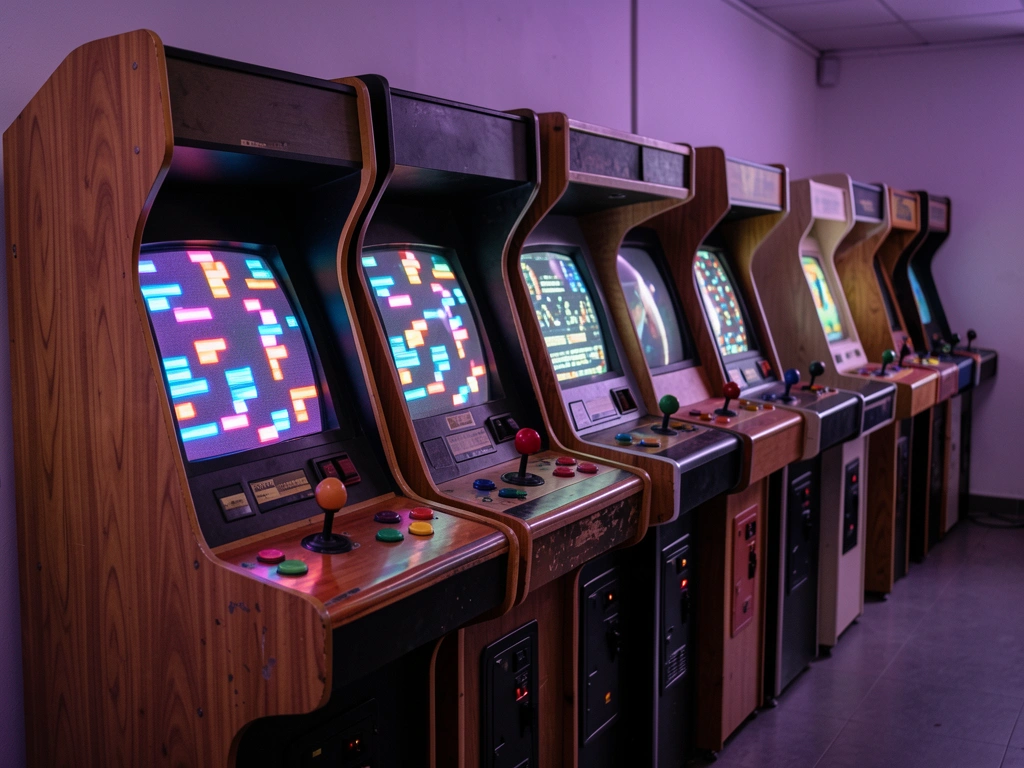
Upright cabinets and cocktail tables from the 1980s and 1990s, with joysticks and buttons kept in order by our own technician.
Most games2 credits a play
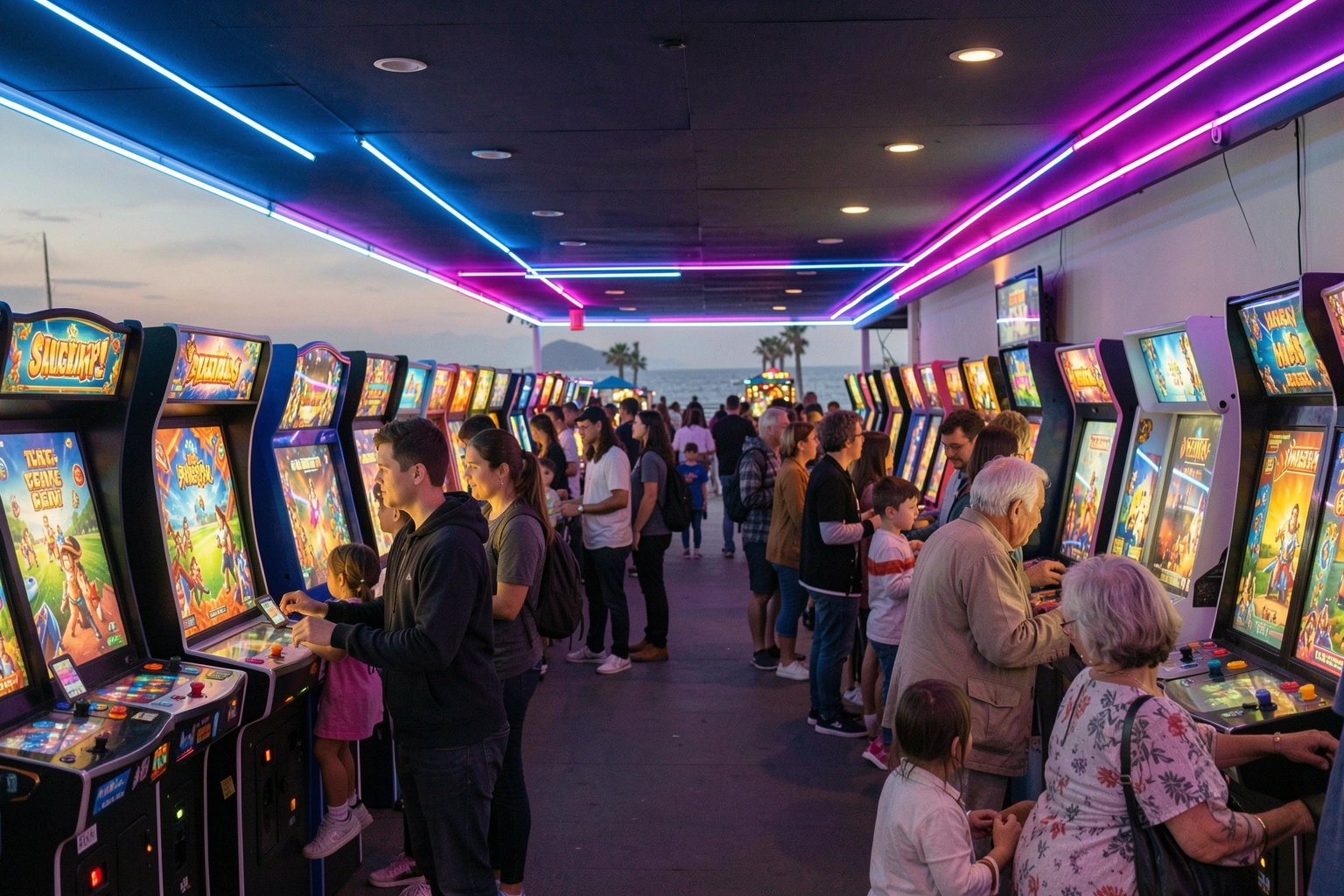
Forty restored classics on the retro row, a modern floor of racing seats and dance platforms, and a prize counter at the end of the pier. Top up a game card, tap and play, or plan a party in the Lighthouse Room.
The arcade runs the length of the old pier building, from the quiet retro row at the land end to the loud modern floor by the sea windows.
Upright cabinets and cocktail tables from the 1980s and 1990s, with joysticks and buttons kept in order by our own technician.
Racing seats, dance platforms, light gun games and big screen team games for up to four players at once.
Ball rollers, timing towers and grab machines that add tickets to the card, each with its price in credits on the reader.
Six air hockey tables, table football and a pinball corner, all played on the same card as everything else.
Slower games and small rides with low seats for under 7s, placed beside the café so adults can sit close by.
Hot drinks, milkshakes, toasties and pizza slices at tables facing the sea, paid at the till rather than on the card.
Every game in the arcade runs on a game card instead of coins. One card can be shared by a whole family, or each player can carry their own.
Pick one up at the kiosk or the front desk for $2. The card keeps working on every visit after that.
Load credits from $10 at a kiosk. It prints a slip with the credits now on the card.
Tap the card on the reader beside a game. The reader shows the price in credits before the game starts and the balance after.
Ticket games add tickets to the same card. Any kiosk shows the credits and tickets left whenever you tap it.
Swap tickets for a prize today, or save them for a bigger one on a later visit.
Bigger top ups load a few extra credits. The middle column is what goes on the card; the last is a rough guide, since games cost between 2 and 8 credits.
| Top up | Credits loaded | Roughly enough for |
|---|---|---|
| $10 | 25 credits | Ten retro games, or three races and a few goes on the rollers |
| $20 | 55 credits | An afternoon for one player across the whole pier |
| $40 | 120 credits | Two or three players sharing a card for a long visit |
| Party card | 40 credits | Loaded for every guest in an arcade party |
Credits and tickets have no cash value and cannot be refunded or exchanged for money. Both stay on the card for 12 months after it was last used, and a registered card's balance can be moved to a new card if it is lost.
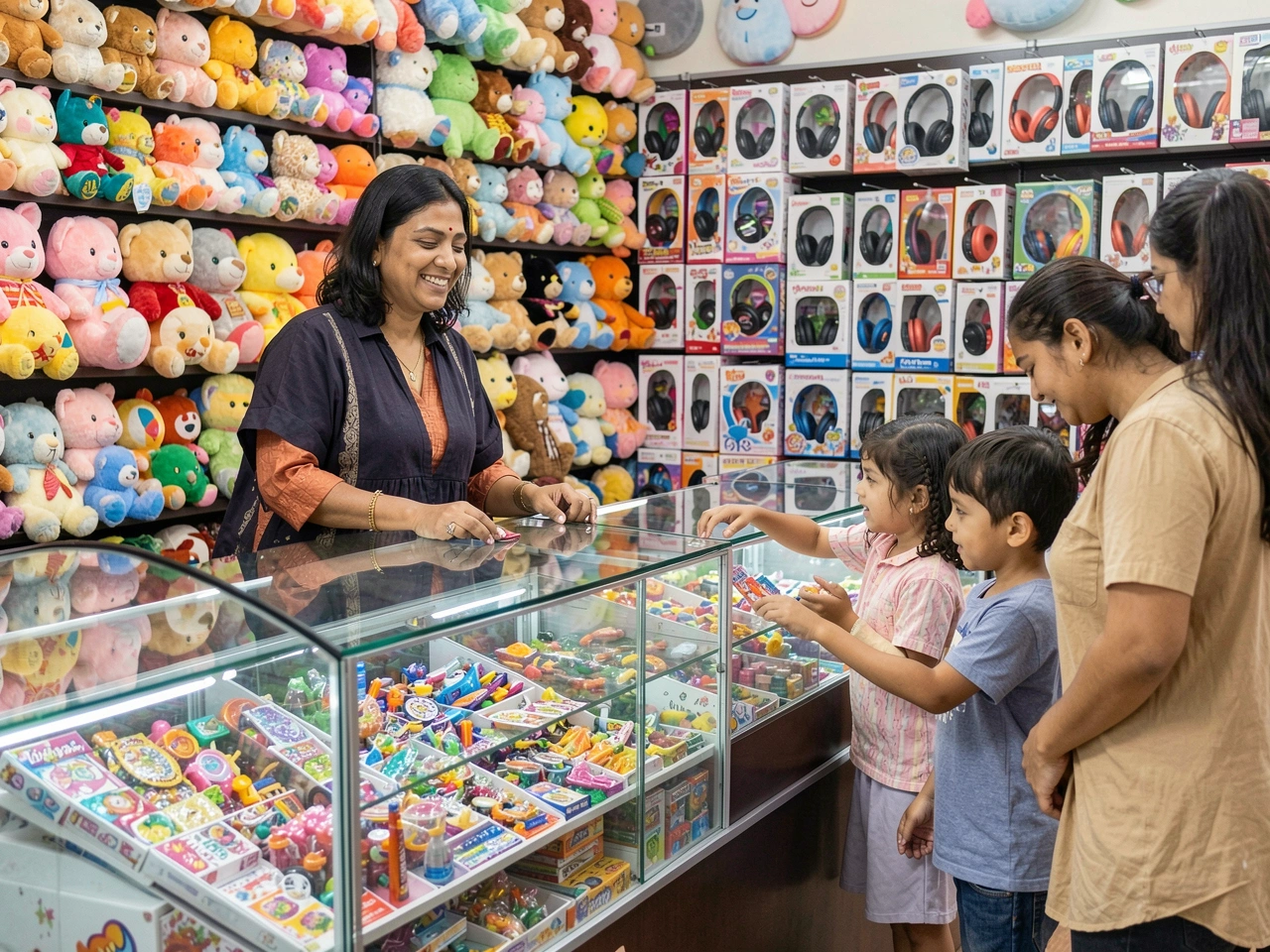
Tickets won on ticket games stay on your card until you swap them at the prize counter. Every prize is marked with its ticket price, from sweets and stickers at 20 tickets to plush toys and headphones at a few thousand.
Ticket games are played for fun. How many tickets a game gives depends on how it is played, and no game, card or top up promises a prize or a set number of tickets. Rules on prize games and age limits differ between countries, and ours follow the rules where the arcade operates.
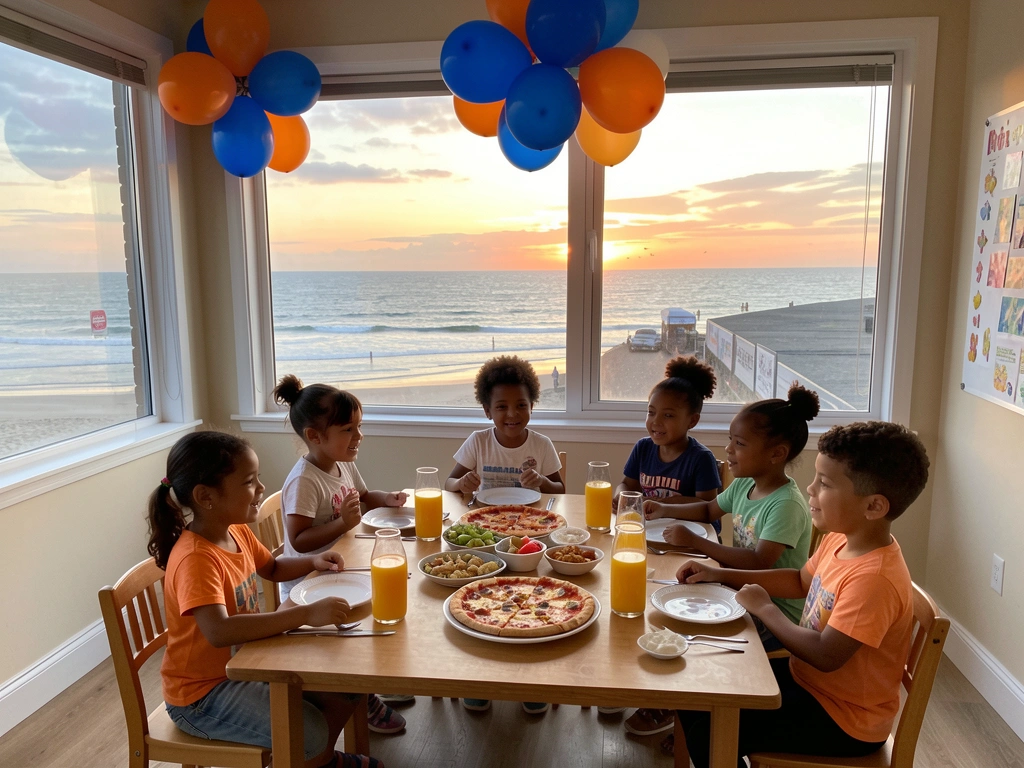
The Lighthouse Room above the arcade seats thirty, with windows on the sea. Every party has a host who meets you at the door with the cards already loaded.
for 10 guests, from$180
a guest, from$28
an evening, from$1,400
A deposit of 25 percent holds a party date once we confirm it, with the balance settled at the front desk when the party arrives. Dates can be moved up to seven days ahead without losing the deposit.
From the joysticks at the land end to the party room over the water.




Two hours went by like twenty minutes. The children loved tapping their own cards, and the readers made it easy to see how many credits were left before anyone asked for more.
Fifteen guests, cards loaded at the door and a host who learned every name. Pizza arrived in the Lighthouse Room just as the credits ran out, which felt like magic.
The retro row is kept beautifully. Every joystick worked, and the Friday grown ups night was a proper trip back to the games of the nineties.
Yes, every game runs on a card; only the café takes payment at the till. One card can be shared by a whole family, and any kiosk shows the balance when you tap it.
No. Credits and tickets have no cash value and cannot be exchanged for money, but they stay on the card for 12 months after its last use, so they keep for the next visit.
No. Ticket games are played for fun and give tickets according to how each one is played, so no card, top up or game promises a prize or a set number of tickets. The counter shows every prize's ticket price, so players can see what they are saving towards.
Tell any member of staff in a blue shirt. We check the reader and put the credits back on the card straight away.
Under 12s need an adult with them at all times, and after 19:00 everyone under 16 does. Retro nights are for ages 18 and over. Games with strong flashing effects carry a notice on the cabinet.
Register your card at a kiosk with an email address. If it goes missing, the front desk moves the balance to a new card for the $2 card price.
Give us the date, the package and the number of guests. Before the next working day is out, the events team sends the times still open on that date, or a nearby date if it has gone.
The front desk answers the phone whenever the arcade is open. Party questions by email reach the events team, who reply on weekdays.
At the land end of the old pier on the seafront promenade, a short walk from the station
| Monday to Thursday | 11:00 to 21:00 |
| Friday | 11:00 to 23:00 |
| Saturday | 10:00 to 23:00 |
| Sunday | 10:00 to 20:00 |
| Prize counter | Closes 30 minutes before the doors |
If your card was registered, the front desk can move its credits and tickets to a new one. Bring the email address you used, and the new card costs the usual $2.
Message the front deskThis arcade website was built by AI from two sentences. Tell us about your business and yours is built the same way, with its pages, photos and booking in place, ready to preview in minutes.
About this sample page
Pixel Pier Arcade is invented, yet its single page shows how an arcade on AI Web Maker can explain cards, prizes and parties without confusing anyone. In the opening view, coloured pixel blocks tumble down beside the headline, and three short facts cover the game count, the card price and the life of a balance. Six zones of games come next, then a five step guide to game cards and a table of top ups. The prize counter section states plainly that tickets have no cash value and that no game promises a prize. Party packages, a gallery, example reviews, six questions and a party enquiry form complete a page that answers money questions before they are asked.
An arcade owner starting on AI Web Maker describes the floors, the cards and the parties in a few lines, and the builder lays out a first page with an enquiry form. Party enquiries come straight to the owner, who confirms the date and agrees any deposit with the organiser. Nothing is billed before launch; after it, the arcade pays $119 a year for hosting, or $19 in each month, and pays for its domain on its own. This sample page explains the reasons behind each section of Pixel Pier. Owners can rename the zones, change the top ups or add a page for school trips while keeping the honest tone that parents trust.